No Trailers found.
For generations, we have believed that man is driven by ruthless self-interest. But over the past decade, this idea has been increasingly challenged. New research from fields as diverse as political science, psychology, sociology and experimental economics is forcing us to rethink human actions and motivation. ‘The Altruism Revolution’ examines the scientific reasons behind the call for a more caring society.
William Shatner presents a light-hearted look at how the "Star Trek" TV series have influenced and inspired today's technologies, including: cell phones, medical imaging, computers and software, SETI, MP3 players and iPods, virtual reality, and spaceship propulsion.
A poetic look at the life and legacy of legendary author Philip K. Dick (1928-1982), who wrote over a hundred short stories and 44 novels of mind-bending sci-fi, exploring themes of authority, drugs, theology, mental illness and much more.
This refreshingly frank and impartial study of the discovery and development of the notorious hallucinogenic drug is notably free of moral judgmental, and features contributions from such legendary heroes of psychedelia as Albert Hoffman - the Swiss scientist who discovered the drug - Aldous Huxley - author of 'The Doors of Perception' - Ken Kesey - author of 'One Flew Over the Cuckoo's Nest.
If machines can be smarter than people, is humanity really anything special?
memory consolidation 01
A hilarious introduction, using as examples some of the best films ever made, to some of Slovenian philosopher and psychoanalyst Slavoj Žižek's most exciting ideas on personal subjectivity, fantasy and reality, desire and sexuality.
A colorful and provocative survey of anarchism in America, the film attempts to dispel popular misconceptions and trace the historical development of the movement. The film explores the movement both as a native American philosophy stemming from 19th century American traditions of individualism, and as a foreign ideology brought to America by immigrants. The film features rare archival footage and interviews with significant personalities in anarchist history including Murray Boochkin and Karl Hess, and also live performance footage of the Dead Kennedys.
The documentary focuses on the annual Mani Rimdu festival of Tibet and Nepal, an event which encapsulates the Himalayan Buddhist experience.
102 Years in the Heart of Europe: A Portrait of Ernst Jünger (Swedish: 102 år i hjärtat av Europa) is a Swedish documentary film from 1998 directed by Jesper Wachtmeister. It consists of an interview by the journalist Björn Cederberg with the German writer, philosopher and war veteran Ernst Jünger (1895-1998). Jünger talks about his life, his authorship, his interests and ideas. The actor Mikael Persbrandt reads passages from some of Jünger's works, such as Storm of Steel, The Worker, On the Marble Cliffs and The Glass Bees.
Documentary on the legendary martial artist Bruce Lee, with a focus on the production of his unfinished film Game of Death. Using interviews and behind-the-scenes footage, Lee aficionado John Little paints a portrait of the world's most famous action hero, concluding with a new cut of Game of Death's action finale, reconstructed from Lee's notes and recently-recovered footage.
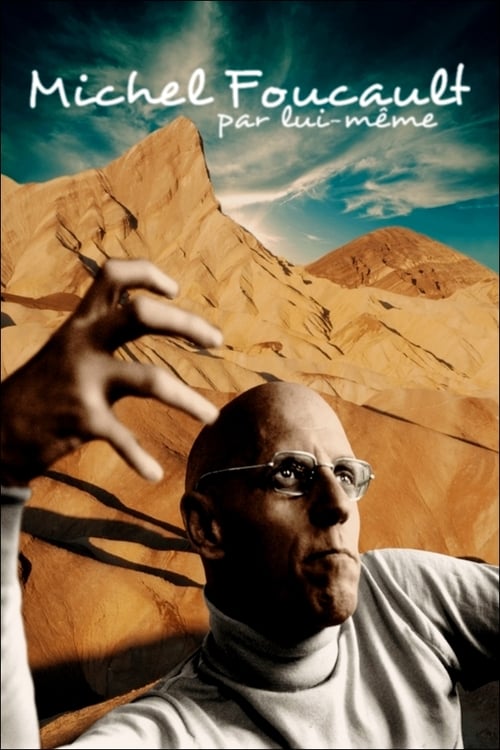
A voyage to the center of the thought of Michel Foucault (1926-1984), a tireless explorer of the margins, a brilliant and atypical thinker, through excerpts from his books and lectures, and the use of images that resonate with them.
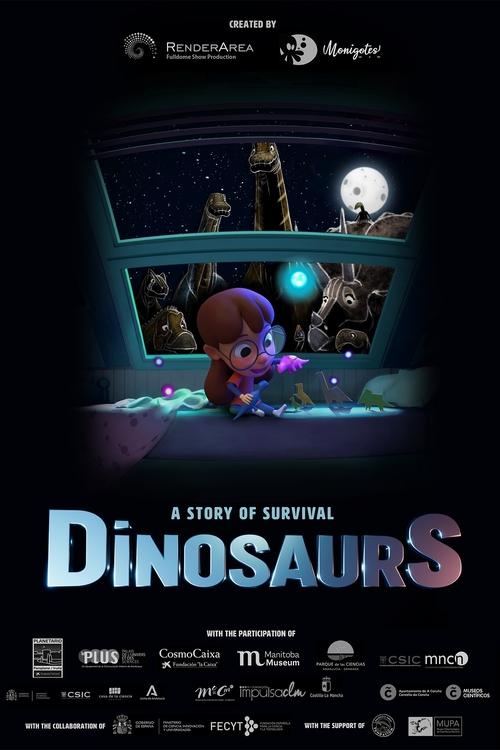
Like almost all children, Celeste is fascinated by dinosaurs. She is preparing a talk for her class about how they went extinct when Moon, a very wise and magical character, poses a tantalizing question: What if I told you that there are still dinosaurs among us? Celeste will join Moon on a journey through time, an exciting adventure that will show them the Earth as it was in the very, very distant past. They will see the fascinating transformations that these animals underwent over millions of years, creating giant creatures, armored beasts, and super-predators, until the day that a cataclysmic impact event caused a mass extinction on Earth. But all is not lost. Celeste will discover the key to their survival.
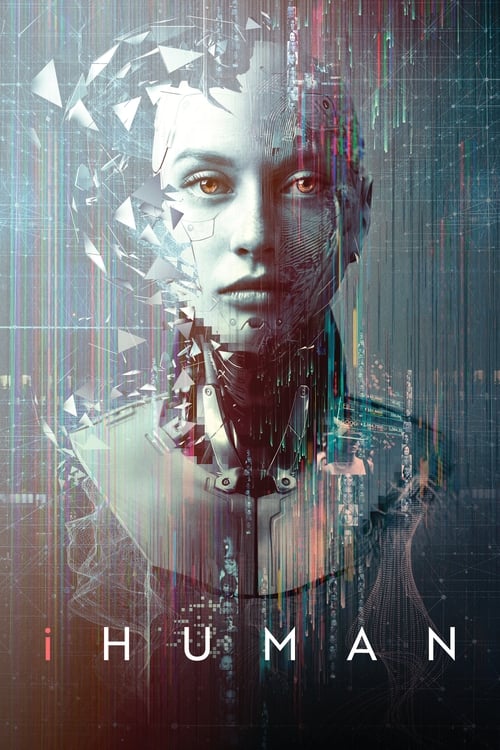
Artificial Intelligence (AI) is possibly the most powerful technology of our time. It has the potential to solve humanity’s biggest challenges yet some fear AI will be our downfall. iHUMAN follows pioneers at the frontline of the race to develop the ever more sophisticated AI to find the questions we need to ask at this crucial point in history.
How can we prevent epidemics? Why do viruses and bacteria move? Rather than trying to contain epidemics one after another, why not stop the processes that encourage their emergence? The challenges are enormous, but scientists argue that solutions exist. Because if emerging diseases are the collateral consequences of our lifestyles, our lifestyles are under our control.
Apple, is the most valuable company in the world. It has revolutionized the modern age & reshaped our relationships with each other. But it faces a major backlash due to controversies. From anti-competitive practices, using App store to copy the best ideas, trapping consumers in the Apple ‘ecosystem’, tax avoidance & sweatshop practices, this film probes into allegations against the tech giant.
A documentary produced in 1979 to celebrate the centenary of the birth of Albert Einstein. Narrated and hosted by Peter Ustinov and written by Nigel Calder.
I WANT SO MUCH TO LIVE explores the pioneering efforts of Genentech and the many individuals who came together to develop Herceptin, the world's first 'targeted therapy' for breast cancer.
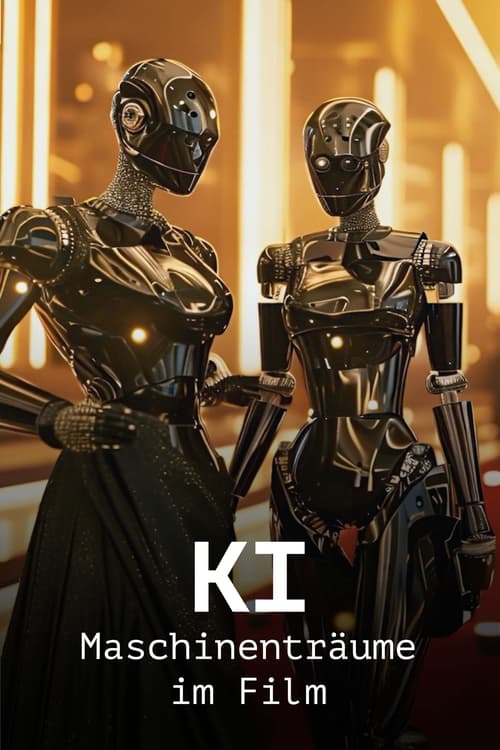
As artificial intelligence becomes ever more sophisticated, the film industry is split between enthusiasm at what the technology can achieve and concern over the future for human workers in the industry. Will actors and actresses be replaced by machines? An overview on the coming wave of AI in cinema.
A team of international scientists attempt to document the first-ever image of a black hole.