A film about how people lived and worked in the Swedish town Ulricehamn in the late 1950s.
No Trailers found.
Self / Narrator (voice)
Self
Documentary about the making of ’Spring Break Zombie Massacre.’
On May 20, 2017, Jérôme Laronze, a 37-year-old cattle farmer, was shot dead by gendarmes at the end of a nine-day run. In conflict with government services, the organic farmer, spokesman for the Confédération paysanne de Saône-et-Loire, had evaded yet another health inspection and, during his escape, had tried to alert people to the malaise in his profession. The news of his death came as a bombshell in a farming world already plunged into mourning by a wave of suicides. How did it come to this? While their incomes depend almost exclusively on European subsidies - which favor large farms - farmers must, in return, comply with very strict standards.
A documentary about one of the most famous classic boxing match with the legendary swedish boxer Jens Ingemar "Ingo" Johansson going to New York to face the then current champion, Floyd Patterson.
A portrait of Maggie, through Swedish everyday life. Maggie always co-ordinates high heels with a beret, and she loves gold. She lives on the 15th floor in one of Malmö’s suburbs. Her balcony is littered with reminders of her previous life. Under a golf bag, next to a racing ticket from 1999, are the remains of a pigeon that she killed when she couldn’t sleep.
An immigrant, working-class family lives through the horrors of the 20th century and raises a son who honors them. This memoir film is told entirely with image, music, and sound by filmmaker and sound designer Hamilton Sterling, guitarist and composer Ralph Towner, and Grammy winning music producer Jimmy Haslip. Available Now on: watch.eventive.org
A fairy tale about communism, social-democracy, and capitalism. (The sequel to Wandering Marxwards)
St. Joseph Fort: Principality of Pontinha, the diamond that illuminates the Atlantic Pearl.
The nostalgic retrospective of the time from a very candid perspective, over five chapters.
“Marilyn vs. Marilyn” tells the story of a little-known period of Marilyn’s life – the years she spent in New York, trying to became a ‘serious”’ actress, taking lessons with Lee Strasberg and setting up a production company with her photographer and trusted friend, Milton Green. Based on hitherto unpublished – and magical - photos from the Greene archives, the film focuses on the photographic image of a woman who remains one of the greatest legends in the history of cinema… and an enduring enigma.
A roller-coaster ride through the history of American exploitation films, ranging from Roger Corman's sci-fi and horror monster movies, 1960s beach movies, H.G. Lewis' gore-fests, William Castle's schlocky theatrical gimmicks, to 1970s blaxploitation, pre-"Deep Throat" sex tease films, Russ Meyer's bosom-heavy masterpieces, etc, etc. Over 25 interviews of the greatest purveyors of weird films of all kind from 1940 to 1975. Illustrated with dozens of films clips, trailers, extra footage, etc. This documentary as a shorter companion piece focusing on exploitation king David F. Friedman.
The fascinating story of knighthood, told through the extraordinary life and times of William Marshal, whom many consider the world's greatest knight. From Europe's medieval castles to the holy city of Jerusalem, presenter Thomas Asbridge explores William's incredible life, revealing a rip-roaring adventure story in the spirit of King Arthur's Knights of the Round Table. In a career that spanned half a century, this English soldier and statesman served some of Christendom's greatest leaders, from Eleanor of Aquitaine to Richard the Lionheart. Marshal fought in battles across Europe, survived court intrigue and exile, put his seal to the Magna Carta and proved to be the best friend a king could have, remaining loyal to those he served through disaster and victory. Then at the age of 70, despite all the odds, he saved England from a French invasion.
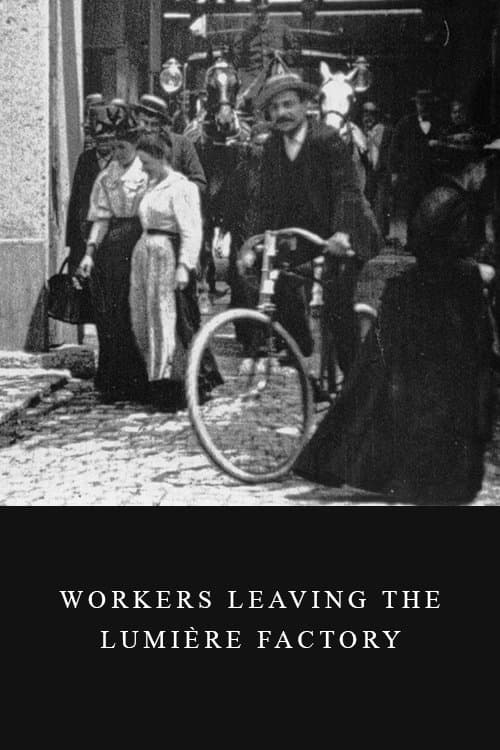
Working men and women leave through the main gate of the Lumière factory in Lyon, France. Filmed on 22 March 1895, it is often referred to as the first real motion picture ever made, although Louis Le Prince's 1888 Roundhay Garden Scene pre-dated it by seven years. Three separate versions of this film exist, which differ from one another in numerous ways. The first version features a carriage drawn by one horse, while in the second version the carriage is drawn by two horses, and there is no carriage at all in the third version. The clothing style is also different between the three versions, demonstrating the different seasons in which each was filmed. This film was made in the 35 mm format with an aspect ratio of 1.33:1, and at a speed of 16 frames per second. At that rate, the 17 meters of film length provided a duration of 46 seconds, holding a total of 800 frames.
The true historical account of the Illuminati, exposing the actual rituals of the secret society, and answering the age-old question of whether or not the order still exists.
The catastrophic and avoidable coal mining disaster at the Knox Mine is recounted by the people who lived through the tragedy.
A documentary by Donna Zaccaro about the political trailblazer, Geralidine Ferraro. Featuring interviews with Bill and Hillary Clinton, George and Barbara Bush, Walter Mondale, and Geraldine Ferraro herself, among others, this is a heartwarming and engrossing portrait of the first woman who was nominated for vice president, whose legacy still reverberates today.
Documentary on career criminal Jack Black during an episode of burglary in Victoria BC. Locations around Victoria and Vancouver are explored in present day, with narration from Black's autobiography.
The stranger-than-fiction story of a French film producer and her mafioso-turned-actor husband who attempt to turn a tiny town into the “Sundance of the East.”
This documentary follows 8 teens and pre-teens as they work their way toward the finals of the Scripps Howard national spelling bee championship in Washington D.C.
The earliest surviving motion-picture film, and believed to be one of the very first moving images ever created, was shot by Louis Aimé Augustin Le Prince using the LPCCP Type-1 MkII single-lens camera. It was taken on paper-based photographic film in the garden of Oakwood Grange, the Whitley family house in Roundhay, Leeds, West Riding of Yorkshire (UK), on 14 October 1888. The film shows Adolphe Le Prince (Le Prince’s son), Mrs. Sarah Whitley (Le Prince’s mother-in-law), Joseph Whitley, and Miss Harriet Hartley walking around in circles, laughing to themselves, and staying within the area framed by the camera. Roundhay Garden Scene is often associated with a recording speed of around 12 frames per second and runs for about 2 to 3 seconds.
Per Persson left Sweden 40 years ago. In Pakistan he fell in love and became the father of two daughters. Trouble starts when the girls grow up and the family decides to emigrate to Sweden. When they end up living in a caravan outside Hässleholm, all their expectations are dashed.