No Trailers found.
The influential life and powerful messages of Vietnamese Buddhist monk Thich Nhat Hanh are explored in this biographical documentary. For more than 50 years, this amazing social activist has preached self-awareness and compassion for all living beings. Follow him as he travels through France and the United States—including a stop at the Vietnam War Memorial in Washington, D.C.—spreading peace by teaching mindfulness and forgiveness.
Six blind Tibetan teenagers climb the Lhakpa-Ri peak of Mount Everest, led by seven-summit blind mountain-climber Erik Weihenmayer.
An engaging reflection on the meaning of existence and on the theme of death in the different spiritual traditions of the East and West.
A documentary film about Tibetan traditional medicine.
A documentary about the Friends of the Western Buddhist Order in London.
A film about the Tibetan Freedom Concert in San Francisco in 1996.
Brilliant Moon chronicles the life of the writer, poet, and meditation master Khyentse Rinpoche, one of Tibet's most revered 20th-century Buddhist teachers. Spiritual guide to His Holiness the Dalai Lama and the Royal Family of Bhutan, his life and teachings were an inspiration to all who encountered him. Richard Gere and Lou Reed provide the narration for his dangerous journey out of China, the subsequent spread of his influence and the search for his reincarnation after his death.
Each year, groups of Tibetan children secretly flee their homeland over the Himalayas to reach schools in India founded by the government in exile. Entrusted to smugglers, they are risking their lives by illegally crossing the great Himalayan range, a towering rampart between Tibet and India. The director will take us in the Mussorie school, in North India, where two thousand four hundred children have been rescued. They have left behind their family childhood and are now considered as orphans. We will discover the itineraries of Sonam, aged nine, and Dholma, the little new girl of the school. Here in India, they are taught about Tibetan culture and will find out about the history of their country and their ancestors. Sonam and Dholma's story is that of thousands of Tibetan children. Are they orphans of a lost country or bearers of hope who will save an endangered culture?
A cinematic journey through the world. Non-verbal.
Documentary on the Great Stupa at Sanchi, built by the Emperor Ashoka, and adorned with some of the finest examples of Buddhist art in the world.
After World War II a group of young writers, outsiders and friends who were disillusioned by the pursuit of the American dream met in New York City. Associated through mutual friendships, these cultural dissidents looked for new ways and means to express themselves. Soon their writings found an audience and the American media took notice, dubbing them the Beat Generation. Members of this group included writers Jack Kerouac, William Burroughs, Allen Ginsberg. a trinity that would ultimately influence the works of others during that era, including the "hippie" movement of the '60s. In this 55-minute video narrated by Allen Ginsberg, members of the Beat Generation (including the aforementioned Burroughs, Anne Waldman, Peter Orlovsky, Amiri Baraka, Diane Di Prima, and Timothy Leary) are reunited at Naropa University in Boulder, CO during the late 1970's to share their works and influence a new generation of young American bohemians.
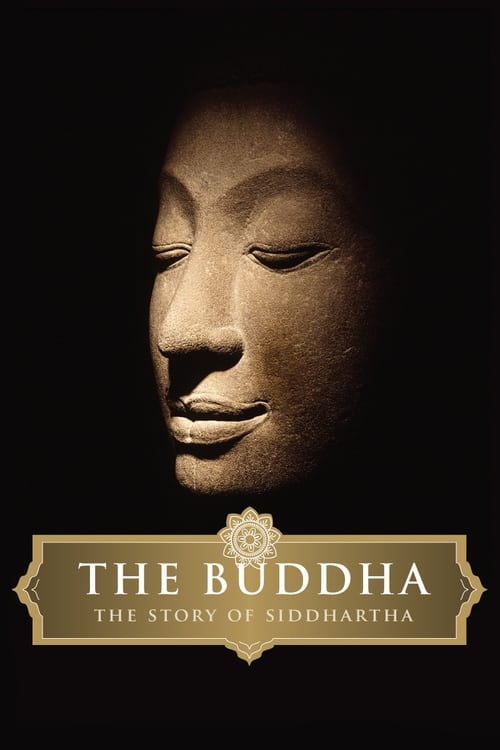
This documentary for PBS by award-winning filmmaker David Grubin and narrated by Richard Gere, tells the story of the Buddha’s life, a journey especially relevant to our own bewildering times of violent change and spiritual confusion. It features the work of some of the world’s greatest artists and sculptors, who across two millennia, have depicted the Buddha’s life in art rich in beauty and complexity. Hear insights into the ancient narrative by contemporary Buddhists, including Pulitzer Prize winning poet W.S. Merwin and His Holiness the Dalai Lama. Join the conversation and learn more about meditation, the history of Buddhism, and how to incorporate the Buddha’s teachings on compassion and mindfulness into daily life.
No overview available.
The French High Mountain Military Group (G.M.H.M.) expedition to Everest in 1981, led by General Pierre Astorg, took place on the north face of the mountain. Fifteen military climbers participated in this expedition, which lasted approximately ninety days. Their goal was to reach the summit by following a siege approach, but despite their efforts, the expedition failed to reach the summit. The French military, engaged since the beginning of March on the north face of Everest (8,848 meters), gave up less than 300 meters from the summit. The climbers, Jean-Claude Mosca, Hervé Sachetat, and Hubert Giot, gave up on setting up Camp 7, the last planned intermediate camp, at 8,600 meters. Poor weather conditions and the physical condition of the expedition members were the reasons for the failure of this meticulously prepared expedition...
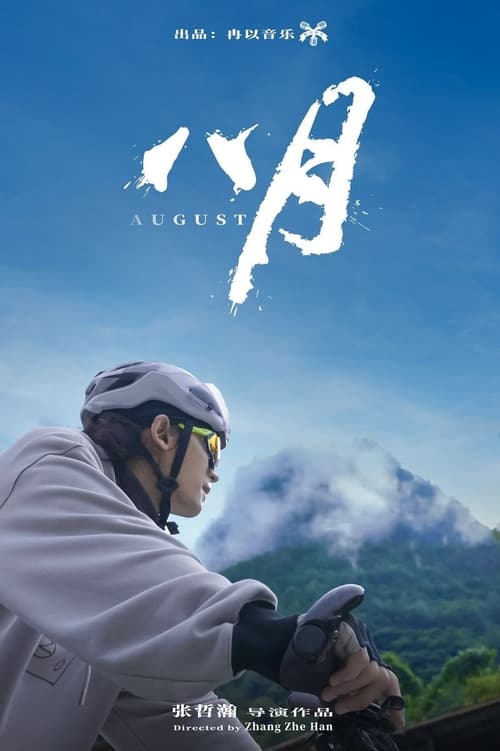
The documentary marks the directorial debut of Chinese actor Zhang Zhehan, it documents his deeply personal journey of self-healing in the aftermath of a devastating cyber media storm in August 2021 that abruptly halted his acting career.
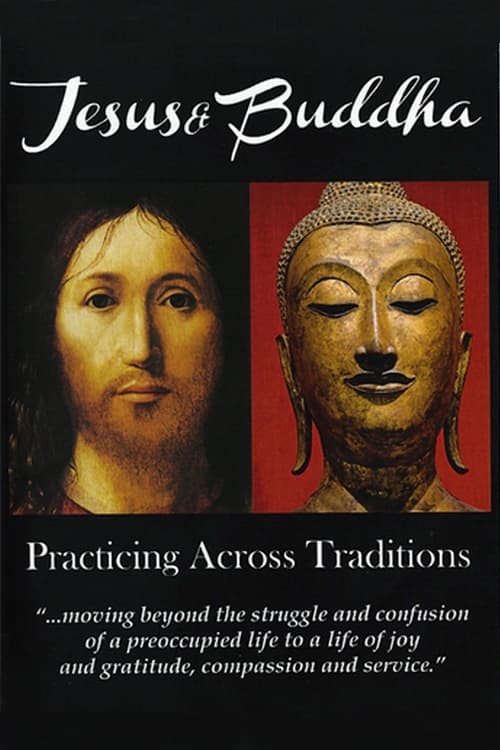
Three leading figures in today's Buddhist-Christian dialogue share their personal journeys in the new documentary Jesus and Buddha: Practicing Across Traditions. We learn how following the path of the Buddha has informed and deepened their understanding of who Jesus was and what he taught. Their experience and insight bring these two liberating archetypes alive in a way that can help guide us through our own confusion and struggle toward lives filled with joy and gratitude, compassion and service.
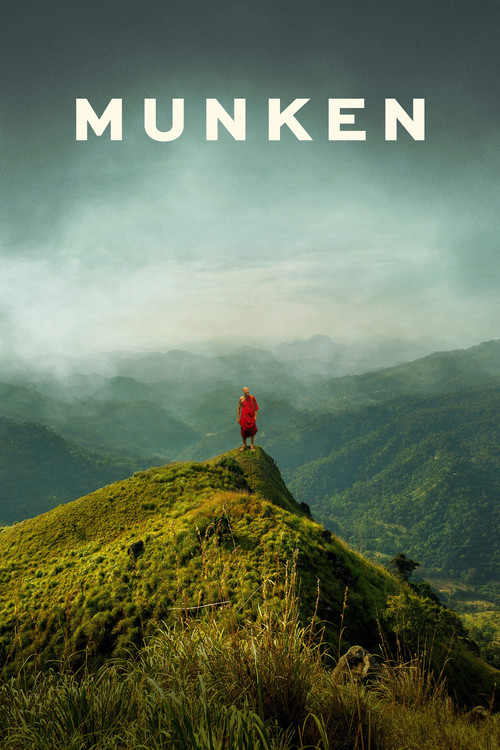
When Danish filmmakers Mira Jargil and Christian Sønderby Jepsen try to find balance in their stressful lives, they seek guidance from a renowned Danish HIV researcher turned monk deep in the mountains of Sri Lanka. But their filming process goes differently than expected. When they hear that the renowned Danish doctor and HIV scientist Jan Erik Hansen has burned all boats to live as a Buddhist monk on a mountain in Sri Lanka, the two Danish documentary makers Mira Jargil and Christian Sønderby Jepsen decide to make a film about him. to make. Jan Erik Hansen, as monk Bhante, has become an important voice in the Buddhist community. He has a YouTube channel with many followers, and people from all over the world ask him their life questions. The film project ends unexpectedly when the monk and the filmmakers appear to have different ideas about the film.
CRAZY WISDOM explores the arrival of Tibetan Buddhism in America through the story of Chögyam Trungpa, who landed in the U.S. in 1970. Trungpa became renowned for translating ancient Buddhist concepts into language and ideas that Westerners could understand and shattered preconceived notions about how an enlightened teacher should behave. Initially rejected, his teachings are now recognized by western philosophers and spiritual leaders as authentic and profound.
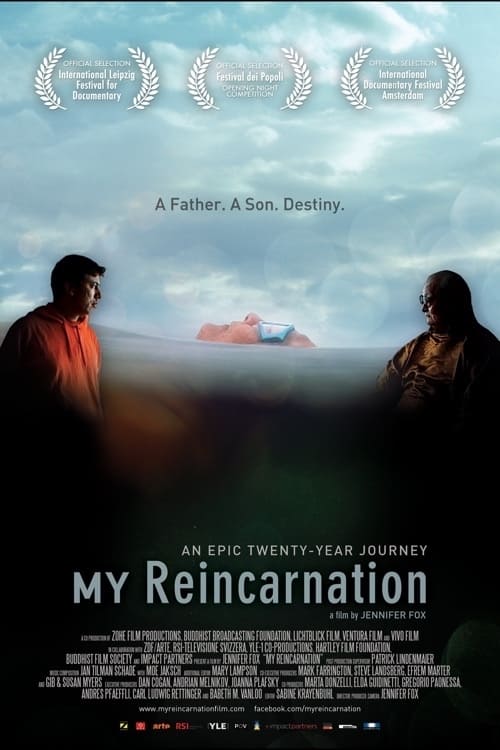
Filmed over twenty years, Tibetan Buddhist Master Choogyal Namkhai Norbu watches as his western-born son, Yeshi, who was recognized at birth as the reincarnation of a famous spiritual master, considers departing from tradition to embrace the modern world.
In a temple in Thailand, an order of Buddhist monks are performing a ceremony for people who headed there to get re-incarnated. There, we meet Tarn, a young Thai woman who lived in the Basque Country some years ago and who is still fascinated with that region, food and culture.