Beyond the Christmas glow, refugees fight to survive.
Amid December’s festive glow, refugees remain hidden in forests along the Poland-Belarus border. This powerful documentary gives voice to their silent cries.
Trailer
A story about children and adults who migrated from eastern Ukraine because of the war and found themselves far from home in a hostel for displaced people. This is a film about the everyday life and pain of refugees, about the search for small details that give strength to live and about adults who are tired of war. It is a self-reflection of refugees who believe that they will soon return home, without a clear understanding of when this will be possible and what awaits them there.
September 2016: Stacey Dooley embeds herself on the frontline with the extraordinary all-female Yazidi battalion, who are fuelled to take revenge against the so-called Islamic State. As the battle to take Mosul from ISIS advances in Northern Iraq, in this extraordinary film for BBC Three, Stacey finds these young women's lives have been transformed by a desire to avenge their loved ones who were murdered by Isis.
On July 5th, 1922, Norwegian explorer, scientist and diplomat Fridtjof Nansen creates a passport with which, between 1922 and 1945, he managed to protect the fundamental human rights as citizens of the world of thousands of people, famous and anonymous, who became stateless due to the tragic events that devastated Europe in the first quarter of the 20th century.
As politicians debate and argue, the men, women and children at the heart of the European immigration wave have found themselves caught in the midst of a humanitarian crisis. On the frontline is the Greek island of Lesvos – the first point of entry into Europe for over half of the refugees. One week at the end of August 2015 marked a tipping point in the crisis. More refugees arrived than ever before, volunteers were inundated and local infrastructure just couldn’t cope; trains were overflowing, refugees were dying in the back of lorries and on beaches, and politicians responded by closing borders and arguing about how to stem the tide of people. Filmed over just five days, this first-hand account of that dramatic week on Lesvos is seen through the eyes of the refugees and volunteers caught in the crisis.
No overview available.
4 young strangers, all war refugees, unite to take on the challenge of summiting Mt. Kilimanjaro, one of the seven summits and the highest peak in Africa. They have been brought together by the charity INARA to shed light on the impact of war on children. The mountain always has a lesson, and often not what we think or expect it to be. Not all will make it to the summit, some will be forced to face dormant personal demons. This is a story of physical and emotional adventure, the rollercoaster of life, and the possibilities that emerge when we stand together.
When a group of Eritrean refugees arrive in the small town of Härnösand there is a growing sentiment against them from the locals. 17-year old Sara Westin decides to found an anti-racist group to combat these feelings but when Sara and her best friend are murdered by Sara's Eritrean ex-boyfriend the feelings in the city reach a boiling point.
A look at the refugee crisis, with testimony from the refugees themselves.
In the Briançonnais mountains, in France, men and women on the roads of exile find the courage to cross the passes on foot, risking their lives. Arrived at the end of a long journey, exhausted, they do not know if they could settle down somewhere to start their life over. It is this transitional time that "The Adventure" tells. Ossoul, the Sudanese poet, Mamadou, survivor of an icy night at the Col de l'Échelle, Charlotte, Mother Courage and others are gradually getting back on their feet and settling to embark on a new life. Filmed over three years, "L'Aventure" is a story of resilience, friendships and revealed emotions. The portraits are drawn and deepened until everyone can recognize themselves in the other, put themselves in their place and understand them.
Recounted mostly through animation to protect his identity, Amin looks back over his past as a child refugee from Afghanistan as he grapples with a secret he’s kept hidden for 20 years.
In May 1974, the Israeli Air Force carried out an extermination operation against the Palestinian refugee camp Nabatiyeh. With this as a starting point, it is reviewed how the last 50 years of Zionist colonization of Palestine have partly led to the establishment of the state of Israel, partly to the expulsion of a people, the Palestinians, from their land. The film shows scenes of daily life in Palestinian refugee camps. We hear various of the inhabitants talk about their desire to return to their country, and we follow how the resistance movement works to free women from their traditional backward role. At the same time, the emergence of the armed resistance struggle is analysed, and the significance of the latest military technological developments for guerilla wars in the 3rd world is explained.
Djibi and Ange, two teenagers living on the streets, arrive at the Archipel, an emergency shelter in the heart of Paris. This documentary is a look at the Archipel, a shelter offering an innovative way to welcome families living on the streets.
Successful model Samira Hashi makes an emotional return to Somalia, one of the most dangerous places in the world and the place she was born. Civil war broke out in 1991, 10 days after Samira's birth, but two years later her family managed to flee the country and she grew up in the UK.Now, as Samira and the war both turn 21, she's going back for the first time to visit the people and places she left behind. The contrast with her safe and glamorous life in London could not be starker as she experiences firsthand the war's effect on a generation of young people growing up in conflict.
With a visual style that alternates between intimate verité moments, meditative reflection and suspenseful sequences, the film tells the story of Chief Ramon Gonzalez, detective Manuel Casas and officer Mayra Garza, as they navigate the complexities of their existence on the US/Mexican border.
Poignant postwar appeal for Britain’s Jewry to support orphaned Jewish children rescued from Europe.
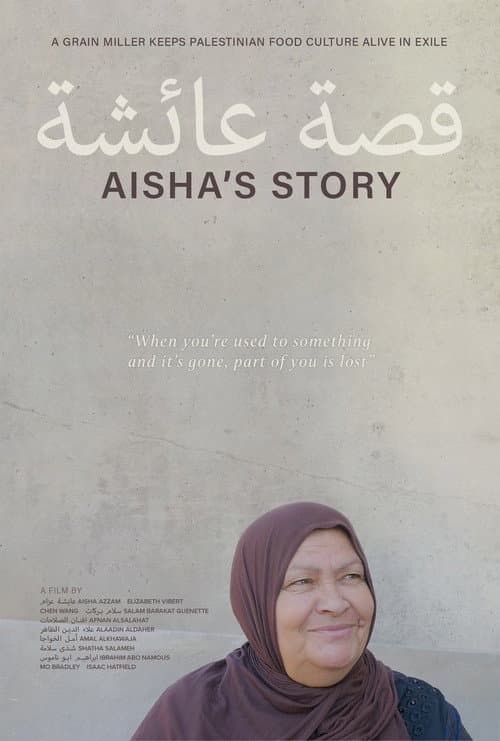
A Palestinian grain miller in a Jordanian refugee camp safeguards her culture and shares her people’s history through food prepared with love, longing, and sumud—the Palestinian spirit of steadfastness.
Here in Toronto, four young Somali refugees are finishing high school. What did they bring with them? What did they find in Canada? Their testimonies, about us and about themselves, interspersed with newsreel footage and sequences of a theatrical creation in which they put all their soul, make them immediately endearing and overturn many prejudices held against refugees. A film that makes you want to get to know them better.
The story of a group of Cubans who arrived in Miami during the Mariel Boatlift and were housed in an improvised camp in the heart of the city. Everyone lived together —men and women, homosexuals and heterosexuals, separated only by cloth curtains that hung from ropes suspended between the beds, like floating walls.
The story of the last months of the 20-year war in Afghanistan through the intimate relationship between American Green Berets and the Afghan officers they trained.
An estimated 12 million people live in refugee camps worldwide and only 0.1% are resettled, repatriated, or integrated into normal society each year. The feature-length documentary.
No Cast found.