Exemplary in its town planning and administration, Bologna has been transformed into a city that is avant-garde, both socially and culturally, yet still preserves its historical roots.
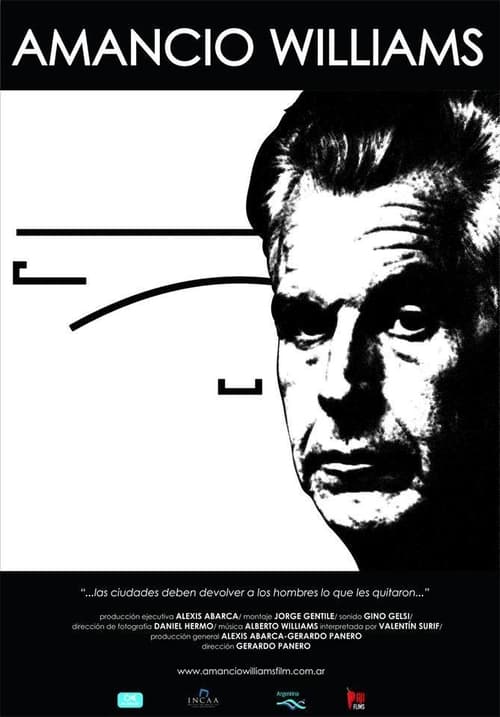
A biography documentary of the Argentine modernist architect Amancio Williams.
Documentary devoted to the architectural and urban planning designs of Le Corbusier. The architect supports his in-depth reflection on the city and its necessary adaptation to modern life with plans, drawings and images, particularly Paris, whose revolutionary development dreamed of by Le Corbusier is exhibited here. Its first projects will remain at the stage of a model: the modernization plan for the city of Algiers. Some will be created by other architects: Ministry of Education in Rio de Janeiro, UN Palace in New York. From the post-war period in less than 10 years, Le Corbusier created large housing units in Marseille, Nantes, a chapel in Ronchamps, a factory in Saint-Dié, a town in Chandigarh in India. Through diagrams, the architect presents his theory of the "radiant city", the mathematical key modulor of his work as well as his project for reorganizing the countryside, industrial and urban cities into a grouping around a cooperative system.
No overview available.
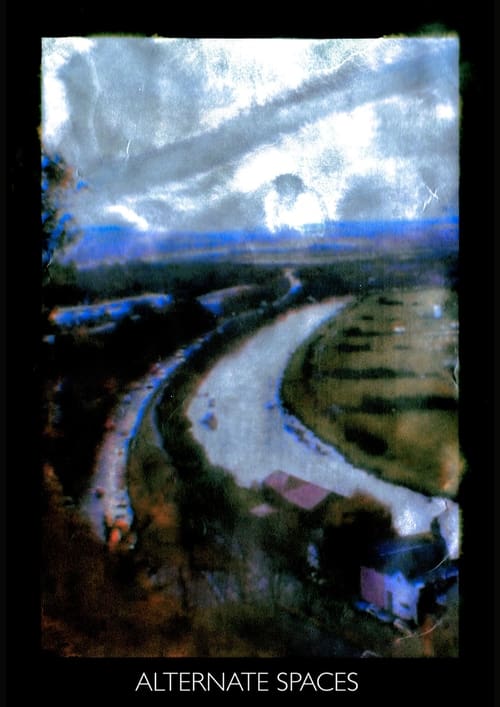
A short documentary on the River Ouse, following it downstream from Lewes to Newhaven, meditating on the surrounding area.
Author and activist Jane Jacobs talks about the problems and virtues of North American cities.
Architect Stanley King involves the local Vancouver community in urban design.
American historian Lewis Mumford looks at the city through history.
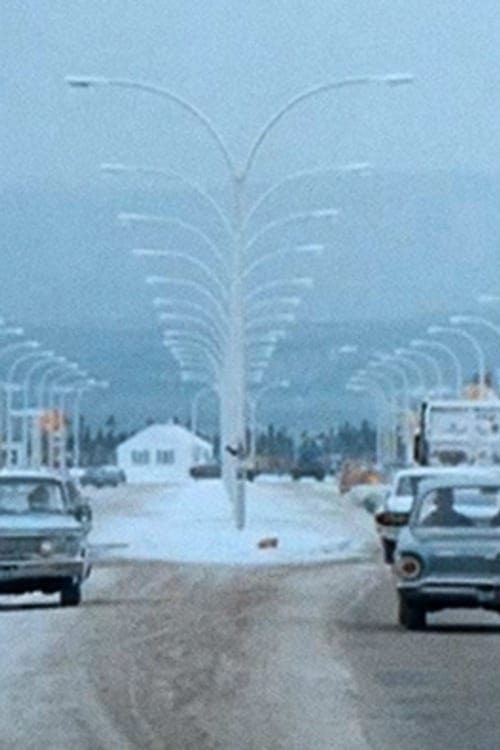
This feature documentary zooms in on the city of Sapporo, on the Island of Hokkaïdo in southern Japan. In contrast to the unplanned sprawl of neighbouring industrialized cities, Sapporo appears to be one of the best-planned large cities in the world, combining growth and technology with town planning and the preservation of green spaces.
In the city of Saskatoon, Saskatchewan, an effective government policy of controlling land investment prevents speculation, keeps land prices down, and provides a good balance between commercial, residential and public areas.
Bridgeview, British Columbia is less than 30 kilometres from downtown Vancouver. The residents were promised a sewer system in 1953, but more than 20 years later the sewer system has yet to be built.
Canada is facing a housing crisis, and cooperative housing might be a part of the solution.
Shows a campaign launched in Halifax in 1967 to probe the core of poverty in that city--low incomes, ill health and inadequate housing affect more than twelve thousand people in the central area. The project combines the efforts of local agencies with those of government agencies to alleviate these conditions.
Legault is an aging man who lived in a rural cabin, now a suburban cabin, as developments have popped up around him.
In this documentary, Marie-Claire Rubinstein reveals to us, through the testimonies of the inhabitants who live there, the architectural achievements of the French urban planner Fernand Pouillon in Algiers. In particular the vast complexes of hundreds of social housing units, including the most famous Diar E Saâd (1953), Diar El Mahçoul (1954) and Climat de France (1957). The historical context, during the war of independence is related by the historian Benjamin Stora and Nadir Boumaza. This documentary also evokes the personality of Fernand Pouillon in a post-colonial context.
Documentary on the revitalization of a housing complex in a working class neighborhood of Montreal. Modern housing has now replaced the old, sagging and overcrowded houses. There is fresh air, light and hope. Habitations Jeanne-Mance, a bold way to renovate a city: a perfect example of the collaboration that can exist at the federal, provincial and municipal levels.
This full-length documentary from the Challenge for Change program addresses housing issues affecting Montreal in the mid-1970s. As the city is restoring older apartments through direct action and government subsidies, new, low-rent housing is being integrated into old neighborhoods.
In the town of Xoco, the spirit of an old villager awakens in search of its lost home. Along its journey, the ghost discovers that the town still celebrates its most important festivities, but also learns that the construction of a new commercial complex called Mítikah will threaten the existence of both the traditions and the town itself.
Valérie Jouve is a weel-known photographer, and Grand Littoral is her first film. Out the outskirts of Marseille, in a landscape criss-crossed by motorways, railways and srubland paths, some figures that seem to be from her famous photos passby and bump into each other. They act as our guides in a tour without beginning or end. How do you look at a place without taking possession of it? How do you describe characters without confining them within a given plot? How do you make the transition from still shots to moving pictures? this brief, musical film leaves us asking these and other unresolved questions.
Just a stone’s throw from downtown Montreal is the largest social housing complex in Quebec. Built in 1959 where the red-light district used to be, Les Habitations Jeanne-Mance have retained something of the area’s seedy reputation for poverty, prostitution, drugs and violence. But who really knows the projects and the people who live there? Delving beneath the prejudices and stereotypes, director Isabelle Longtin ventured inside the buildings and met the residents.
No Trailers found.
No Cast found.