An interview documentary about Finnish military court sentencing procedures after the Continuation War.
No Trailers found.
Self
Self (archive footage)
This expository film shows the mood of European society on the eve of the Second World War while promoting the values of international cooperation. Using the Swiss office of the BBC as an example, the film describes the functioning of radio and presents the possibilities opened by mass communications. After the advent of sound film, Cavalcanti promoted experimentation with sound, and in this connection he was interested in the communicational, organizational, and social aspects of radio.
No overview available.
A story about children and adults who migrated from eastern Ukraine because of the war and found themselves far from home in a hostel for displaced people. This is a film about the everyday life and pain of refugees, about the search for small details that give strength to live and about adults who are tired of war. It is a self-reflection of refugees who believe that they will soon return home, without a clear understanding of when this will be possible and what awaits them there.
The concept of machine-made knit was known as early as the 1850s, but it was only during the 1920s that the quality of the material had improved. When the plant known as "Atlas" was introduced in 1931, the shop windows drew a lot of attention, and Aho & Soldan was ordered to make a promotional film. In this well-paced film, we see the jersey production step by step.
A letter, received by the Finnish National Radio’s phone-in program, hopes that in this era of #metoo and many other well-meaning campaigns, attention will be drawn to an unpleasant phenomenon, the use of the name Urpo as a synonym for idiot. In this warm-hearted and humorous documentary, four men called Urpo gather to reflect on the meaning and impact of their name on their lives. Is the use of Urpo still decent in 2023?
Near the end of World War II, General Dietrich von Choltitz receives orders to burn down Paris if it becomes clear the Allies are going to invade, or if he's unable to maintain control of the city. After much contemplation, Choltitz ignores orders, enraging the Germans and giving hope to various resistance factions that the city will be liberated. Choltitz, alongside Swedish diplomat Raoul Nordling, helps a leader organise his forces.
A documentary film that follows the lives of first-generation retired immigrants living in Finland.
The story of New Zealander Helen Todd's law suit against an Indonesian general that she pursued after her son, Kamal, was shot dead in the Dili massacre in East Timor.
During the Continuation War, there were dozens of POW camps in Finland. About the third of 70,000 prisoners died during the first year of war. Most of the archives of the camps were destroyed and the majority of the war crimes were never revealed.
In the winter of 1988, in the depths of the Iraq/Iran war, the border town of Halabja was attacked by chemical weapons with all its people and their different stories.
“War is a monster, war is madness, war is a self-feeding cancer, swallowing everything! War is a sacrilege, which destroys what is most precious in our planet, human life, the innocence of the little ones, the beauty of creation”.
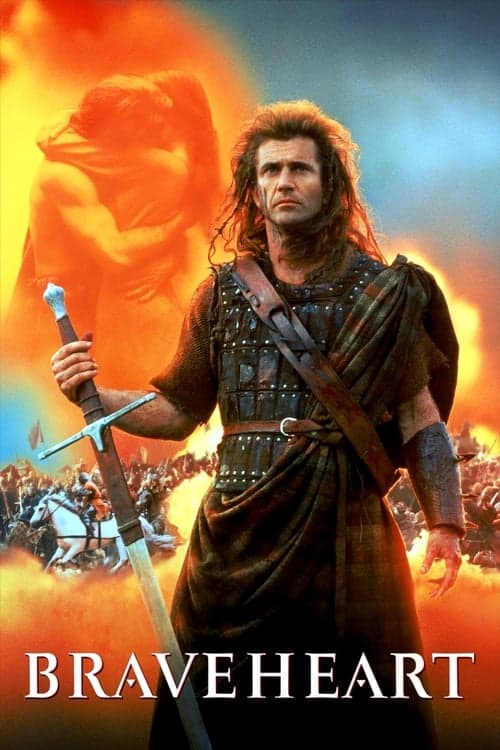
Enraged at the slaughter of Murron, his new bride and childhood love, Scottish warrior William Wallace slays a platoon of the local English lord's soldiers. This leads the village to revolt and, eventually, the entire country to rise up against English rule.
Checkpoint Zoo documents a daring rescue led by a heroic team of zookeepers and volunteers, who risked their lives to save thousands of animals trapped in a zoo behind enemy lines in the Russian Invasion of Ukraine.
A man kills a monster and a woman becomes a goddess.
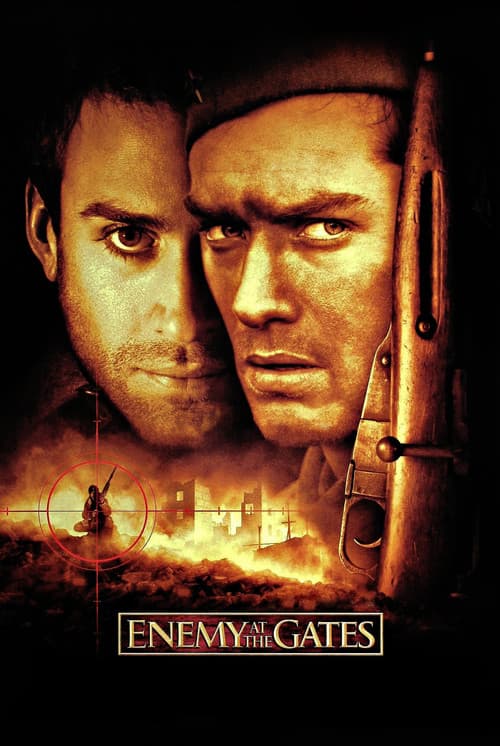
A Russian and a German sniper play a game of cat-and-mouse during the Battle of Stalingrad in WWII.
Jean Moulin lived several lives: unifier of the French Resistance, martyr tortured by the Gestapo, forgotten after the war, and then hero. From obscurity to prominence, Jean Moulin's name has remained linked for 70 years to that of his executioner, Klaus Barbie. This historical connection has contributed to the Resistance fighter's enduring legacy. The film retraces the paths of Jean Moulin and Klaus Barbie, head of the Gestapo in Lyon, from November 11, 1942, to June 21, 1943, the date of Jean Moulin's arrest.
Dramatic and deeply personal film about the psychological impact of killing on the lives of five soldiers. Representing a cross section of nationalities, gender, class and race, these soldiers reveal intimate memories about the central act of war, the killing of another human being. How do these individuals make sense of what they have done? What happens when time challenges their carefully constructed stories? Consciously apolitical but deeply psychological, Hidden Battles examines the strength and struggles of men and women who kill and how they create a life for themselves afterward.
Five young Ukrainians discuss life following the Maidan Revolution of 2014. Not all fought in the Russian-Ukrainian war, but it, regardless, shattered their life plans. Representing 'Generation Maidan', they face the question of how to cope with experiences of violence, how to go on. A local theatre director produces Hamlet, wherein they can use Shakespeare’s tragic character as a mirror and face their traumas onstage. For them, 'to be or not to be' is not simply text but an existential dilemma with no clear answer.
The film is based on the true story of the Great Catholic Christian Massacre of nearly 700 Christians that took place in 1544 in Mannar and the chain of events related to the same massacre that took place in 1560.