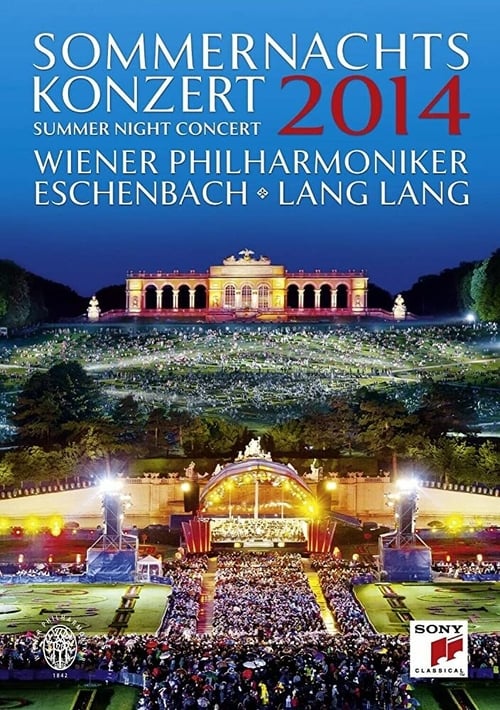
The renowned orchestra presents the world's biggest annual classical open air concert live from their hometown Vienna, Austria on Thursday, May 29th, 2014. The Summer Night Concert with the Vienna Philharmonic is an annual open-air event that takes place in the magical setting of the Schönbrunn Palace Park in Vienna with the palace as a magnificent backdrop. Everyone is invited to come to this unique occasion with free admission. Each year up to 100,000 people can take up the invitation, or enjoy on radio and TV in over 60 countries.
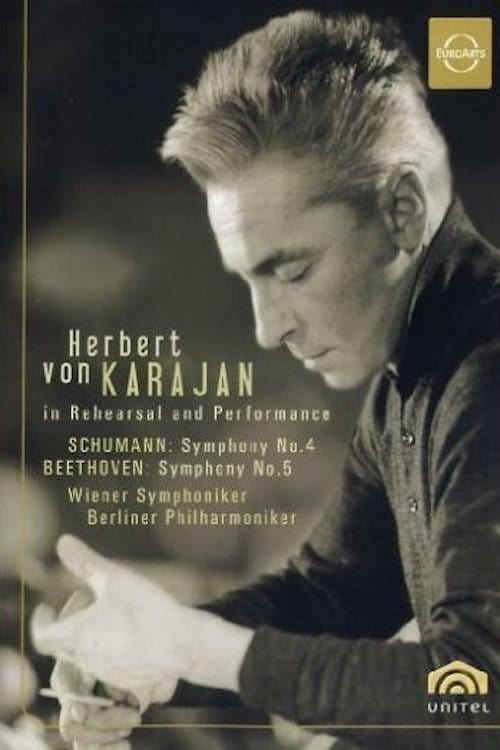
Karajan conducts rehearsal and performance of Schubert's Symphony No. 4 with the Vienna Symphony in Vienna, Nov. 1965, and Beethoven's Symphony No. 5 with the Berlin Philharmonic, January 1966. Henri-Georges Clouzot directs.
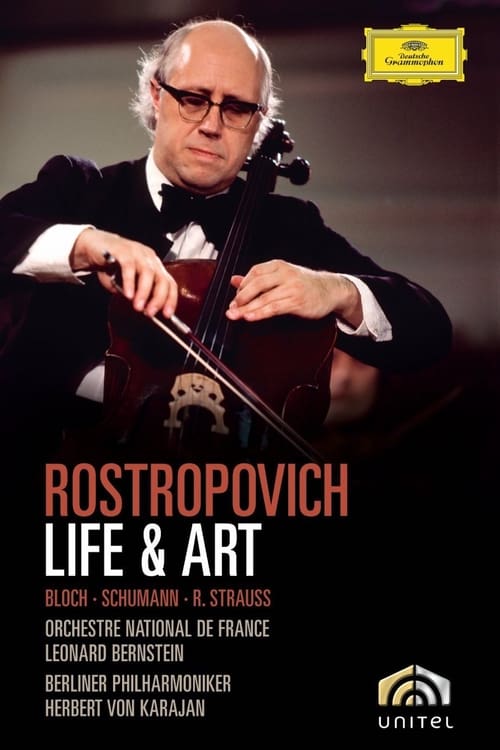
Released as a memorial for the great Russian cellist Mstislav Rostropovich, who passed away on 27 April 2007, this DVD contains one bonafide cello concerto, the Schumann Cello Concerto in A minor, and two tone poems with prominent cello parts, Ernest Bloch's Schelomo and Richard Strauss' Don Quixote. Rostropovich mastered the Schumann in several famous recordings. Here, conducted by Leonard Bernstein, he provides a splendid performance. Featuring his trademark powerful technique, smooth legato and crisp vibrato, the Romantic roots of the concerto are never hidden for long, despite the relatively cool playing of the Orchestre National de France.
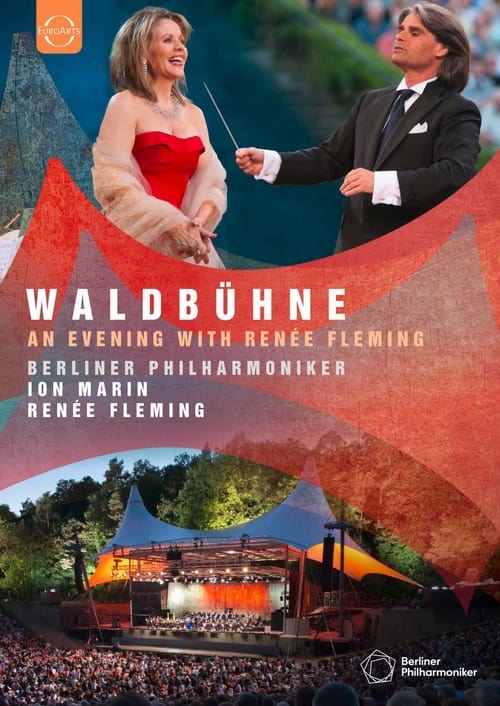
Repertoire Modest Mussorgsky: Night on Bald Mountain; Antonín Dvořák: Song to the Moon from “Rusalka”, Op. 114; Aram Chatschaturjan: Adagio from “Spartacus”; Richard Strauss: Final Scene from “Capriccio”, Op. 85; Richard Wagner: Overture to “Rienzi, der Letzte der Tribunen”; E. W. Korngold: Mariettas Lied from “Die tote Stadt”; Richard Strauss: Zueignung, Op. 10 No. 1; Sir Edward Elgar: Salut d’amour; Giacomo Puccini: Donde lieta uscì from “La bohème”; Tu che di gel sei cinta from “Turandot”; Ruggero Leoncavallo: Musette svaria sulla bocca viva from “La bohème”; Mimì Pinson, la biondinetta from “La bohème”; Piotr Tchaikovsky: “Romeo and Juliet” (Fantasy Overture)
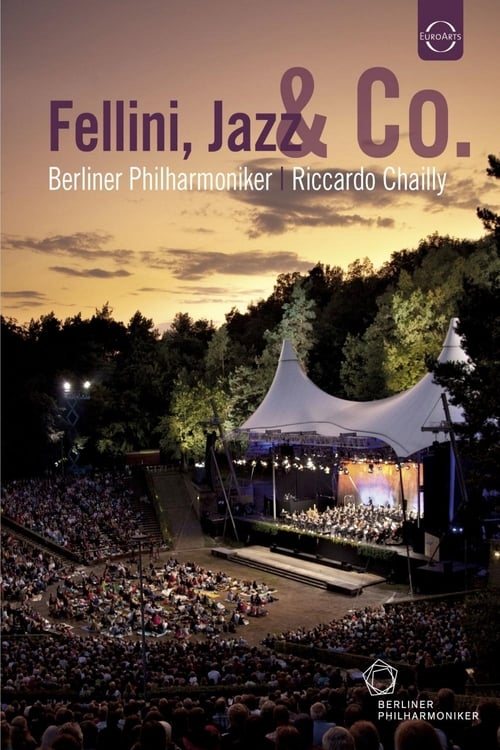
The Waldbühne in Berlin, one of the most appealing outdoor amphitheatres on the European continent, is the home of the Berliner Philharmoniker’s summer concerts. With audiences of more than 20,000, these are some of the most popular classical music concerts in the world. Riccardo Chailly is famous for having one of the broadest and most eclectic repertoires. Here, under his baton, the orchestra presents perennial favourites by Shostakovich, Rota and Respighi. Live recording from the Waldbühne, Berlin, 23 August 2011, directed by Kasten Henning, produced by Jan Bremme. TV Producer: Dorothea Diekmann, RBB. Repertoire Dmitry Shostakovich: Suite No. 2 for Jazz Orchestra (Suite for Variety Orchestra), Lady Macbeth of Mtsensk Suite – Allegretto; Nino Rota: ‘La Strada’ Ballet Suite; Ottorino Respighi: Fountains of Rome • Pines of Rome • Danza gueresca ‘Belkis’; Paul Lincke: Berliner Luft
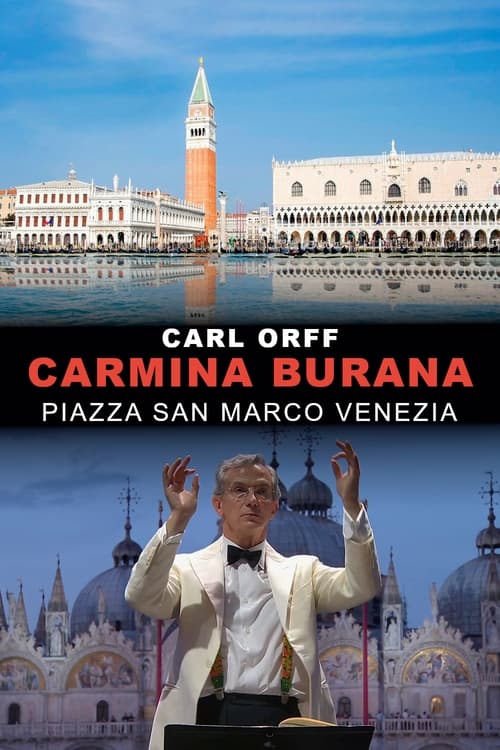
The Choir and Orchestra of the La Fenice Theatre, conducted by Fabio Luisi, take over Piazza San Marco in Venice for a grandiose concert. Facing the basilica, the musicians perform the famous cantata "Carmina burana", twenty-four medieval poems set to music by Carl Orff between 1935 and 1936.
Performed by the Czech Philharmonic Orchestra conducted by J. Bělohlávek. Slavonic Dances are among the most popular works by Antonín Dvořák and Czech Romantic music in general. The first series, originally composed for four-hand piano and later orchestrated for symphony orchestra, is inspired mainly by Czech folk dances. The orchestral version of Slavonic Dances is considered a groundbreaking work, thanks to which Dvořák attracted attention abroad and launched his international career. A television recording of this outstanding performance was made in 2014. The Czech Philharmonic Orchestra is conducted by Jiří Bělohlávek.
A festive event marking the 10th anniversary of the Czech Republic's accession to the European Union, during which the Brno Philharmonic Orchestra will perform a live broadcast of L. van Beethoven's popular Symphony No. 9 in D minor, Op. 125, with Ode to Joy.
In celebration of its 100th anniversary in 1983, the Metropolitan Opera hosts a four-hour performance uniting some of the world's most spellbinding opera singers and conductors. The event includes a ballet from Samson et Dalila and boasts incredible classical performances from Kathleen Battle, Plácido Domingo, Jose Carerras, Leonard Bernstein, Marilyn Horne, Leona Mitchell, Luciano Pavarotti and many more.
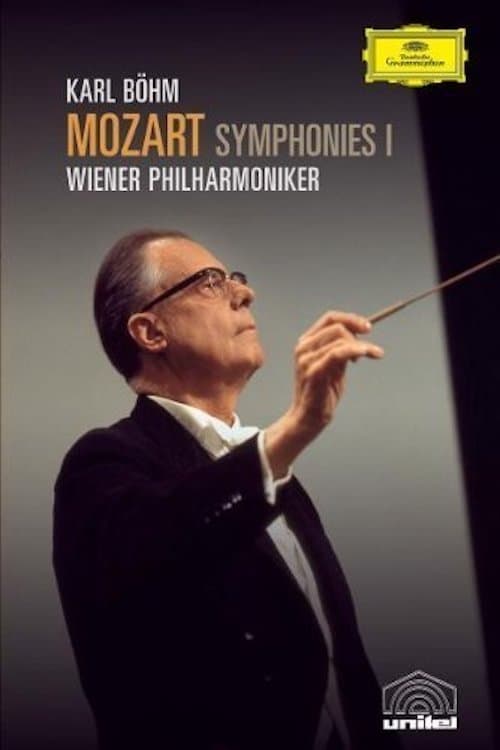
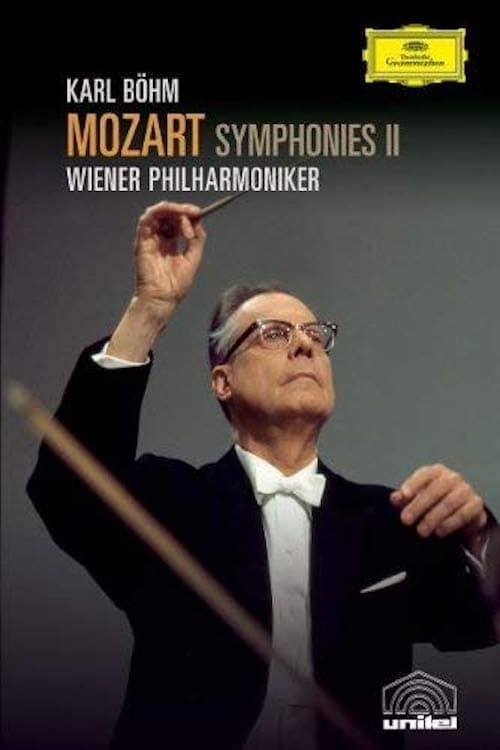
There are only a couple of DVD recordings of Mozart's Symphony No. 40. Fortunately, this one by Karl Bohm, recorded live in Vienna's Musikvereinssaal, is excellent, as are the other Mozart symphonies on this DVD. Since this disc offers three of the big six last symphonies of Mozart, Nos. 35 (Haffner), 40, and 41 (Jupiter), plus two more, it is an outstanding value. Despite the age of the recordings (1973-74), both the sound and the video are quite good.
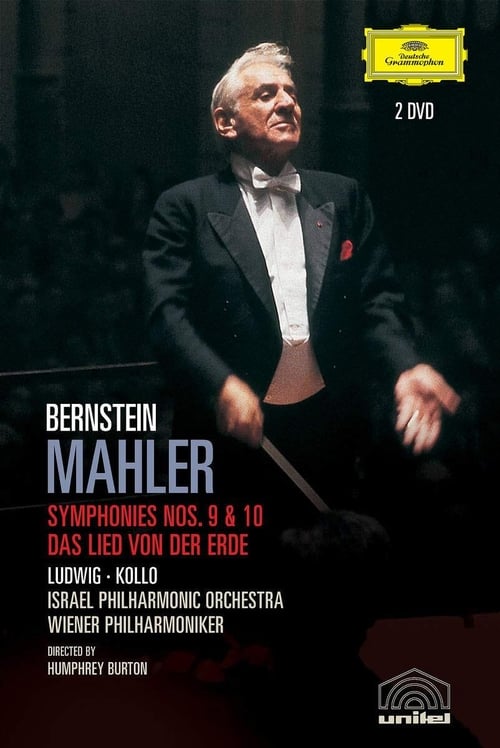
Filmed on tour at Berlin's Philharmonie, this account of the valedictory Ninth Symphony is an intense interpretation, expressing Bernstein's conviction that modern man had at last caught up with the message encoded in Mahler's last completed work. Having made his famous 1966 studio recording of "Das Lied von der Erde" in Vienna, Bernstein re-recorded this in Israel with the same searing subjectivity. René Kollo draws on the voice of a great Wagner tenor, while Christa Ludwig, the greatest exponent of the contralto songs at the time, is unbearably poignant in the final movement's fusion of elation and sadness.
In the 1960s Karl Böhm (1894–1981) had made his mark as interpreter of Mozart with the the Berlin Philharmonic. Yet his recordings with the Vienna Symphony demonstrate a mutual sympathy and deep love for this timeless music. The musicians are razor-sharp in attack, harmony, and release. Böhm's style is minimalist: a firm downbeat, a ruffled hand here and there, a slight sway, no mugging. Occasionally, when quite excited, he gives a little hop but immediately pulls himself on a tight leash.
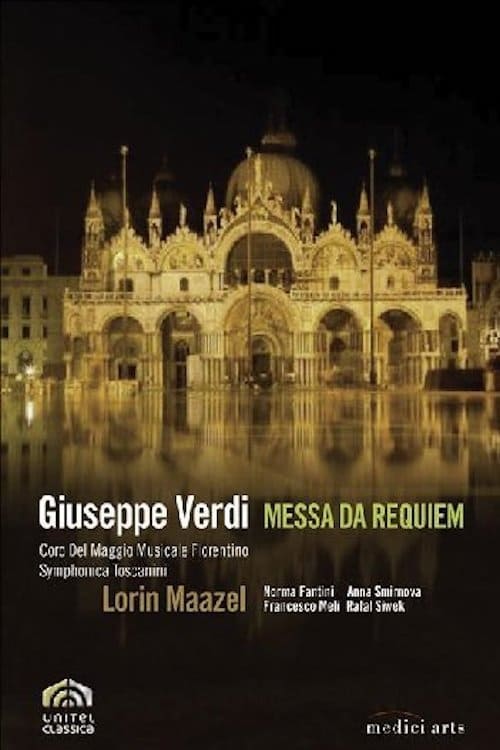
The production itself is quite beautiful: recorded in the Basilica di San Marco in Venice in November 2007, it highlights the cathedral's splendor, the reverent audience, the soloists, orchestra and chorus with near-perfect cinematography. The soundtrack is also acceptable, which may have been quite a task to achieve, given the Basilica's over-reverberant acoustics. Alas, the performance itself does not rise to the occasion. Despite the occasional minor insecurity in ensemble and a visible lack of joy, the Symphonica Toscanini musicians play well, the Coro del Maggio Musicale Fiorentino members sing equally well, and the soloists are more than adequate, almost tangibly trying to excel.
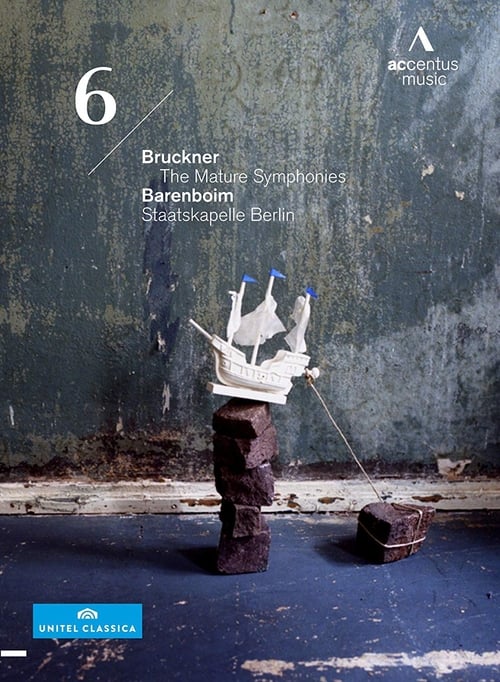
Anton Bruckner’s 6th Symphony was written between 1879 and 1881: a very happy time in his life. Unlike most of Bruckner’s symphonies, the 6th was not revised. Of all his works, this one seems to come from a single source of inspiration. Bruckner himself called it his “boldest” symphony – probably due to its extreme degree of motivic, rhythmic and harmonic originality. This live recording of the seldom-performed 6th Symphony is the next instalment of the acclaimed Bruckner cycle by the Staatskapelle Berlin and Daniel Barenboim. Anton Bruckner Symphony No. 6 in A major (original version) Daniel Barenboim, Conductor Staatskapelle Berlin Recorded live at the Philharmonie Berlin, 22 June 2010
“Clarity was one thing that made this performance a marvel. Another was the flexibility of Barenboim’s speeds…. The flexibility of Barenboim’s tempi meant that Bruckner’s charm – an often overlooked aspect of his genius – shone through, especially in the genial Trio.” (The Telegraph) Bruckner’s 8th is the last symphony completed by the Austrian composer. Many of his contemporaries regarded the symphony as “the pinnacle of 19th century music”. Even today, this monumental work fascinates listeners with its virtuoso orchestral technique, its immensity of sound, and its inexhaustible richness of detail. Symphony No. 8 in C minor (second version 1887-90, Robert Haas Edition) Daniel Barenboim, Conductor Staatskapelle Berlin Recorded live at the Philharmonie Berlin, 26 June 2010
Daniel Barenboim is an expert in exploiting the impact of cyclical performances of composers works: This time he focuses his sharp intellect on all six of Anton Bruckners mature symphonies. Der Tagesspiegel described Barenboim's performance of the works with the Staatskapelle Berlin on six nearly consecutive evenings in June 2010 as a superhuman accomplishment and went on to praise how: His Bruckner is conceived and performed very theatrically, like an opera without words. Bruckners famous Romantic Symphony No. 4 forms the prelude to a spectacular DVD series from Accentus Music and Unitel Classica, exploring Bruckners symphonic cosmos.
Between 1981 and 1984 Leonard Bernstein recorded nearly all of Brahmss orchestral works with the Wiener Philharmoniker to honor the 150th anniversary of the composer's birth in 1983. For the concertos, Bernstein enlisted the services of some of the finest Brahms interpreters of the time: the violoninst Gidon Kremer, the cellist Mischa Maisky and the pianist Krystian Zimerman. Leonard Bernstein, Krystian Zimerman, and the Wiener Philharmoniker, it's very hard to get a better group of musicians for these masterpieces. Mr. Zimerman and Mr. Wolfgang Herzer's piano cello duets in the third movement of Brahms' second is simply tearful.
With nearly 450 years of tradition, the Staatskapelle Berlin is one of the oldest orchestras in the world. Daniel Barenboim has served as its music director since 1992, and in 2000 the orchestra appointed him Chief Conductor for Life. Having already performed important cycles such as Beethoven, Brahms and Schumann together, Daniel Barenboim and the Staatskapelle turned their focus toward Anton Bruckner's last six Symphonies, performed in the Philharmonie Berlin in the course of only one week in June 2010. This music is more serious and more significant than one had thought, the Berliner Zeitung summarized in its review of Daniel Barenboims celebrated Bruckner cycle with the Staatskapelle Berlin. Bruckners unfinished Symphony No. 9 brought to an end, in a poignant manner, the work of one of the greatest symphonic composers of the Classic-Romantic era.
The Süddeutsche Zeitung summed up this highly acclaimed performance of Bruckner's monumental Fifth Symphony by saying: Both Bruckners belief in God, as it majestically wells up out of the chorale of the Fifth, and his deeply tragic world view, collide with one another in Barenboims interpretation. The operatic experience of the conductor was almost tangible, revealing the sheer dramatic instrumental battle between Bruckners God and the Devil between heaven and hell without betraying Bruckners unerring sense of striking proportions. The release of this contrapuntal masterpiece (as Bruckner, not without pride, referred to this work) is part of Daniel Barenboims Bruckner cycle with the renowned Staatskapelle Berlin.
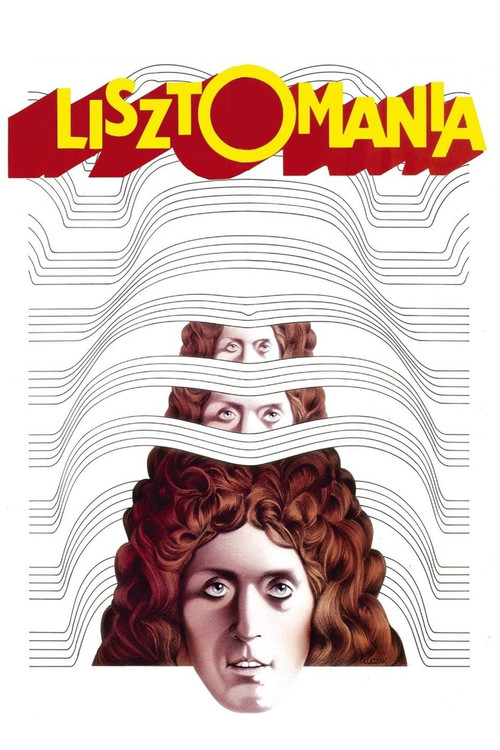
In the 19th century, Romantic composer/pianist Franz Liszt tries to end his hedonistic ways but keeps getting sucked back in by his seductive fellow composer Richard Wagner.
No Trailers found.