No Trailers found.
No Cast found.
Set in the Mayan civilization, when a man's idyllic presence is brutally disrupted by a violent invading force, he is taken on a perilous journey to a world ruled by fear and oppression where a harrowing end awaits him. Through a twist of fate and spurred by the power of his love for his woman and his family he will make a desperate break to return home and to ultimately save his way of life.
Michael Moore's view on how the Bush administration allegedly used the tragic events on 9/11 to push forward its agenda for unjust wars in Afghanistan and Iraq.
This documentary draws on new evidence to reveal that a fire was raging in Titanic's boiler rooms before she left port, that it was kept secret and, it's now believed, that it led to the tragedy
Documentary following a team of technicians in Italy as they reconstruct a number of historic Middle Eastern artifacts that were vandalized at the hands of Islamic State.
West Germany underwent a period of rapid and extraordinary growth after the Second World War with rising wages and living standards. This economic miracle is often credited to Economics Minister Ludwig Erhard and the hard work of ordinary Germans. But on closer inspection, some hard truths and injustices from the Nazi era casts a shadow on this postwar rosy picture.
In the collective imagination, international adoption evokes images of children being saved from a life of destitution in poorer countries by being adopted by families in Europe or America. But the reality that has emerged is one of child trafficking, falsified documents and governments around the world turning a blind eye.
Most of us think of death as something clear-cut, and that medical science has it neatly figured out. This feature documentary explodes such assumptions through its exploration of a phenomenon that blurs life and death to an unprecedented degree. In what Tibetan Buddhists call tukdam, advanced meditators die in a consciously controlled manner. Though dead according to our biomedical standards, they often stay sitting upright in meditation; remarkably, their bodies remain fresh and lifelike, without signs of decay for days, sometimes weeks after clinical death. Following ground-breaking scientific research into tukdam and taking us into intimate death stories of Tibetan meditators, the film juxtaposes scientific and Tibetan perspectives as it tries to unravel the mystery of tukdam.
Louis XIV's ship La Lune was wrecked off Toulon in November 1664. The ship was returning from an expedition to the Barbary Coast with nearly one thousand people on board, simple seamen or nobles of the highest rank. Discovered by a submarine in 1993, the wreck lies in 90 metres of water. In a state of magificent preservation, like some underwater Pompei, she will, starting in 2012, be the subject of an exceptional archeological investigation, bringing together history and robotics, the expertise of archeologists and the passion for the deep.
In the spring of 2010, Julian Assange published classified documents that shed a harsh light on the war crimes committed by the United States in Afghanistan and Iraq.
Since the invention of the automobile, women have distinguished themselves by their daring: the history of women in motor sport.
No overview available.
An unprecedented access to a number of Saudi women in the capital city of Riyadh as they embrace the freedom that comes from being behind the wheel.The Saudi Women’s Driving School is said to be the world's largest driving school, which caters exclusively to women since the ban on female drivers was lifted in 2017.
The story of Hissa Hilal, a Saudi woman who used her reality-television fame to speak against religious extremism.
Twenty years after A Brief History of Time flummoxed the world with its big numbers and black holes, its author, Stephen Hawking, concedes that the "ultimate theory" he'd believed to be imminent - which would conclusively explain the origins of life, the universe and everything - remains frustratingly elusive. Yet despite his failing health and the seeming impossibility of the task, Hawking is still devoted to his work; an extraordinary drive that's captured here in fleeting interview snippets and footage of the scientist sharing a microwave dinner with some fawning PhD students. Though the pop-science tutorials that dapple the first of this two-part biography are winningly perky, Hawking, alas, remains as tricky to fathom as his boggling quantum whatnots
A montage of newscasts tracing the events of the "damned war" and the German invasion of 1940.
Professor Barbenfouillis and five of his colleagues from the Academy of Astronomy travel to the Moon aboard a rocket propelled by a giant cannon. Once on the lunar surface, the bold explorers face the many perils hidden in the caves of the mysterious planet.
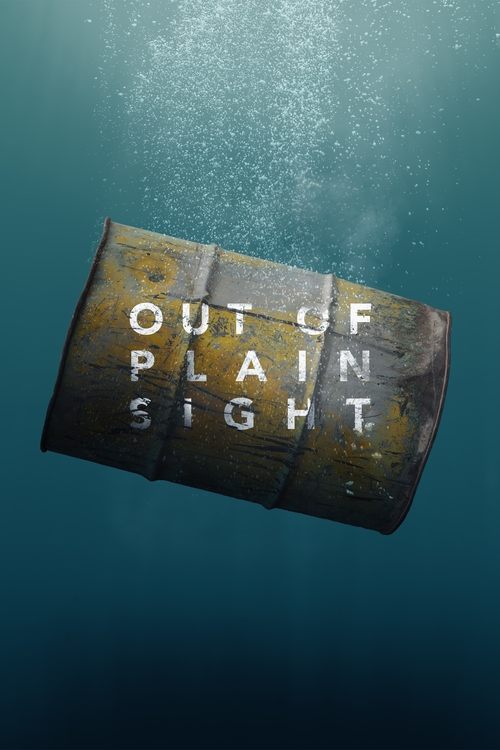
From the Los Angeles Times and Pulitzer Prize-finalist Rosanna Xia, OUT OF PLAIN SIGHT is a cinematic exposé of an environmental disaster lurking just off the coast of Southern California. Not far from Catalina Island, aboard one of the most-advanced research ships in the world, David Valentine discovered a corroded barrel on the seafloor that gave him chills. The full environmental horror sharpens into greater clarity once he calls Xia, who pieces together a shocking revelation: In the years after World War II, as many as half a million barrels of toxic waste had been quietly dumped into the ocean – and the consequences continue to haunt the world today.
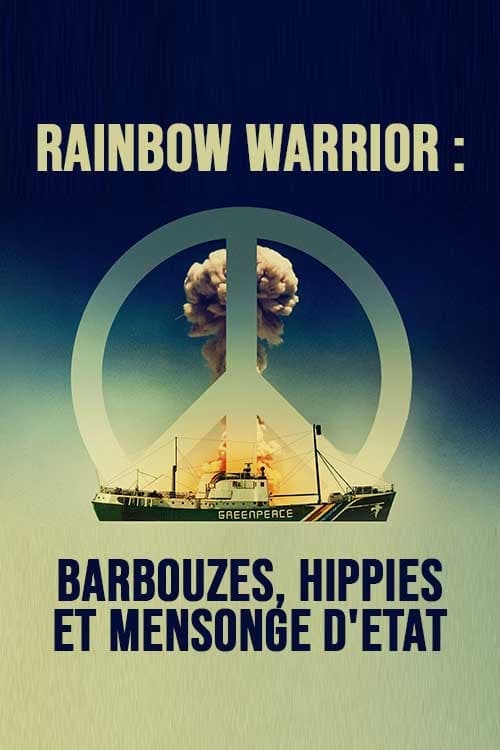
The Rainbow Warrior was a Greenpeace ship that was bombed by operatives of the French government, in New Zealand in 1985, while heading to a protest against nuclear testing, tragically taking the life of photographer Fernando Pereira. Edward McGurn’s enlightening and exciting documentary uncovers a tangled tale of nuclear weapons, geopolitical coverups, and attempts to take action against impending environmental collapse. Was Pereira’s death an accident or part of a larger political plot?