HOW ARE YOU FEELING TODAY?
In an increasingly oppressive modern age, the characters of this film are subject to the alienation and meanness that characterizes today’s days.
Narrator
Sophia
Woman reading the news
Man with a dog
A young couple living in a Connecticut suburb during the mid-1950s struggle to come to terms with their personal problems while trying to raise their two children. Based on a novel by Richard Yates.
No overview available.
A young East German woman leaves her controlling husband/business partner and relocates to a West German city to start anew as an accountant, but he soon catches up with her.
Arrested for an unnamed crime, Josef K. is trapped in a surreal bureaucratic maze where justice is unknowable and guilt is assumed.
Humble and introvert Muharrem lives in a solitary and meager existence of a prayer and sexual abstinence adhering strictly to the most severe Islamic doctrines.His extraordinary devotion attracts the attention of the leader of a rich and powerful Istanbul religious group and he offers him an administrative post as a rent collector for their numerous properties. Muharrem's new job throws him into the modern outside world he has successfully avoided for so long. He soon witnesses conflict attitude toward alcohol consumption and goodwill.He notices that he himself has become proud, domineering and even dishonest.To make matters worse, Muharrem's inner peace is unnerved by the tormenting image of seductive woman who tempts him in his dreams,both night and day.With the balance of his devotion now upset,his fear of God begins to eat away at his senses.
Unemotional, restrained cinematographic poem, situated in a wintry and poor suburb of Tehran. A man is dismissed and his lack of prospects for the future make him decide to seek his happiness abroad. He leaves his wife and child behind and for a long time nothing is heard of him. Then a stranger turns up, a car mechanic looking for a job. The attractive single mother can’t resist his attentions. Very subtly, a struggle ensues that reflects that of a whole generation of young doubting Iranians who may want to leave the country, but hardly know how to start.
Loosely based on the criminal career of Frank Lucas, a gangster from La Grange, North Carolina, who smuggled heroin into the United States on American service planes returning from the Vietnam War, before being detained by a task force led by Newark Detective Richie Roberts.
Take a journey through the ever-changing landscape of artificial intelligence with this doc exploring the challenges and opportunities ahead.
An 80-year-old woman spends her time at a bus station. She’s waiting for the right moment to leave this place forever.
Tímamót, or Changes in English. An upbeat, heartwarming story about Gudjon, Sigurbjorn and Steinthor who lived together for decades along with several other inhabitants in the Tjaldanes Institution, in a peaceful valley close to Reykjavik. When a decision is made to close down the institution, their life takes an unexpected turn and they discover a new side to life and to themselves.
Guido Anselmi, a film director, finds himself creatively barren at the peak of his career. Urged by his doctors to rest, Anselmi heads for a luxurious resort, but a sorry group gathers—his producer, staff, actors, wife, mistress, and relatives—each one begging him to get on with the show. In retreat from their dependency, he fantasizes about past women and dreams of his childhood.
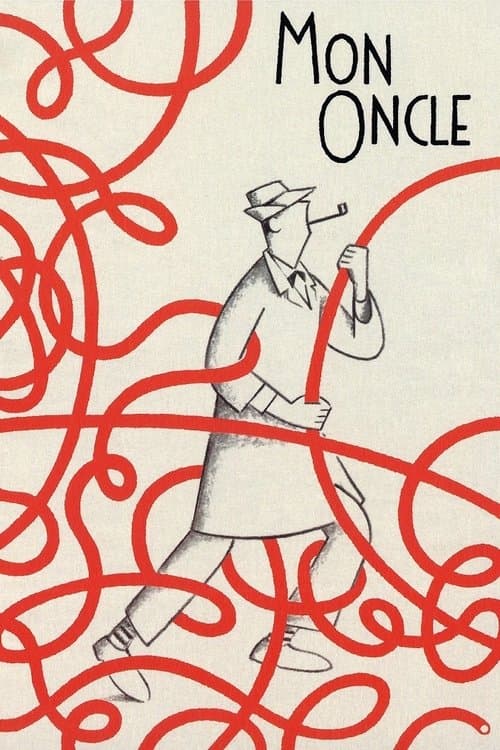
Genial, bumbling Monsieur Hulot loves his top-floor apartment in a grimy corner of the city, and cannot fathom why his sister's family has moved to the suburbs. Their house is an ultra-modern nightmare, which Hulot only visits for the sake of stealing away his rambunctious young nephew. Hulot's sister, however, wants to win him over to her new way of life, and conspires to set him up with a wife and job.
Since nurseries were opened up to the private sector in the early 2000s, early childhood has become a lucrative business for its voracious players. As scandals involving abuse and embezzlement of public funds multiply, we investigate the excesses of deregulation, which has turned babies into cash machines.
In nineteenth-century Łódź, Poland, three friends want to make a lot of money by building and investing in a textile factory. An exceptional portrait of rapid industrial expansion is shown through the eyes of one Polish town.
A documentary about the corrupt health care system in The United States whose main goal is to make profit even if it means losing people’s lives. "The more people you deny health insurance, the more money we make" is the business model for health care providers in America.
A man struggles with memories of his past, including a wife he cannot remember, in a nightmarish world with no sun and run by beings with telekinetic powers who seek the souls of humans.
Just before the launch of artificial moons, a retired couple finds their harbor in the fading darkness. Trying to catch up with the pace of modernity, their daily life traces this forthcoming brightness back to its earthly origins.
When a sudden plague of blindness devastates a city, a small group of the afflicted band together to triumphantly overcome the horrific conditions of their imposed quarantine.
A privileged millennial struggles to be a good member of society. Greta Thunberg is watching and so is an old white man, commenting on her every move. A matter of life and death!
Vignettes of the lives of several residents of a Vienna suburb during a heat wave.
Trailer