No Trailers found.
French Deputy
A group of French soldiers, including the patrician Captain de Boeldieu and the working-class Lieutenant Maréchal, grapple with their own class differences after being captured and held in a World War I German prison camp. When the men are transferred to a high-security fortress, they must concoct a plan to escape beneath the watchful eye of aristocratic German officer von Rauffenstein, who has formed an unexpected bond with de Boeldieu.
No overview available.
1911. Lenin organizes the first Bolshevik party school near Paris, in the small town of Longjumeau. Through a chain of historical parallels and associations, this time is intertwined with the events of the Paris Commune, the October Revolution and the political struggles of the post-revolutionary years.
Edmond Dantès, who was active in the resistance against the Nazis, is accused for being a Nazi collaborator and is imprisoned in the fortress of Sisteron.
Iranian Iradj Azimi directed this French historical drama re-creating events depicted in the famous 1819 painting The Raft of the Medusa by Jean Louis Andre Theodore Gericault (1791-1824). The ill-fated voyage of the frigate Medusa begins when it departs Rochefort for Senegal in 1816. After striking a sandbar off the African coast, 150 civilians row safely to shore, but Captain Chaumareys (Jean Yanne) orders 140 soldiers and sailors onto a raft (minus supplies) and has it cut loose. Only 14 survive from the 140, creating a scandal back in France. Gericault (Laurent Terzieff) later talks to three of the survivors while researching his painting. Work on this film began in 1987, but sets destroyed by Hurricane Hugo caused delays, so the film was not completed until 1990. However, it then remained undistributed until an incident in which writer-director Azimi slashed his wrists in front of French Ministry of Culture officials.
An 18-minute panoramic film showcasing the grandeur, charm and romance of one of Europe’s most enchanting countries.
Published in 1949, The Second Sex became the bible of global feminism. An essential work that passionately advocates for gender equality, women's independence, and the liberation of morals. Today, how does this seminal work continue to resonate in our contemporary world? Conceived as an initiatory journey to the origins of Simone de Beauvoir's thinking, the film The Second Sex: In the Footsteps of Simone de Beauvoir takes us to the United States, to the places that inspired the philosopher and nourished her theories. An American road trip bringing together the worst and the best, predatory capitalism and mad love. A unique reinterpretation in the company of the great thinkers of our century.
They call each other Emmanuel and Vladimir - but despite the informal tone, a fateful negotiation is taking place. During France's presidency of the EU, President Macron takes on the task of negotiating with President Putin in an attempt to prevent an invasion of Ukraine. For the first time, we get to follow the diplomatic game behind the scenes and hear parts of their phone conversations.
A documentary film depicting five intimate portraits of migrants who fled their country of origin to seek refuge in France and find a space of freedom where they can fully experience their sexuality and their sexual identity: Giovanna, woman transgender of Colombian origin, Roman, Russian transgender man, Cate, Ugandan lesbian mother, Yi Chen, young Chinese gay man…
"Race d’Ep!" (which literally translates to "Breed of Faggots") was made by the “father of queer theory,” Guy Hocquenghem, in collaboration with radical queer filmmaker and provocateur Lionel Soukaz. The film traces the history of modern homosexuality through the twentieth century, from early sexology and the nudes of Baron von Gloeden to gay liberation and cruising on the streets of Paris. Influenced by the groundbreaking work of Michel Foucault on the history of sexuality and reflecting the revolutionary queer activism of its day, "Race d’Ep!" is a shockingly frank, sex-filled experimental documentary about gay culture emerging from the shadows.
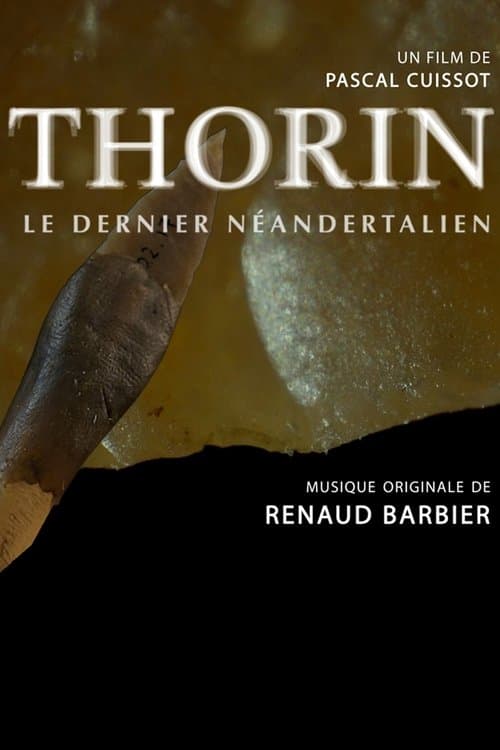
The Mandrin Cave in the Rhône Valley is a fascinating excavation site. Archaeologist Ludovic Slimak discovered fossils and flints here, proving that Neanderthals inhabited the cave for over 80,000 years. The first Neanderthal in France for half a century was also unearthed in the cave: He was given the name Thorin.
After serving as an embassy secretary in London at the end of 1787, a position he didn't exactly enjoy, the poet André Chénier returns to Paris. When the Revolution breaks out, he becomes enthusiastic about it, and never ceases to express his love of liberty and high principles. But he also speaks out against excesses and troublemakers. For her part, the beautiful Aimée de Coigny, who has just divorced the Duc de Fleury, leads a dissolute life. In 1793, the Convention decides to put "the Terror on the agenda". Aimée de Coigny and her new lover, Casimir de Montrond, are arrested. At the Saint-Lazare prison, their life together is preserved. Six months later, Chénier is arrested and imprisoned. Dazzled by the young woman's beauty, the poet dedicates his most beautiful verses to her. But Aimée remains unmoved by his love.
Mehdi Lallaoui's documentary begins where it all ended, in New Caledonia, with images of the ruins of the penal colony where many Commune insurgents were deported, including Louise Michel. The director thus tracks down all the still visible traces of the insurrectional movement, in the South Pacific but especially in Paris, by following Alain Dalotel, author of numerous works on the Commune (and who died on May 29, 2020 in Bagnolet). He also tracks down all the archives, allowing us to understand, with the means of communication and information of the time (and with a voice-over by Bernard Langlois), what contemporaries experienced between March and May 1871: their hopes, their dreams, their fears, their anger.
Grace Dalrymple Elliot is a British aristocrat trapped in Paris during the French Revolution. Determined to maintain her stiff upper lip and pampered life despite the upheaval, Grace continues her friendship with the Duke of Orléans while risking her life and liberty to protect a fugitive.
In barely a century, French peasants have seen their world profoundly turned upside down. While they once made up the vast majority of the country, today they are only a tiny minority and are faced with an immense challenge: to continue to feed France. From the figure of the simple tenant farmer described by Emile Guillaumin at the beginning of the 20th century to the heavy toll paid by peasants during the Great War, from the beginnings of mechanization in the inter-war period to the ambivalent figure of the peasant under the Occupation, From the unbridled race to industrialization in post-war France to the realization that it is now necessary to rethink the agricultural model and invent the agriculture of tomorrow, the film looks back at the long march of French peasants.
A group of people are standing along the platform of a railway station in La Ciotat, waiting for a train. One is seen coming, at some distance, and eventually stops at the platform. Doors of the railway-cars open and attendants help passengers off and on. Popular legend has it that, when this film was shown, the first-night audience fled the café in terror, fearing being run over by the "approaching" train. This legend has since been identified as promotional embellishment, though there is evidence to suggest that people were astounded at the capabilities of the Lumières' cinématographe.