Ireland’s great houses, towers and castles, including Yeats’ Tower House, Bunratty Castle, Butler Castle and Castletown House.
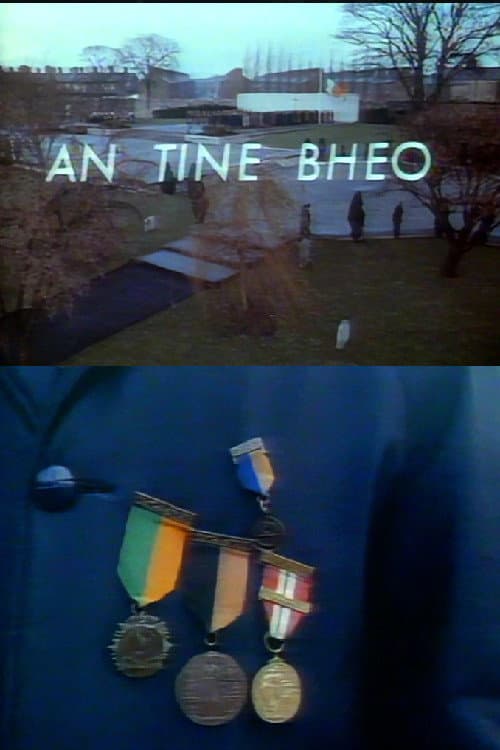
Commemoration of the 1916 Easter Rising in Ireland, commissioned for its 50th anniversary.
A mother determines to see her son faced with autism and depression overcome challenges, along with support from family, the community and teachers.
Exclusive two-disc film documenting the British and Irish Lions tour to South Africa in the summer of 1997. The unprecedented behind-the-scenes access to the team shows the preparations, the training, the fun, the team selection, the 'earthy' language, the bonding, the awesome task of playing and some shocking footage of injuries. Despite securing the series with wins in the first two tests, the Lions remained motivated by the prospect of a 3-0 whitewash, a feat never achieved against the Springboks throughout the century.
Seamus Murphy’s documentary examines Irish writer Pat Ingoldsby’s unique world. Ingoldsby’s poems and candid anecdotes bear witness to a visceral relationship with his beloved Dublin, fellow Dubliners and anything that catches his interest. Personal challenges, a sensitive humanity and a lifetime as a maverick have taught him to harness reality and reach well beyond it to avenge the banal with absurd magic. It heals him as it does us.
In 1919 an art school opened in Germany that would change the world forever. It was called the Bauhaus. A century later, its radical thinking still shapes our lives today. Bauhaus 100 is the story of Walter Gropius, architect and founder of the Bauhaus, and the teachers and students he gathered to form this influential school. Traumatised by his experiences during the Great War, and determined that technology should never again be used for destruction, Gropius decided to reinvent the way art and design were taught. At the Bauhaus, all the disciplines would come together to create the buildings of the future, and define a new way of living in the modern world.
While the overt violence and conflict associated with the Troubles may have subsided since the Good Friday Agreement, it is true that many people in Northern Ireland continue to be affected by the legacy of the conflict. This includes individuals who were directly impacted by the violence, as well as those who continue to struggle with the social, economic, and political consequences of the conflict. While the actual violence and conflict may have ended, the legacy of the Troubles still lingers on in Northern Ireland; many are still struggling to come to terms with what happened and find a way to move forward.
In 1947 Marcel Breuer, a fundamental figure of the Bauhaus, visited Argentina and designed the Parador Ariston, in Mar del Plata. As time goes by, the Ariston will be forgotten. The context in which it was created leads us to discover how Mar del Plata is transformed into the dream city for vacations by Argentine families and the importance of architectural heritage.
The story of famous actor and director Orson Welles is told through his two visits to the Republic of Ireland; first in his youth as a promising young actor and finally in later years as a washed up icon of the silver screen.
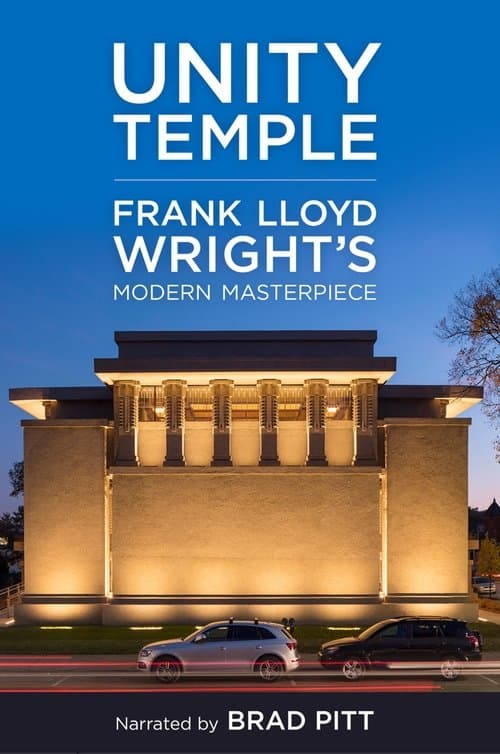
Frank Lloyd Wright’s Modern Masterpiece, Unity Temple is an homage to America’s most renowned architect. The film pulls back the curtain on Wright’s first public commission in the early 1900’s to the painstaking efforts to restore the 100 year old building back to its original beauty. The dedicated team of historians, craftspeople, members of the Unitarian congregation and Unity Temple Restoration Foundation reveal the history of one of Wright’s most innovative buildings that merged his love of architecture with his own spiritual values. The film intersperses the architect’s philosophies with quotes narrated by Brad Pitt.
A photographer explores the seldom noticed architecture in his home town.
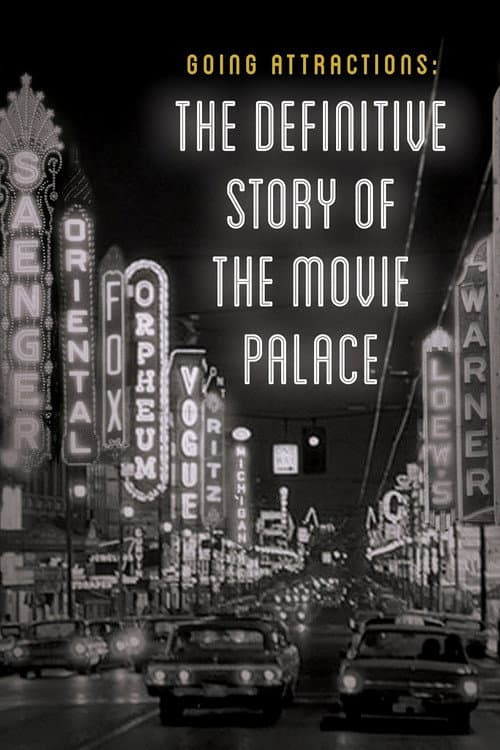
Celebrating the splendor and grandeur of the great cinemas of the United States, built when movies were the acme of entertainment and the stories were larger than life, as were the venues designed to show them. The film also tracks the eventual decline of the palaces, through to today’s current preservation efforts. A tribute to America’s great art form and the great monuments created for audiences to enjoy them in.
The Kabin Studio on the north side of Cork gives teenagers the mic and the confidence to use it. Writing and performing infectious Irish-language rap, they grow from shy beginners into viral sensations—their lyrics pulsing with pride, heritage and the joy of being heard.
Inspired by Patrick Pearse’s poem Mise Éire (“I Am Ireland”), this documentary assembles archival footage from across Europe to trace the rise of Irish nationalism from the 1890s through the 1916 Easter Rising. Directed by George Morrison, the film chronicles key figures and events of the independence movement, with Irish-language narration and a score by Seán Ó Riada.
A collection of Irish legends and sightings, featuring eerie ruins of castles. A moody film, very well narrated by Richard Basehart. Rich in folklore and timeless legends, Ireland possesses a history of supernatural phenomena and in fact, may be the most haunted country in the world. This documentary traces the ghostly paths of the spirits that have roamed the Emerald Isle since the beginning of man. Filmed entirely on locations in Ireland, including the city of Dublin and at many other ghostly places such as Killakee House, St. Michan’s Church, St. Patrick’s Cathedral, Carrickmines, Howth Castle, Malahide Castle, Aillwee Cave (Ballyvaughan), Cliffs of Moher, Kilfenora Cathedral, Glenfesk, Muckross Abbey, Kildemock Church, Castlegregory and many more.
A series of static shots of the buildings of the California Mission system, as they existed in 1907. Because many of the Mission buildings were in poor states of repair in 1907, director Norman Dawn uses glass shots, a technique where paintings are applied to a sheet of glass placed between the camera and the objects being photographed, in order to restore roofs and walls that had been destroyed.
The history of the Teatro Amazonas in Manaus, an opera house located in the middle of the Amazon rainforest, whose construction, between 1884 and 1896, depended on the labor exploitation of the local indigenous populations, provides an insight into the cultural, social and political situation in Brazil.
A unique production, featuring each member of the All-Ireland team, together with former Down footballing legends. Hear the strategies and comments from Manager Pete McGrath, interviews, comments and analysis from former Down stars like Sean O'Neill, Paddy Doherty, James McCartan, Peter Rooney and Liam Austin. Enjoy the revealing interviews from Down's previous All Ireland Winning captains Kevin Mussen - (1960), Paddy Doherty - (1961), Joe Lennon - (1968), Paddy O'Rourke - (1991) as well as current captain DJ. Kane - (1994). A history of Down football to treasure forever. Presented by Kevin Mallon Produced and Directed by Hugh Hardy
A short documentary exploring the ways LGBT couples show affection, and how small interactions like holding hands in public can carry, not only huge personal significance, but also the power to create social change.
No overview available.
A behind-the-scenes look at the 1998 West Cork Chamber Music Festival
No Trailers found.
Narrator