The interactive roadmovie follows the trail of a convicted war criminal with ties to Switzerland. On a journey through contemporary Rwanda, the viewer decides how deeply he wants to immerse himself in the story.
Trailer
No Cast found.
Follow comedian Ellen DeGeneres as she fulfills her dream of protecting Fossey’s legacy by building the The Ellen DeGeneres Campus of the Dian Fossey Gorilla Fund in Rwanda.
The story of black and mixed race people in Nazi Germany who were sterilised, experimented upon, tortured and exterminated in the Nazi concentration camps. It also explores the history of German racism and examines the treatment of Black prisoners-of-war. The film uses interviews with survivors and their families as well as archival material to document the Black German Holocaust experience.
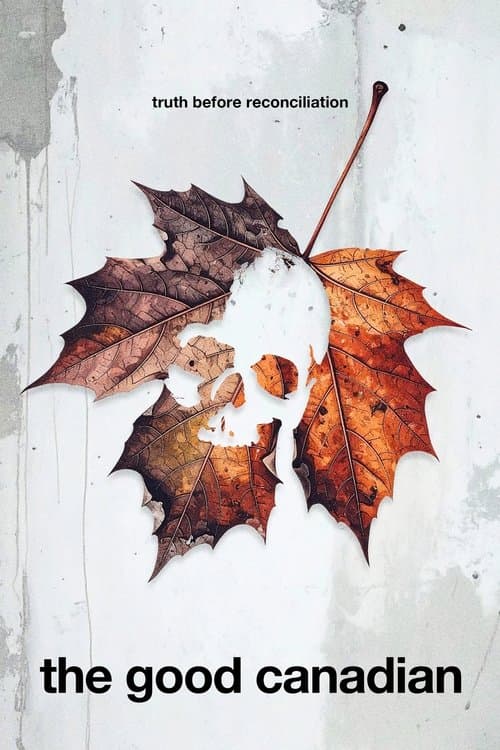
The world knows the image of the good Canadian. But what if there was a dark secret behind a national identity? THE GOOD CANADIAN exposes the truth behind the idea of a True North strong and free. In this unflinching and eye-opening documentary, directors Leena Minifie and David Paperny move us through the corridors of systemic inequity, from the Indian Act to residential schools, to modern-day family separation. Fusing shocking footage with detailed interviews with experts, advocates, whistleblowers and politicians, THE GOOD CANADIAN challenges national myth-making, while offering Canadians the chance to forge a new identity from the truth.
Severed tells the story of Mohamad Saleh, an 18-year-old from Gaza who has lived through five major assaults on the Gaza Strip. In those attacks, he lost his home, family members, his best friends, and, at the age of 12, his leg. Now living in exile in Egypt, Mohamad struggles to piece together the shattered fragments of his life. Through his eyes, the pain and trauma endured by thousands in Gaza are laid bare, alongside their remarkable strength, resilience, and determination to live.
After her gender identity was denied in her homeland, Lee Li, a transgender asylum seeker, was forced to leave her country, family, and language to embark on a journey toward belonging, freedom, and self-empowerment.
September 2016: Stacey Dooley embeds herself on the frontline with the extraordinary all-female Yazidi battalion, who are fuelled to take revenge against the so-called Islamic State. As the battle to take Mosul from ISIS advances in Northern Iraq, in this extraordinary film for BBC Three, Stacey finds these young women's lives have been transformed by a desire to avenge their loved ones who were murdered by Isis.
This two-part documentary reveals how al-Qaeda used Bosnia as a training-ground, money-laundering centre and forward operating base during the brutal civil war of 1992-95. The veterans went on to attack New York, Washington DC, London, Madrid, Mombasa and Bali. The story also reveals how the people of Srebrenica were betrayed by the Sarajevo government in advance of the massacres of July 1995.
August 29, 1979, Talavera Bruce Penal Institute, Bangu, Rio de Janeiro. After serving eight years in prison, Inês Etienne Romeu, the only survivor of the "House of Death" in Petrópolis and the first political prisoner sentenced to life in prison in Brazil, left prison benefiting from Amnesty. Norma Bengell filmed this moment: from the prison door to her home with her family, Inês was welcomed by family, friends and members of the Brazilian Amnesty Committee, in what marked the first act of the historic denunciation that Inês would carry out against her tormentors and the Military Regime.
Montage film by Aymeric Caron, broadcast at the French National Assembly on May 29, 2024. “Is it a dream or a reality? » demands a little girl stunned by her injuries. It is a nightmare, without a doubt, and nothing can justify it, neither the crimes of October 7 nor the detention of Israeli hostages by Hamas. Condemning all the crimes of October 7, before and after, condemning anti-Semitism and all forms of racism is common sense. However, it seems that this needs to be clarified. Everyone present normally wishes that the surviving hostages can one day be reunited with their families and that the massacre in Gaza stops immediately. But to follow through with the process is to see things face to face, to see what has been happening in Gaza since October 7, what the Israeli army is doing, what the television channels are not showing.
Peter LeDonne and Steve Kalafer chronicle the extraordinary life of Immaculée Ilibagiza, a young African woman who escaped genocide in Rwanda and ultimately found refuge in the United States. Seeking shelter with an Episcopalian minister, Immaculée hid from her attackers inside a bathroom for three long months but stayed centered through prayer and faith.
Obama: All Access offers a unique, behind-the-scenes look at the life and career of President Barack Obama.
My mother always refused to speak about her childhood during the Cambodian genocide. Upset by her silence, my brother and I decide to follow Antoine, a grandson of Armenian genocide survivors, photographing the ghosts of his ancestors in the Middle East.
An Indonesian man with a communist background named Ramli was brutally murdered when the "Communist" purge occurred in 1965. His remaining family members lived in fear and silence until the making of this documentary. Adi, a brother of his, decided to revisit the horrific incident and visited the men who were responsible for the killings and one survivor of the purge. These meetings uncovered sadistic details of the murders and exposed raw emotions and reactions of the killers' family members about what happened in the past - much to Adi's disappointment.
The Holocaust began with the indiscriminate mass shootings by the Einsatzgruppen in the bloodlands of Eastern Europe and was perfected in the gas chambers at Auschwitz. “Bullets And Blueberries” explores the motives, methods and madness of the perpetrators, using never-before-seen images captured by the killers themselves — images that fully capture the banality of evil.
Mountain Gorilla takes us to a remote range of volcanic mountains in Africa, described by those who have been there as ""one of the most beautiful places in the world"", and home to the few hundred remaining mountain gorillas. In spending a day with a gorilla family in the mountain forest, audiences will be captivated by these intelligent and curious animals, as they eat, sleep, play and interact with each other. Although gorillas have been much-maligned in our popular culture, viewers will finally ""meet the legend"" face to face, and learn about their uncertain future.
A documentary chronicling the adolescent years of Elie Wiesel and the history of his sufferings. Eliezer was fifteen when Fascism brutally altered his life forever. Fifty years later, he returns to Sighetu Marmatiei, the town where he was born, to walk the painful road of remembrance - but is it possible to speak of the unspeakable? Or does Auschwitz lie beyond the capacity of any human language - the place where words and stories run out?
More than 15 years after leaving the country, Eugène Murangwa, the former goalkeeper of the most popular club in Rwanda and national team, returns to his native land to pass on the values of a sport which saved him in 1994 to the young people of an association that he created with former football players. Illustrated with previously unseen archives, the film throws a new light on the history of Rwanda through football, a sport which served the “civilizing” mission of the colonizer, allowed the Hutu Power to mobilize the youth and helped the reconstruction of the country after the genocide.
Between 1904 and 1908, when Namibia was still called German South West Africa and a German colony, up to 60,000 Ovaherero and 10,000 Nama died at the hands of German colonialists. The crimes of the German colonial rulers went down in history as the first genocide of the 20th century. The Afro-German presenter and influencer Aminata Belli travels to the African country to investigate the extent to which the legacy of the German colonial era affects the present day of Namibian society. She pays particular attention to the involvement of the Protestant Church in the subjugation of the indigenous people and the sense of guilt of the descendants of the German settlers as well as the Germans themselves. To do this, the fashion journalist interviews various people on site and pretends to be interested in the following questions: Were the missionaries of the time guilty? How does a country heal when horrific things have happened there? And is reconciliation possible?
From 1968 to 1972, photographer and filmmaker Bob Campbell documented the activities of Dian Fossey as she developed a cross-species bond with Rwandan mountain gorillas. Campbell shot 70,000 feet of film, but only a fraction of his material was edited into the lecture presentation that preceded Fossey's Gorillas in the Mist. This program compiles highlights from the previously unreleased footage, offering an unforgettable glimpse into the gorilla community and Fossey's relationship with it. Her methods may not entirely jibe with those of modern conservationists, but there is no denying the profound impact of her work on current research and eco-activism.
A feature-length documentary film by Carol Mansour and Muna Khalidi. After 43 horrific days working round the clock under constant bombardment in the emergency rooms of Gaza’s Al Shifa and Al Ahli hospitals, British-Palestinian reconstructive surgeon, Dr. Ghassan Abu Sittah, emerged to find himself as a face of Palestinian resistance.