No Trailers found.
Narrator
Pauline, a plucky Super Ager from Erie, Pennsylvania lives her 102nd and 103rd years on camera, revealing the power that family, faith, purpose, a sense of humor and some good genetics play in a long, well-lived life. An intimate portrayal of grit and resilience emerges with a needed acknowledgment of the often overlooked role of women in America's "Greatest Generation."
Filmmaker Herbert Alfonso and musician Glenn de Randamie travel to Ghana to do some research on polyrhythm and the West-African spirituality. However, their trip to The Motherland makes them realize that home is more than the place where they grew up. Years later, they recollect their faded memories and try to find the right words to describe their intense experience. What exactly made them feel at home and lost at the same time? What does being home actually mean for a black individual from Europe while visiting Africa? Only abstractions seem to persevere as this colourful and musically-charged collage serves to show how a life-changing experience can leave us with nothing but fragments of a truth that has yet to be discovered.
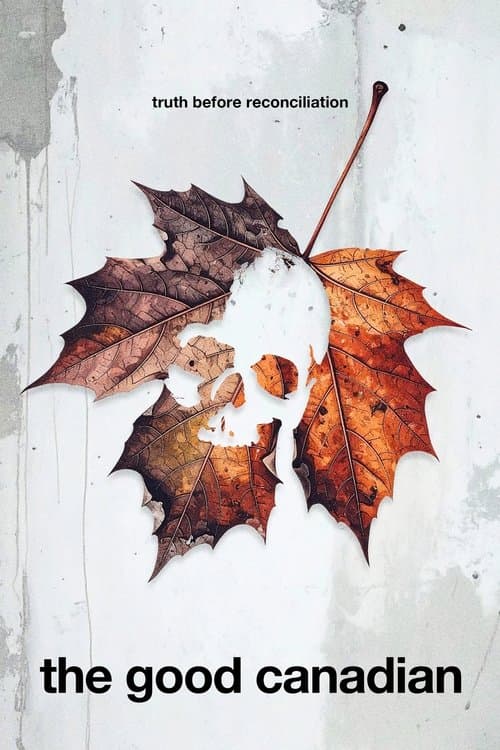
The world knows the image of the good Canadian. But what if there was a dark secret behind a national identity? THE GOOD CANADIAN exposes the truth behind the idea of a True North strong and free. In this unflinching and eye-opening documentary, directors Leena Minifie and David Paperny move us through the corridors of systemic inequity, from the Indian Act to residential schools, to modern-day family separation. Fusing shocking footage with detailed interviews with experts, advocates, whistleblowers and politicians, THE GOOD CANADIAN challenges national myth-making, while offering Canadians the chance to forge a new identity from the truth.
No overview available.
“Don’t end up alone like I did.” This plea expressed by her grandmother before passing, haunts Tatiana, a single, 40-year-old documentary filmmaker. Filled with questions about what it means to “not end up alone,” Tatiana explores her grandma Teresa’s life: an imposing woman who owned an iconic movie theater, divorced three times and challenged the Dominican social norms of her era. The filmmaker embarks on a journey through family archives, old films and hundreds of letters, constructing —or trying to deconstruct— a story about love, expectations and solitude.
Emilie Busquant, a woman with an exceptional destiny, was born on March 3, 1901, in Neuves-Maisons, Lorraine. In 1923, she moved to Paris to find work and met Messali Hadj, who had also come seeking employment. A beautiful love story began; she fell in love with both a man and a cause: the independence of Algeria. Together, in 1926, they founded the first Algerian independence party, the North African Star (Étoile Nord-Africaine). She would support the Algerian people's struggle throughout her life.
On the anniversary of their mother's death, brothers Enzo and Franco find a box with many old photographs. As one of the brothers is blind, the other will tell him what is in the photographs.
A Wildlife Safari through Africa.
As beautiful and sleek as it is deadly, 52 Blocks merits special conservation efforts as the United States' only existing native martial culture, as it is indeed, the jazz of the martial arts world. Across the African diaspora, there are manifestations of African-derived warrior-dances, capoeira in brazil, mani in Cuba, ladja in Martinique, pinge in Haiti- yet the US offshoot has remained esoteric, because it was suppressed throughout slavery, Reconstruction and Jim Crow and then obscured in the criminal justice system. The history, interviews and training of the martial arts style that created Breakdance and boxing greats like Mike Tyson.
Over a dozen students at this school in Quebec were radicalised. To tackle the issue, a pilot project was launched to heal divides within the student body. It's a hybrid cultural model, made up of the many cultures of its students.
A synaesthetic portrait made between French Polynesia and Brittany, Color-blind follows the restless ghost of Gauguin in excavating the colonial legacy of a post-postcolonial present.
"I, Candy" deconstructs a drawing Candy Kugel made when she was six years old. It explores her life, touching on family history, current events and societal norms of the time. In the process, she confronts anti-Semitism, channels political activism, and navigates life choices through luck and determination (and a bit of voodoo)!
The rock-wild youth of the 1960s during the apparitions of their idols.
The incredible house of Pierre Loti (1850-1923) in Rochefort will reopen to the public in June 2025. This is an opportunity to look back on the romantic life of one of the most widely read and translated authors of his time. The writer-officer, who joined the navy at the age of 17, traveled around the world as his assignments took him. Through his literary work, he built a sensitive memory of the diversity of cultures at the turn of the 20th century, questioning the major geopolitical upheavals of his time. The film draws heavily on Loti's own words, combined with a collection of rare archives from the period.
A brave boy named Temba ventures to find food and water for his drought-striken village. But when he is given a set of magical bones, he uses them to gain riches for himself instead of sharing with his friends.
In 2011, as tens of thousands of migrants, Loss, and Madess Moussa arrived in Europe via Turkey. Required by EU law to remain in Greece, they only want one thing : to leave. Therefore earn the money needed to start is an obsession and all means are good. The film "The Adventure" follows the lives of these three Ivorians to Athens - their sense of enclosure, strategies to find money, failover illegally, attempts to start - and explores what is at stake, individually and collectively during migration: relations to other migrant communities, friendship, betrayal, solidarity, mafias and violence.
In all of his existences, KOBE KOTORO embarks on an everlasting odyssey through the home of his mind. A transformative journey in hopes to find understanding, identity & reflection. And if nothing else; the freedom to try again.
THE ARYANS is Mo Asumang's personal journey into the madness of racism during which she meets German neo-Nazis, the US leading racist, the notorious Tom Metzger and Ku Klux Klan members in the alarming twilight of the Midwest. In The ARYANS Mo questions the completely wrong interpretation of "Aryanism" - a phenomenon of the tall, blond and blue-eyed master race.
yaya/ayat explores identities, being lost in translation and distance. But at its core it's about the filmmaker longing for a relationship with her geographically distant grandma and her journey to Greece to find her. This is an experimental documentary about how being a part of any diaspora shapes a person's identity.