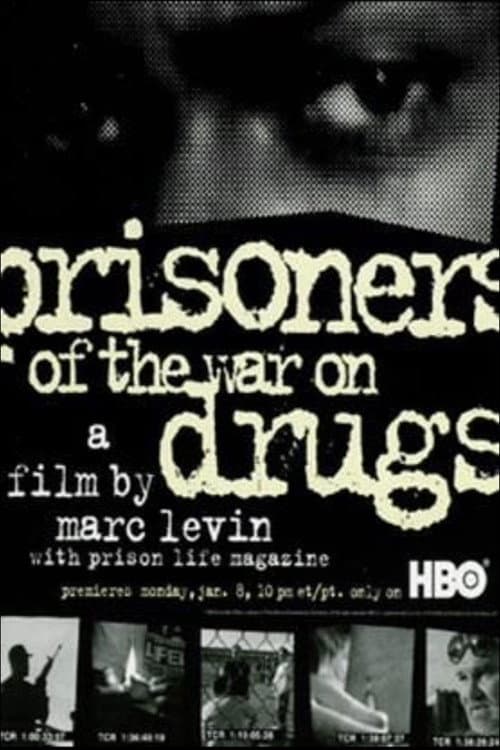
Ten easy steps show you how to make money from drugs, featuring a series of interviews with drug dealers, prison employees, and lobbyists arguing for tougher drug laws.
Trailer
This live performance includes a 10 song concert in Amsterdam, plus 4 exclusive uncut videos. Extras include tour of The Red Light District, interview, photo gallery, weblinks to bonus online content, and bonus video content.
Marijuana is the most controversial drug of the 20th Century. Smoked by generations to little discernible ill effect, it continues to be reviled by many governments on Earth. In this Genie Award-winning documentary veteran Canadian director Ron Mann and narrator Woody Harrelson mix humour and historical footage together to recount how the United States has demonized a relatively harmless drug.
Shot over the course of 18 months in New York City's Lower East Side, METHADONIA sheds light on the inherent flaws of legal methadone treatments for heroin addiction by profiling eight addicts, in various stages of recovery and relapse, who attend the New York Center for Addiction Treatment Services (NYCATS).
A fast-paced suspense thriller and feature documentary about the sudden rise of ecstasy in Europe to epidemic levels after the disintegration of the Soviet Union.
No overview available.
Determined to find out the true effects of marijuana on the human body, stand-up comedian and former Stoner of the Year Doug Benson documents his experience avoiding pot for 30 days and then consuming massive amounts of the drug for 30 days. More than just an amusing story of one man's quest to get superhigh, this documentary also examines the hotly contested debate over medical marijuana use.
A documentary examining the use of marijuana by young people in the late 1960s and early 1970s. Included are interviews with people who regularly use marijuana and testify to its beneficial effects as an aphrodisiac and scenes of nude encounter groups, instructions for making marijuana brownies, soldiers in Vietnam smoking marijuana, etc.
In the 1980s, ruthless Colombian cocaine barons invaded Miami with a brand of violence unseen in this country since Prohibition-era Chicago - and it put the city on the map. "Cocaine Cowboys" is the true story of how Miami became the drug, murder and cash capital of the United States, told by the people who made it all happen.
An intimate look at the Woodstock Music & Art Festival held in Bethel, NY in 1969, from preparation through cleanup, with historic access to insiders, blistering concert footage, and portraits of the concertgoers; negative and positive aspects are shown, from drug use by performers to naked fans sliding in the mud, from the collapse of the fences by the unexpected hordes to the surreal arrival of National Guard helicopters with food and medical assistance for the impromptu city of 500,000.
The Goose Lake International Music Festival held August 7–9, 1970 in Leoni Township, Michigan, "was one of the largest music events of its era", and featured many of the top rock music bands of the period. Songs performed include: Savage Grace - All Along The Watchtower, John Sebastian - Darling Be Home Soon, Harmonica Solo - Teegarden & Van Winkle, Ten Years After - Sweet Little Sixteen, The Stooges - 1970, Mountain - Ain't Got A Dime Jam, Mississippi Queen.
From its beginning during the Reagan years through current times, the War on Drugs has left many victims stranded in the prison system. PRISONERS OF THE WAR ON DRUGS reveals life behind bars in the nation’s prisons. Each prisoner has his or her own story, but for most, the story is predictably similar; they have been criminalized for drugs or drug related offenses, locked up with easy access to substances, and given little opportunity for rehabilitation. This film provides an inside look at the prison system, its prisoners and a war on drugs we do not seem to be winning.
The Nightcrawlers provides unprecedented access to the the Manila Nightcrawlers as they look to expose the true cost of Filipino President Duterte’s violent war on drugs.
The personal and social tragedy of drug addiction with its evil accompaniment, drug traffic. Over the side of the silent liner in the darkness slips the package of smuggled narcotics, introducing us to the complex problem which involves all races and classes of man. We see many aspects of addiction - the addict preparing an injection, a group waiting tensely for their dope peddler; agents preparing and adulterating the illegal product; the police catching a pusher red-handed. International and national authorities are working from two angles - suppression of the illicit traffic; and where possible, rehabilitation of the addict.
Gangstresses, a documentary by Harry Davis, tells the story of violence, poverty, and survival in the streets from a female perspective. Over a two-year period, Davis interviews female hustlers, drug dealers, rappers, porn stars, prostitutes, mothers, and daughters. Among them are Champagne, a well-known African American porn star who has a small child; Mama Mayhem, a street hustler; Uneek, a rapper from the Bronx; and Vanessa Del Rio, a famous porn actress. Musicians Lil' Kim, Mary J. Blige, Ice T, and Tupac Shakur also share personal stories of survival. The documentary conducts follow-up research on the women's complicated lives, offering glimpses of both tragic reality and hopeful recovery.
As police and DEA agents battle sophisticated cartels, rural, economically-disadvantaged users and dealers–whose addiction to ICE and lack of job opportunities have landed them in an endless cycle of poverty and incarceration–are caught in the middle.
Actor Val Kilmer narrates this powerful film exploring the methamphetamine epidemic that's ravaged blue-collar America. Putting a human face on the problem, filmmaker Justin Hunt reveals the damage being done by this rural drug of choice, as well as the steps being taken by communities across the nation to wipe out the scourge. From Wyoming to New Mexico, Montana and Oregon, American Meth paints a picture of both devastation and hope.
Since the 1970s, Switzerland has been characterized by a sometimes controversial, sometimes innovative drug policy that has become a model for other countries around the world. Using archive footage and interviews with contemporary witnesses - politicians, social workers and former drug addicts - the film reconstructs key moments in this turbulent chapter of national politics.
Narrator (voice)
Self