logologo
MovieVerse© 2024
Privacy PolicyTerms of ServiceContact Us
Made with ❤️ by Thathsara
movie poster
Uncovering Our Earliest Ancestor: The Link
Sign in to create your own watchlist

Uncovering Our Earliest Ancestor: The Link

Apr 26, 2009
0h 59m
★ 7.1

Overview

Explores the story behind the discovery of an early primate fossil, Darwinius masillae, nicknamed Ida, in a shale quarry in Germany. The fossil is believed to be around 47 million years old, and is extraordinarily well-preserved. Originally unearthed in 1983, Ida lay in the hands of a private collector for 20 years before it was shown to a Norwegian paleontologist, Dr Jørn Hurum. Realising that Ida could turn out to be a significant missing link between modern primates, lemurs and lower mammals, he persuaded the Natural History Museum in Oslo to purchase the fossil and assembled an international team of experts to study it. Their findings were announced in a press conference and the online publication of a scientific paper on 19 May 2009.

Genres

Documentary

Production Companies

Atlantic Productions
BBC

Cast

David Attenborough

Self - Presenter / Narrator

David Attenborough

You may also like

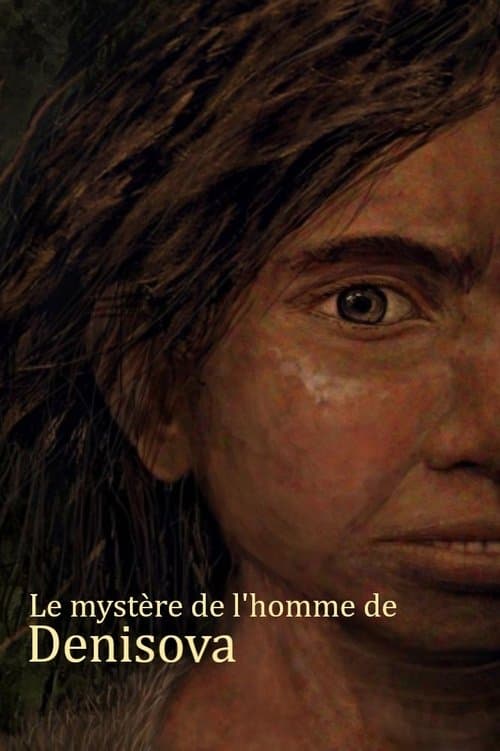
Le mystère de l'homme de Denisova
8.5

Le mystère de l'homme de Denisova

Jun 23, 2022

No overview available.

Homo Spatius
6.4

Homo Spatius

Sep 25, 2018

Can Homo sapiens evolve into Homo spatius? For over 50 years now, we have been testing our human nature in our effort to conquer outer space, and still 30 years away from a possible human exploration of Mars, a question remains: Can our body take such travels? Will it ever adapt? Combining human adventure and the exploration of the human body, this film offers unique insights into the physical and psychological effects of space travel on the Astronauts and measures the impact on medical sciences.

Pablo From Neanderthal
5.0

Pablo From Neanderthal

Aug 31, 2022

What would have happened if the Neanderthals had prevailed over Homo Sapiens? How would our species have evolved? How does art relate to evolution, and why in the world does evolution behave like a bricoleur? Last of all, just what does Marcel Duchamp have to do with all of this? This film is neither a documentary nor a portrait of the artist Pable Echaurren; it’s a kaleidoscopic meditation on our past, present and future.

Another World
7.2

Another World

Mar 15, 2014

A feature documentary about the journey of mankind to discover our true force and who we truly are. It is a quest through science and consciousness, individual and planetary, exploring our relationships with ourselves, the world around us and the universe as a whole.

Dawn of Humanity
7.5

Dawn of Humanity

Sep 10, 2015

Nova and National Geographic present exclusive access to an astounding discovery of ancient fossil human ancestors.

Human By Chance?
0.0

Human By Chance?

Jan 1, 2020

If we compare ourselves with our genetically closest living relatives, the chimpanzees, we have few physical advantages. We are far weaker, cannot move nearly as fast, and do not have the same climbing capabilities. Instead, humans excel in areas such as architecture, religion, science, language, writing, art, culture, and ideas. These achievements are due to our larger brain that contain billions of neurons. It was the rapid growth of our brain, originating about 2 million years ago, that allowed us to be the predominant species of the world. What caused this rapid growth of our cerebral cortex? Researchers worldwide have asked this question for many years, but now there finally seems to be an answer.

Decoding Neanderthals
8.0

Decoding Neanderthals

Jan 9, 2013

Over 60,000 years ago, the first modern humans left their African homeland and entered Europe, then a bleak and inhospitable continent in the grip of the Ice Age. But when they arrived, they were not alone: the stocky, powerfully built Neanderthals had already been living there for hundreds of thousands of years. So what happened when the first modern humans encountered the Neanderthals? Did they make love or war?

Ice Age Death Trap
9.0

Ice Age Death Trap

Feb 1, 2012

In a race against developers in the Rocky Mountains, paleontologists uncover a unique fossil site packed with astonishingly well-preserved bones of mammoths, mastodons, and other giant extinct beasts. The discovery opens a highly focused window on the vanished world of the Ice Age in North America.

La teoría fantástica (o cómo se creó el mito de la evolución)
2.0

La teoría fantástica (o cómo se creó el mito de la evolución)

Jul 20, 2017

No overview available.

Dinosaurs on Ice
0.0

Dinosaurs on Ice

Jul 22, 2008

Deep inside the arctic, scientists are experimenting with extreme palaeontology methods to unlock the secrets of polar dinosaurs, and perhaps the key to our own survival on Earth. On Alaska's north slope there are dinosaur bones, lots of them. But they're trapped in an icy tomb - an impenetrable wall of permafrost. Dinosaurs on Ice follows the journey of two scientists, Dr Tom Rich and Dr Tony Fiorillo, who undertake separate expeditions to the Colville River in Alaska's far north to uncover the dinosaurs' bones and break the ice on a prehistoric world that until now has been unreachable. But the task is not easy. The weather is extreme, the location remote.

No Image
0.0

The Age of Transitions

Jan 1, 2009

The cutting edge group known as transhumanists see a beautiful future brought about by artificial intelligence, life extension, and cybernetics. What one must realize before getting carried away with such utopian dreams is that transhumanism was born out of the elitist pseudo-science eugenics. This documentary provides vital information on the history of eugenics and its new cutting edge transformation.

The Bones
8.0

The Bones

Mar 18, 2024

Following the journey of fossils from their discovery in remote corners of the earth to laboratories, museums, auction houses and collectors’ living rooms, the film weaves together interlocking stories of eccentric characters caught between the demands of commerce and the basic human drive to unlock the most profound mysteries of life. THE BONES takes us deep into the Gobi, Sahara, and North American badlands, and through laboratories, museums, high-end auction houses, and grungy hotel rooms at the Tucson gem show. Wrapped in elusive questions about the origins of life on earth, and its potential future demise, THE BONES unearths the deep passions at the heart of the dinosaur world.

Intelligence artificielle - Quand les émotions s'en mêlent
7.5

Intelligence artificielle - Quand les émotions s'en mêlent

Nov 19, 2021

With the rapid advancements in artificial intelligence, the line between humans and machines continues to blur, and everything is evolving at an astonishing pace as this technology offers tantalizing promises. However, some researchers, including 2024 Nobel Prize in Physics laureate Geoffrey Hinton, warn about its exponential power. A deep dive into the dizzying complexities of AI.

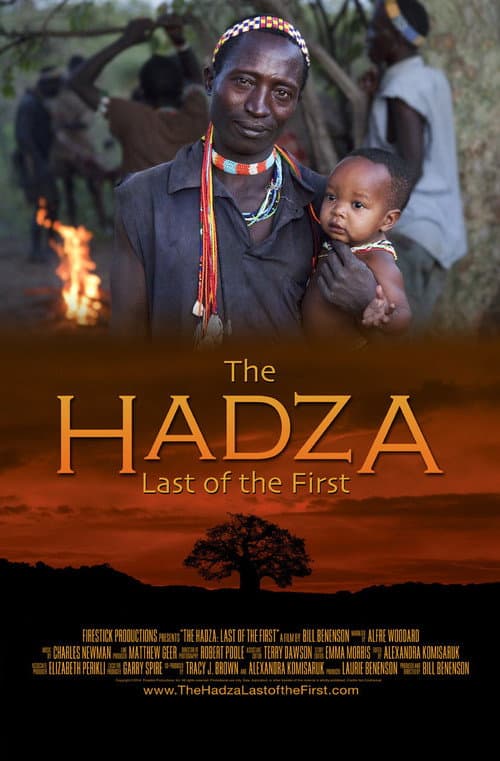
The Hadza:  Last of the First
0.0

The Hadza: Last of the First

Oct 31, 2014

A look at human origins in the very place of our origins, Africa's Rift Valley

Charles Darwin and the Tree of Life
7.7

Charles Darwin and the Tree of Life

Feb 1, 2009

Darwin's great insight – that life has evolved over millions of years by natural selection – has been the cornerstone of all David Attenborough’s natural history series. In this documentary, he takes us on a deeply personal journey which reflects his own life and the way he came to understand Darwin’s theory.

Raising The Allosaur
0.0

Raising The Allosaur

Oct 25, 2003

In May 2002 a group of people went looking for dinosaur and here is what they found!

Out Of Europe
8.0

Out Of Europe

Feb 8, 2020

Looking at whether the history of early human evolution should be rewritten. For decades, most experts have been convinced that Africa is the cradle of mankind and many fossil finds from Kenya, Ethiopia, South Africa and Chad seemed to prove it.

When Whales Could Walk
0.0

When Whales Could Walk

Jan 31, 2024

In Egypt's Sahara Desert, massive skeletons with strange skulls and gigantic teeth jut out from the sandy ground. This fossil graveyard, millions of years old, is known as the "Valley of the Whales." Now, paleontologists have unearthed a whole new species of ancient whale dating to 43 million years ago, and this predator wasn't just able to swim – it also had four legs and could walk. Follow scientists as they search for new clues to the winding evolutionary path of mammals that moved from the land into the sea to become the largest animals on Earth.

Science Breakthroughs: Homo Naledi
0.0

Science Breakthroughs: Homo Naledi

Dec 25, 2017

Science Breakthroughs: Homo Naledi Discovered in 2013, new and puzzling finding of small-skulled fossils of Homo Naledi has scientists trying to understand whether Homo Sapiens lived at the same time as Homo Naledi, and how Homo Naledi communities may have lived.

Your Inner Fish
8.0

Your Inner Fish

Apr 9, 2014

How did your body become the complicated, quirky, amazing machine it is today? Anatomist Neil Shubin uncovers the answers in this 3-part science series that looks at human evolution. Using fossils, embryos and genes, he reveals how our bodies are the legacy of ancient fish, reptiles and primates — the ancestors you never knew were in your family tree.

Uncovering Our Earliest Ancestor: The Link Trailers

No Trailers found.