No Trailers found.
No overview available.
An account of the successful life and work of Spanish singer and actor Camilo Sesto (1946-2019), the portentous, almost miraculous, voice of Spanish pop music for decades, through his own point of view, told during his last interview and in many others, and through the words of those creators whose own work has been strongly influenced both by his art and his magnetic personality.
Madrid, Spain, 1949. The Circo Americano arrives in the city. While the big top is pitched in a vacant lot, the troupe parades through the grand avenues: the band, a witty impersonator, the Balodys, acrobats, jugglers, acrobatic skaters, clowns and… Buffallo Bill.
The famous Spanish comedian Andreu Buenafuente, CEO of the production company El Terrat and prestigious TV host, tells how he and his numerous collaborators, both on set and behind the cameras, managed to carry on with their work despite the chaos and the several logistical and human problems caused by the global pandemic that began in early 2020.
The chronicle of the process, ten long years, that led to the end of ETA (Euskadi Ta Askatasuna), a Basque terrorist gang that perpetrated robberies, kidnappings and murders in Spain and the French Basque Country for more than fifty years. Almost 1,000 people died, but others are still alive to tell the story of how the nightmare finally ended.
Famous Spanish film critic Alfonso Sánchez talks about his personal life, his work and Anouk Aimée. A sentimental tribute to one of the most relevant figures on the Spanish film scene.
The Filomena snowstorm in central Spain was undoubtedly exceptional. Its return period in many places exceeded half a century, particularly in Madrid. Despite accurate weather forecasts, Filomena brought roads, public transport, health centers, and other basic services in Madrid to a standstill. What went wrong in the management of this weather event?
The story of Enrique Herreros (1903-1977), cartoonist, advertiser, poster designer, talent manager, actor, producer and filmmaker, and the most daring of mountaineers; the man who, along with his companions from the so-called “other Generation of '27,” brought Hollywood to Madrid's Gran Vía, turning a grey and sinister post-war city into the capital of an incipient and ambitious cultural industry.
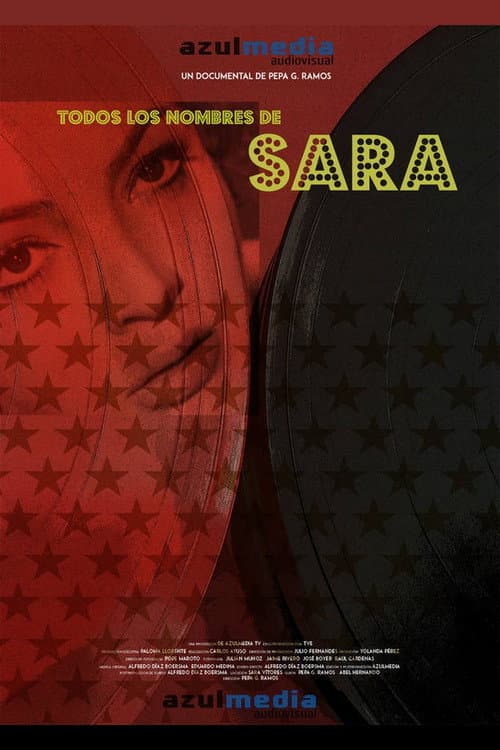
Born in Campo de Criptana, a small village in the Spanish region of La Mancha, Sara Montiel (1928-2013) conquered Mexico, Hollywood, and the hearts of people. The recognition of an unparalleled professional career, an intimate dialogue with a tireless worker who took the stage at the age of twelve and never got off. A movie star who seduced millions of viewers around the world, a singer who reinvented a musical genre, a woman who broke the mold…
Spain, 1968. An analysis of the political and social situation of the country, suffocated by the boot of General Franco's tyrannical regime. (Filmed clandestinely in Madrid and Barcelona during the spring of 1968.)
A journey through four hundred paintings, all masterpieces, among the more than nine thousand treasured in the Prado Museum, Madrid, Spain.
When looking at Pedro Almodóvar’s filmography, it becomes evident that women are everywhere; in fact, his work revolves around them. His divas are the best to create a real portrait of Almodóvar and evoke the emotional power of his films. These women are the ideal observers of a cinematic career that, from La Mancha to Hollywood, has changed the image of Spain in the world.
Narrator dreams of Madrid while being caught in a repetitive loop somewhere in Paris. He questions if his interlocutor is a real human being, as their dialogue, mostly built of citations, doesn't seem to be helping with breaking the loop.
Six elderly retired women, two from Buenos Aires, Argentina; two from Montevideo, Uruguay; and two from Madrid, Spain, have something in common, despite their different interests and lives: they go to the movies almost every day.
madrid music scene at night
The early days of the future genius of Spanish cinema Luis García Berlanga, from his birth in Valencia in 1921 to his departure to Madrid in 1947 to become a filmmaker.
For three and a half centuries, from the same day that Diego Velázquez (1599-1660) applied his last brushstroke to the canvas, the enigma of “Las meninas, o La familia de Felipe IV” (1656) has not been deciphered. The secret story of a painting unveiled as if it was the resolution of a perfect crime.
Él mismo