Living on the front line
Documentary about the first German foreign deployment of German soldiers in Kosovo since the Second World War in 1995.
No Trailers found.
No Cast found.
A German Documentary about the “village of friendship” that was created by American Veteran George Mizo to help the Vietnamese kids suffering from the Vietnam War.
Checkpoint Zoo documents a daring rescue led by a heroic team of zookeepers and volunteers, who risked their lives to save thousands of animals trapped in a zoo behind enemy lines in the Russian Invasion of Ukraine.
In this documentary, experts dissect the Battle of Britain, which took place on Sept. 15, 1940 — a day that determined the fate of the nation.
Archival footage, animation and music are used to look back at the eight anti-war protesters who were put on trial following the 1968 Democratic National Convention.
No overview available.
Skip Liberty enlisted in the Army in 1968. During his tour in Vietnam he shot 3,100 feet of Super 8 film, over 3 hours worth. Upon returning to the states the film was placed in storage, Skip had never seen the footage he shot. Until now.
For decades, the countries of the African Sahel region have been targets of colonialism and exploitation by France and other Western powers. This documentary addresses the popular resistance and new paths of development forged by Burkina Faso, Niger, and Mali after experiencing civil and military uprisings in recent years. The film explores the popular resistance that sustains the revolution in the three Sahel countries and was made after extensive coverage of the ongoing social dynamics and geopolitical disputes.
Jean Moulin lived several lives: unifier of the French Resistance, martyr tortured by the Gestapo, forgotten after the war, and then hero. From obscurity to prominence, Jean Moulin's name has remained linked for 70 years to that of his executioner, Klaus Barbie. This historical connection has contributed to the Resistance fighter's enduring legacy. The film retraces the paths of Jean Moulin and Klaus Barbie, head of the Gestapo in Lyon, from November 11, 1942, to June 21, 1943, the date of Jean Moulin's arrest.
Made refugees by the war in Ukraine, Olga and her granddaughter Milana travel to a summer camp in the Austrian Alps to test the limits of their own bravery, and to strengthen their growing bond.
Errol Morris examines the incidents of abuse and torture of suspected terrorists at the hands of U.S. forces at the Abu Ghraib prison.
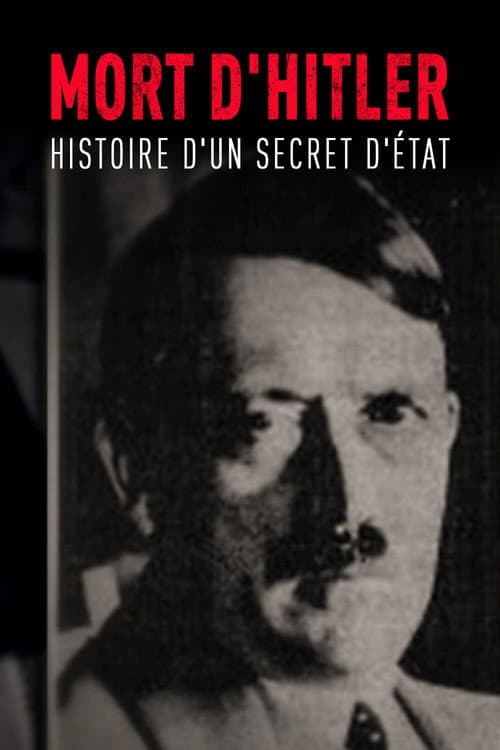
On April 30, 1945, while the Russian Army surrounded Berlin, Hitler committed suicide in his bunker. His body was discovered a few days later by the Soviets. He would be positively identified after a top secret inquest in which Hitler's personal dentist would play a central role. And yet, at the same time, Stalin publicly declared that his army was unable to find the Führer's body, choosing to let the wildest rumors develop and going so far as to accuse some of his Allies of having aided the monster's probable escape. What secrets were hidden behind this dissimulation? What happened then to the two ladies involved in the identification of Hitler’s body?
Using exclusively archival footage, Erwin Leiser traces the rise and collapse of the Third Reich, from Adolf Hitler’s early years to the devastation of Europe and his suicide in 1945. The film draws heavily on material produced and preserved by the Nazi propaganda apparatus to confront the mechanisms, imagery, and consequences of totalitarian power.
In 1944, two prisoners miraculously escaped from Auschwitz. They told the world of the horror of the Holocaust and raised one of the greatest moral questions of the 20th century.
This documentary follows two long-lost Ukrainian friends, Arsalan and Nastya, as they reconnect in Germany after russia's full-scale invasion against Ukraine. Arsalan, an actor now in Frankfurt after time in a refugee camp, and Nastya, journalist and producer who stayed in Kyiv, reflect on the divergent paths their lives have taken due to the war. Through their conversations and therapy sessions, the film explores themes of displacement, identity, and the emotional impact of war on youth.
What does it mean to “live” after experiencing war? Four Romanian survivors of the Afghanistan conflict share — for the first time — their invisible wounds and path to recovery.
Easy Company, the 2nd Battalion of the 506th Parachute Infantry Regiment of the 101st Airborne Division, fought their way through Europe, liberated concentration camps, and drank a victory toast in April 1945 at Hitler's hideout. Veterans from Easy Company, along with the families of three deceased others, recount their horrors and victories, bonds they made and the friends they lost.
During the Syrian civil war, the district of Yarmouk, home to thousands of Palestinians, became the scene of dramatic and ferocious fighting. The film follows the destiny of civilians during the brutal sieges, imposed by the Syrian regime, that took place in the wake of the battles. With his camera, Abdallah Al-Khatib composes a love song to a place that proudly resists the atrocities of war.
Reality in Ukraine was divided into two periods - before the war and after. Every citizen tries to be useful in this national resistance. Ukrainians change their professions and adapt to the needs of wartime. In art workshops, sculptors make anti-tank obstacles. Silent figures of Ukrainian figures, angels, Cossacks and multiple copies of Jesus Christ, like a terracotta army, froze in anticipation of new creations. Masters weld metal defenses for the Armed Forces of Ukraine.
Young singer Dmytro creates the rock band "Shadows," but realizes that the other members are only slowing down his path to the big stage. He wants to turn his life around 180°, leaving the dangerous and depressing city of Sumy behind to find a successful music career in the capital.
A cellar-dwelling woman talks about her life to a camera during the devastating war in Bosnia.