Explores the distinctive features of the major rivers of the continent, and discusses their contributions to the farming, recreation, transportation and hydroelectric power of North America.
No Trailers found.
No Cast found.
No overview available.
It shows the Neretva river from its source to the shores of the Adriatic Sea. The document also captures the original four-hundred-year-old bridge in Mostar.
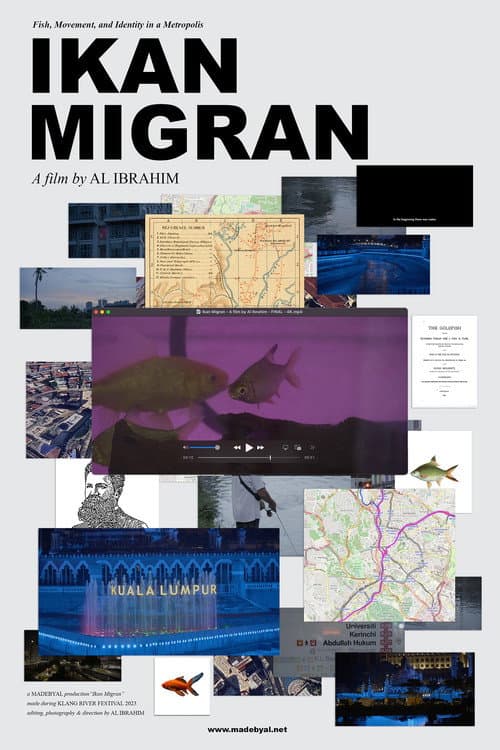
A documentary short that uses fish to explore identity and belonging in a metropolis.
A New Yorker journeys to the jungle in the Darien Gap of Panama to reconnect with an indigenous tribe he met and photographed 20 years ago. Their reunion highlights the profound power of photos and the human connection that transcends cultural barriers.
Although it crosses six countries and is over 3,500 kilometers long, the Zambezi is one of the least known rivers in the world. So it's time to take to the water and discover this mystical, ever-changing river, whose mood changes from day to day, kilometer to kilometer, and which is the very essence of life for millions of animals and people in this often drought-stricken, water-scarce region!
This short-length documentary takes us to Agadir, a city in Morocco that was struck by an earthquake in 1960. The film, made by an expatriate Moroccan who lost family and friends in the disaster, is a memorial to that tragedy and to the past he left behind when he came to North America. Partly allegorical, it employs varying techniques to offset reality from fantasy sequences.
In Tacony Creek Park, home to one of Philadelphia's lesser-known watersheds, Julie Slavet and Malcolm Bundy reflect on their involvement with and love for the park, made bittersweet by the continuous and increasing amount of pollution that flows into its river. Combined wastewater and stormwater sewage outfalls have affected Philadelphia's rivers for years, but as one innovative program mitigates this for the Schuylkill and Delaware, Tacony gets left behind. Scientist Laura Toran educates the audience on green infrastructure and its potential positive impacts, while Slavet and Bundy discuss how they're still waiting—not without hope—for those impacts to reach their community.
Take an unprecedented visual journey into Planet Water. Water Life captures extraordinary locations and intimate animal behavior never before seen on film. Two years in the making, this groundbreaking series takes viewers on an unprecedented visual journey to aquatic ecosystems on five continents to reveal how water shapes and sculpts the landscape and provides food and refuge for an astonishing array of species. This epic series tells water's story as never before to engage viewers in vital discussions about how water must be conserved and preserved. Learn the impact of climate change, pollution and other factors that are changing the environment and affecting each and every one of us.
A panoptic film on water, energy and climate, SunGanges (SuryaGanga) is a wild and intense ride three filmmakers take across the vast Indian landscape in an attempt to connect the dots between vanishing rivers, massive energy projects and the quiet rise of renewable energy.
Joseph Vallot, geographer, naturalist and mountaineer born in 1854 in Lodève, was a visionary man, full of humor and whose curiosity was insatiable. He had spent some forty years of his life studying the Mont Blanc massif, sacrificing a good part of his fortune to this multifaceted passion. He was notably the first to demonstrate that one could sleep, work and even do science at an altitude of over 4000 meters, at a time when ascents to the summit of Western Europe were still adventurous expeditions. This documentary tribute follows in his footsteps, via the route taken at the time, on foot from Chamonix via the Grands Mulets refuge to the summit of Mont Blanc to the Joseph Vallot observatory nestled at an altitude of 4400m, with a team of guides, journalists and scientists.
Presents a geographic overview of the Rocky Mountain region. Discusses the significant role that this region of natural resources has played in the development of the continent
Decolonising the Curatorial Process is a forty-minute documentary which explores decolonial strategies in an academic and curatorial context. The film features academics, activists and practitioners, and contains case studies of institutions that are deploying critical, self-reflective forms of curatorial practice. The Museum of London Docklands exhibition on slavery and the sugar industry is examined as an example of how an institution can decolonise the curatorial process, utilise the work of artists in a museum context, and critically examine East London's imperial history. The Pitt Rivers museum in Oxford, who are working with Maasai activists from Kenya and Tanzania on a project centred on repatriating the museum's collection of sacred Maasai artefacts, also features in the film.
Take to the sky and come face-to-face with Washington states majestic mountains, including one of the Pacific Northwests most well-known symbols: Mount Rainier. Celebrate the diversity of the states landscapes in Over Washington, from the glittering Puget Sound in the west to the rolling Palouse in the east. Stunning aerial cinematography and original music bring these spectacular images to life.