And the sun? How's the sun?
Three friends drive through the mountains looking for a community of Palestinians they've only ever heard about.
No Trailers found.
Kareem
Zayd
Walid
Reem
Salma Zidane, a widow, lives simply from her grove of lemon trees in the West Bank's occupied territory. The Israeli defence minister and his wife move next door, forcing the Secret Service to order the trees' removal for security. The stoic Salma seeks assistance from the Palestinian Authority, Israeli army, and a young attorney, Ziad Daud, who takes the case. In this allegory, does David stand a chance against Goliath?
An Israeli film director interviews fellow veterans of the 1982 invasion of Lebanon to reconstruct his own memories of his term of service in that conflict.
Born in Brooklyn to Palestinian refugee parents, Soraya decides to journey to the country of her ancestry when she discovers that her grandfather's savings have been frozen in a Jaffa bank account since his 1948 exile. However, she soon finds that her simple plan is a complicated undertaking — one that takes her further from her comfort zone than she'd imagined.
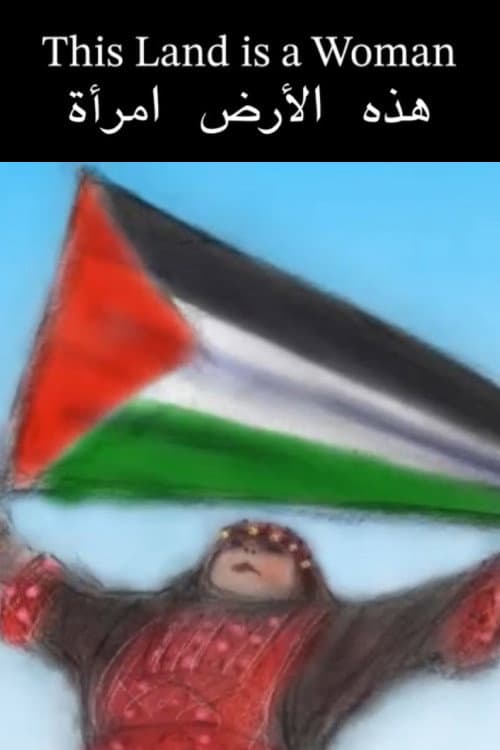
Inspired by the poem Hamza by the great Palestinian poet Fadwa Tuqan, compares and connects the mystery of the fertility of the Palestinian land to the mysterious power of it's women.
A Colombian actress named Zahinabu is finally having her first audition in New York, for a Latina role. It could be the opportunity that she has been waiting for since she arrived to US. But the audition takes a different direction when the casting group needs to consider the great audition from this Latina woman who doesn't look like a "latina".
Two childhood friends are recruited for a suicide bombing in Tel Aviv.
A teenage skateboarder becomes suspected of being connected with a security guard who suffered a brutal death in a skate park called "Paranoid Park".
Jaira, Chelsea, and Alecz catch up with their friend, Sujee, who lives in Busan, Korea. Sujee is lonely and seeks people who understand her struggles as a diaspora but her friends have a different image of her life there.
Dawn breaks on the 17th of August, and Laksmi prepares for a celebration of the Indonesian independence day. As she embarks on her preparations, she experiences visitations by familiar faces from her past, reminding her of the folly of nostalgia in a post-colonial world.
Newspaper Boy is a Malayalam–language Indian film released in 1955. It is the first neo realistic movie in the language. The film, a drama of stark realism, narrates the life of the common man on the street. The film is noteworthy in that the entire production programme from script-writing to direction was controlled and executed by students.
A food delivery man’s first shif t falls on the night of June 11, 2019. Ka-ho is new to his job and needs his son to navigate for him. The two ride on the same motorbike and try their best to deliver their orders. In a bar, Tyson spends the night attempting to figure something out. Under the blue sky, up on the highway, they are heading to the next destination.
No overview available.
The story follows a day in the life of Ismail, a Palestinian photographer whose American upbringing was shaped by his grandfather’s displacement during the 1948 Palestine Nakba. When Ismail’s mother gifts him his grandfather’s keffiyeh—a traditional Palestinian scarf—it triggers an internal struggle between shame and pride in his cultural identity, all unfolding against the ominous backdrop of rising violence against Palestinians.
Santa Claus tries to outrun a gang of knife-wielding youth. It's one of several vignettes of Palestinian life in Israel - in a neighborhood in Nazareth and at Al-Ram checkpoint in East Jerusalem. Most of the stories are droll, some absurd, one is mythic and fanciful; few words are spoken. A man who goes through his mail methodically each morning has a heart attack. His son visits him in the hospital. The son regularly meets a woman at Al-Ram; they sit in a car, hands caressing. Once, she defies Israeli guards at the checkpoint; later, ninja-like, she takes on soldiers at a target range. A red balloon floats free overhead. Neighbors toss garbage over walls. Life goes on until it doesn't.
Maysa unfolds over a single afternoon as a young woman and her stoic middle eastern mother navigate the quiet tension of a long-held silence. As memories of migration and girlhood surface in fractured flashbacks, their unspoken history begins to unravel. A tender, restrained portrait of love, resilience, and the things women carry - even when they no longer have to.
The film represents life in a godforsaken Russian village. The only way to reach the mainland is to cross the lake by boat and a postman became the only connection with the outside world. A reserved community has been set up here. Despite the modern technologies and a spaceport nearby the people of the village live the way they would in the Neolithic Era. There is neither government nor social services or jobs. The postman's beloved woman escapes the village life and moves to the city. Postman's outboard engine gets stolen and he can no longer deliver mail. His normal pattern of life is disrupted. The postman makes a decision to leave for the city too but returns before long with no certain reason. The script is based on real characters' stories. People from the village play their own parts in the film. The search for the protagonist lasted for over a year.
“King” delves into the intimate realm of men’s mental health through a poignant exchange between a young man and his barber in a vibrant Dominican barbershop. Through candid conversations and mutual support, the film explores the complexities of masculinity, identity, and emotional well-being within the context of a culturally rich community. “King” offers a compelling portrayal of the power of dialogue and fellowship in navigating the challenges of modern life.
Khtobtogone begins as a love story between protagonist Zine and the girl of his dreams, Bulma. But in introspective narration, Zine reflects more broadly on masculinity and coming of age in Marseille’s Maghrebi community.
Lin, a migrant female worker from Cambodia, and Yeon-hee, a Korean, are friends who work together at a factory at night. One day, the two will go to the sea together for the weekend. However, the factory manager only forces Lin to work overtime on the weekend, while Lin finds out that Yeon-hee is leaving Korea for Australia soon.
Hasan Everywhere is an animation which broaches the subtlety of a relationship between a man and a woman who bear the passports of enemies, to sympathetically deal with the subjects of death, grief, lost opportunity; but mostly it seeks to demonstrate the possibility of friendship triumphing over the deepest of rifts between two people. In that regard it is most unusual among the standard fare of animated shorts.