Short documentary exploring the fame and talent of Charlie Chaplin.
Self
A documentary look at the 'making of' and cult success of the troubled Lou Adler directed film "Ladies And Gentlemen The Fabulous Stains" starring Diane Lane.
A crew of filmmakers shoot undercover on the streets of Hong Kong with hidden microphones and no permits. The city becomes a giant set as mounting tension and ego clashes push tempers to breaking point.
Documentary which follows Bo Widerberg during the making of 'Man on the Roof', 'The Butt' and a failed theater production.
Documentary about the making and reception of Carl Th. Dreyer's final movie, "Gertrud."
Documentary about legendary Paramount producer Robert Evans, based on his famous 1994 autobiography.
An in-depth oral history of the production and development history of Robert Altman's "O.C. and Stiggs," featuring commentaries from the film's cast and crew.
No overview available.
Dan Aykroyd, John Candy, Gilda Radner and Cheech and Chong present this compilation of classic bad films from the 50's, 60's and 70's. Special features on gorilla pictures, anti-marijuana films and a special tribute to the worst film maker of all-time, Ed Wood.
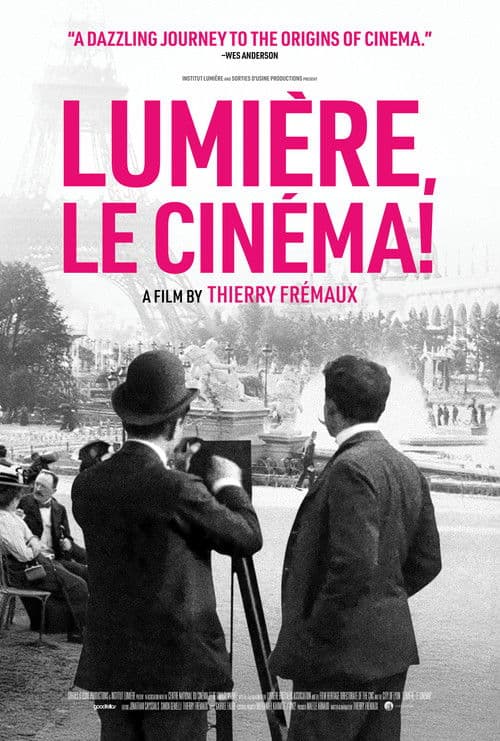
In one of those wonderful coincidences of history, lumière, the French word for “light,” was also the last name of brothers Auguste and Louis, whose brilliant invention, the cinematograph, helped to inaugurate the most beloved art form of the last 130 years. Institute Lumière director Thierry Frémaux uses Lumière, Le Cinema! to guide the viewer through over a hundred shorts—some famous, some forgotten, some never before seen—directed by Lumière and company. In the process, Frémaux illuminates how the brothers employed the camera as a creative instrument as they (and their operators) mastered framing, staging, and subject selection for quotidian and exotic microdocumentaries as well as the first ever fictional motion pictures. The result is not only a glorious re(telling) of the genesis of cinema but a profound meditation on the beautiful world captured—and the mysterious world imagined—by the Lumières.
A documentary about Tim Burton's iconic 1988 fantasy comedy Beetlejuice, covering all the aspects of production: from filming in East Corinth, Vermont, to the stop-motion and special effects work, as well as a series of exclusive interviews and rare behind the scenes archives.
When World War II broke out, John Ford, in his forties, commissioned in the Naval Reserve, was put in charge of the Field Photographic Unit by Bill Donavan, director of the soon-to-be-OSS. During the war, Field Photo made at least 87 documentaries, many with Ford's signature attention to heroism and loss, and many from the point of view of the fighting soldier and sailor. Talking heads discuss Ford's life and personality, the ways that the war gave him fulfillment, and the ways that his war films embodied the same values and conflicts that his Hollywood films did. Among the films profiled are "Battle of Midway," "Torpedo Squadron," "Sexual Hygiene," and "December 7."
Jean-Claude van Damme, Sheldon Lettich and more discuss the 1991 film "Double Impact" from inception to reception.
When Canada entered World War II, the National Film Board suddenly had an urgent new mission—and hundreds of women stepped forward, helping to create Canadian cinema as we now know it.
What do the Japanese see in Canada? What's the magnetic pull from the Far East? And what's our take on this land of ours? Bolstering our feeling of national pride comes naturally after watching the Japanese embrace the country. The film follows Masaaki Kagami, a Japanese transplanted in Alberta. He specializes in making souvenir videos for Japanese tourists. HO! KANADA is an investigation of national stereotypes. The film records the way the Japanese see us, and how we see them and ourselves.
Ferruccio Castronuovo was the only authorized eye, between 1976 and 1986, to film the brilliant Italian filmmaker Federico Fellini (1920-1993) in his personal and creative intimacy, to capture the gears of his great circus, his fantastic lies and his crazy inventions.
In 1967, experimental filmmaker Jorgen Leth created a striking short film, The Perfect Human, starring a man and women sitting in a box while a narrator poses questions about their relationship and humanity. Years later, Danish director Lars von Trier made a deal with Leth to remake his film five times, each under a different set of circumstances and with von Trier's strictly prescribed rules. As Leth completes each challenge, von Trier creates increasingly further elaborate stipulations.
A brief look at the history of "Homicide: Life on the Street", one of the best shows on television and its ratings history as well as some of the people on the show, as well as behind the camera. The primary focus of this PBS documentary is the "Subway" episode which aired on December 5, 1997 on NBC. This two-hour documentary follows the "Subway" episode from conception to award nominations.
Staged behind the scenes look at the McWalter movie.
Amazing, but true: Fort Lee, New Jersey (just across the George Washington Bridge from Manhattan), was once the epicenter of American film production. This documentary of a truly bygone era combines photographs culled from private collections, as well as restored footage from such films as Thomas A. Edison's Rescued from an Eagle's Nest and D.W. Griffith's The New York Hat, filmed at the studios in Fort Lee.
In the early nineties, before the massive gentrification of many of New York's then slums, several young people from very disparate backgrounds left their broken homes and ventured onto the brutal streets of the city. United by their love of skateboarding, they formed a family and built a unique lifestyle that eventually inspired Kids, a groundbreaking and outrageous film directed by photographer Larry Clark and released in 1995.
No Trailers found.