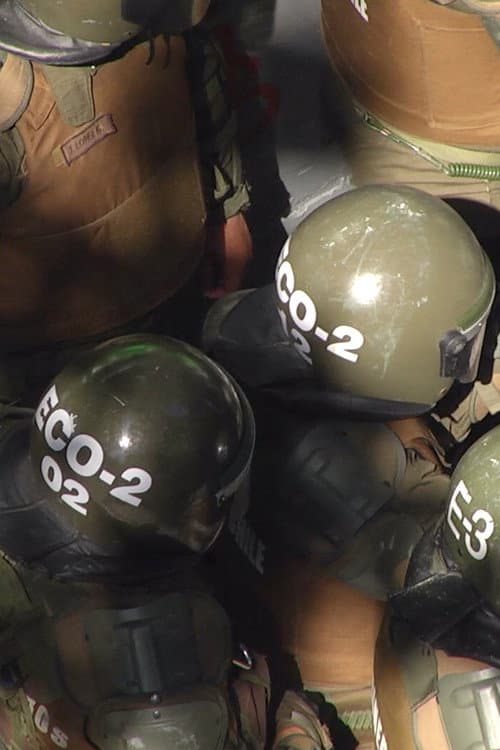
Chile hurts me
A Chilean stomach and social discomfort.
Himself
No Trailers found.
"Golpe a golpe" (Family coup) was a Chilean television sitcom from the 1970s and 1980s. In this series, the family of the stern anti-communist dictator Augusto Pinochet found themselves forced to share their home with the spirit of the late former socialist president Salvador Allende, who was portrayed by a puppet. This short film aims to salvage this show's existence by extracting fragments from its surviving material.
Mateo, son of a notorious mob lord of the city, has been dumped by his wife who took his son away. He doesn't resist the shame and hires the most ruthless hit-man available to kill them. He hires Toro Loco, a cold, eccentric assassin with will bring the hell to this family, always under his own twisted rules.
It all begins at a party in Santiago, Chile, when a seemingly innocent gesture -- the offer of a ride home -- ends in a passionate night of lovemaking and intense conversation for young singles Bruno and Daniela. Shacked up at a flea-bitten motel for a one-night stand, the pair lingers deep into the night, alternating between powerful physical encounters and an ever-deepening emotional connection.
Raquel has been the live-in housekeeper for a kind, reasonably wealthy family for half her life, and the joyless repetition of the job has begun to take its toll. Increasingly dependent on painkillers, Raquel resorts to pranks and childish avoidance to antagonize the family’s college-age daughter and a procession of new servants, all in the hopes of protecting her precarious power within the home. Her antics successfully push everyone away, until new maid Lucy actually pushes back.
The marks of the violence of the Chilean state, against its own compatriots. Flicker Film. 35mm B & W Still Photography. Silent.
The third installment in Dan Přibáň's series of travel documentaries describes the author's journey with his friends across South America in vehicles that are often notorious but cult in their own way. The charming dynamics of the group on screen are further enhanced by the high-quality craftsmanship.
Experimental Short Film Documentary made during the social outbreak, follows 2 Deaf people walking through the outbreak in Plaza Dignidad.
Davide and Loris are brothers and live in a very small village in the north of Italy. While Davide is eighteen years old and gay, Loris is almost thirty and doesn't know anything about his brother's sexuality.
Chile would become the first country in the world to democratically elect a Marxist president, Salvador Allende. After his arrival to the government in 1970, the class struggle would reach a decisive point for the country in 1973.
An outrageous road movie about The Old Man and his grandkids in a 24 hour race against time to stop a milky madman hell bent on killing his prized cow to save the world.
The story of the Yugoslavian football team who became youth world champions in Chile, 1987.
Images of Argentinian companies and factories in the first light of day, seen from the inside of a car, while the director reads out documents in voiceover that reveals the collusion of the same concerns in the military dictatorship’s terror.
Documentary short about the death of Chilean general René Schneider by the CIA, following the election of Salvador Allende as president of the nation.
Through moving and detailed testimonies, the documentary explores the significant Chilote heritage in the architecture of an emerging Patagonia at the end of the 19th century.
From the creators of 31 Minutos, here comes the story of a rock that didn't want to grow up...
Bruno Muel's documentary on the coup in Chile in 1973. Muel, who was part of the famed Medvedkine group, along with Chris Marker and Jean-Luc Godard, among others, captured one of the most powerful portraits of the early days of Dictatorship. Profound solidarity with the socialist cause, Muel and his team showed great courage to mix the official registration of images with those triumphant, clandestine, of the nascent opposition.
A poetic short film showing a day in the 2019 protests in Santiago, Chile through documentary images.
No overview available.