Portrait of Augustinas Baltrušaitis, film and theatre director, as well as actor, who fell into obscurity and has now been relegated to the margins of society, as a result of specific political circumstances. Countdown is a film about the limits of memory, the effects of the implacable passage of time, and a hope that surpasses time.
A scientific treatise on the 'Wäscheklammer' - the artistic landmark of the Kreideberg district in Lüneburg.
An immersion in the 1st public auction of NFT crypto-art in France. Doubts, impediments, twists and turns... The birth of a community of artists. The 1st french NFT documentary.
No overview available.
Too hot! The spawning fish do not come at the right time and the pepper plants end up dying in this heat. "This is a very different weather that not even the spirits can understand." From their gardens, homes, and backyards, the indigenous women of the Amazon involve us in their vast universe of knowledge while they observe the impacts of climate change in their ways of life.
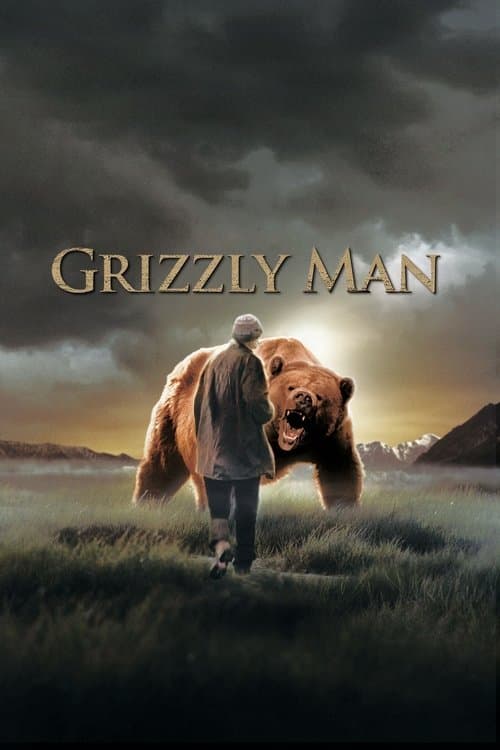
Follows the story of "Grizzly Man" Timothy Treadwell and what the thirteen summers in a National Park in Alaska were like in his attempt to protect the grizzly bears. The film is full of unique images and a look into the spirit of a man who sacrificed himself for nature.
Shot over five years. A unique document of the creative work of the most representative artist of her generation. She is a painter (she creates a 240 m mural in the film), and a photographer of icons, which reflect everything human that the spirit contains. Life and thought of an essential artist, creator over three decades of an internationally recognized work and deserving of the National Photography Award. “The Look of Ouka Lele” is the story of how the creativity of a genius develops, his passion and his struggle in thought, painting and photography. Art and existence, united by the effort, talent and beauty of a creator in eternal struggle.
The Dolls of Lisbon is NYC's Antagonist Art Movement's latest exploit inspired by the Zapatista Dolls of Mexico, a souvenir that traveled the world symbolizing a rebellion against the legacy of Andy Warhol's commodification of art.
When the lights dim and the stage is revealed, Meschke channels life through the strings of his puppets, triggering the spiritual connection between the creator and his alter-egos: the charismatic Don Quixote, the loving Penelope, the inquisitive Baptiste, or the mysterious Antigone. THE MAN WHO MADE ANGELS FLY is a poetic story about a master of his craft that has inspired audiences to reflect upon common issues of suffering and the mortal coil. Visionary and un-biographic, imaginary tribute to the puppeteer.
The study of extreme physics brought us the bomb. It has taken us inside the violent death of a star. Now, it has brought us face to face with the most destructive force in Nature: a supermassive black hole. How large, how powerful, can these monsters get? What can they tell us about the extremes of time and space?
The film "Wild Animals of Virginia" explores the diverse wildlife inhabiting Virginia's forests, fields, and waterways. It highlights various species such as chipmunks, squirrels, woodchucks, beavers, muskrats, minks, otters, raccoons, elk, white-tailed deer, cottontail rabbits, foxes, black bears, opossums, bobcats, and skunks. The documentary emphasizes the natural laws governing these animals, their habitats, diets, and behaviors, while also touching on their historical significance and interactions with early settlers.
For almost three years, nature filmmaker and ecologist David Cebulla has been observing wild Common hamsters. He not only tries to learn more about the species, but also documents why hamsters are globally threatened with extinction. David travels from the western border of the distribution area in France via Germany, Poland, Austria and Hungary to the eastern border of the distribution area in the Kazakh steppe. In the process, he manages to capture some unique and fantastic images. But during the project, it becomes increasingly difficult to find animals living in the wild.
Sylvie Vartan has had an extraordinary life: a Bulgarian child forced into exile, who became the icon of a youth in the midst of revolution in France. After a career spanning 64 years, with nearly 50 albums recorded and 40 million records sold, she has decided to bow out. During her farewell tour, the singer chose to open up to Augustin Trapenard.
Fifty years after her first recording in Nashville, Sylvie Vartan decided to record the album she sings on to mark this anniversary there. In one of the songs, she says: I have forged my own path, without turning back. Leaving my mistakes behind me. I ventured into unknown territory, avoiding pitfalls, and I came back. It is on this "road," both public and personal, starting from her native Bulgaria to Paris, passing through a thousand places around the world, traversing fashions and overcoming the trials of an extraordinary life, that this film sets out to illuminate the trajectory of a shy young girl who became an international icon and a resolutely free woman.
Author Helen Macdonald follows Britain’s greatest river over four seasons, encountering salmon, beavers and the microscopic creatures helping to answer science's biggest questions.
No Trailers found.