Anton Spielmann (18) and his two younger friends Basti Muxfeldt and Jonas Hinnerkort are living in their family homes with their parents in an idyllic village close to Hamburg. The three of them founded the band 1000 Robota. The band has an ambitious aim: „We want to cause creation not to remind of it”, and they want to live up to their ideals. In a society affected by economic pressure 1000 Robota are questioning themselves and others and they don‘t want to meet other people‘s expectations. In a world of excessive supply they are looking for significance and want to unite with others to create a new way of youth culture. But soon they have to face some serious difficulties.
In this unique, compelling film, those who knew him speak freely, some for the first time, to reveal the many mysteries of Francis Bacon.
A journey into the hearts, minds and eyes of Georgia O’Keeffe, Emily Carr and Frida Kahlo - three of the 20th century’s most remarkable artists.
The Sophisticated Misfit is a long-awaited must-have for fans of the artist Shag and Tiki culture alike. This documentary traces the artist’s roots growing up in Hawaii, his artistic journey in college, his early work designing album covers, to his modern-day role as an art-world phenom. In addition to exclusive footage of Shag painting in his home studio, the film features intimate interviews with the artist, his family, artistic influences, tiki-philes, celebrity collectors, and fans.
Pop Goes the Easel was Ken Russell’s first full-length documentary for the BBC’s arts series Monitor. It focused on 4 British Pop Artists - Peter Blake, Peter Philips, Pauline Boty and Derek Boshier.
How can structures, which take up defined, rigid portions of space, make us feel transcendence? How can chapels turn into places of introspection? How can walls grant boundless freedom? Driven by intense childhood impressions, director Christoph Schaub visits extraordinary churches, both ancient and futuristic, and discovers works of art that take him up to the skies and all the way down to the bottom of the ocean. With the help of architects Peter Zumthor, Peter Märkli, and Álvaro Siza Vieira, artists James Turrell and Cristina Iglesias, and drummer Sergé “Jojo” Mayer, he tries to make sense of the world and decipher our spiritual experiences using the seemingly abstract concepts of light, time, rhythm, sound, and shape. The superb cinematography turns this contemplative search into a multi-sensory experience.
Art in glorious motion. Bright, colourful and often intensely dynamic, the 1970 'Kinetics' show at London's Hayward Gallery was a major international showcase of the new active sculptural art. Works by Jean Tinguely, Nam June Paik, Peter Logan, Takis, Jesus Raphael Soto and many others dazzled a wide-eyed public. This priceless film record of the show captures a kaleidoscope of neon lights, rotating metal, squirting water and stroboscopic projections. Director Lutz Becker, of the Slade School of Art Film Unit - who would go on to direct Double-Headed Eagle (1973), a documentary account of Hitler's rise to power - uses a variety of textural, electronic sounds (courtesy of Peter Sahla) to evoke the unusual experience. The show was enormously popular, with visitors filling out the gallery day after day.
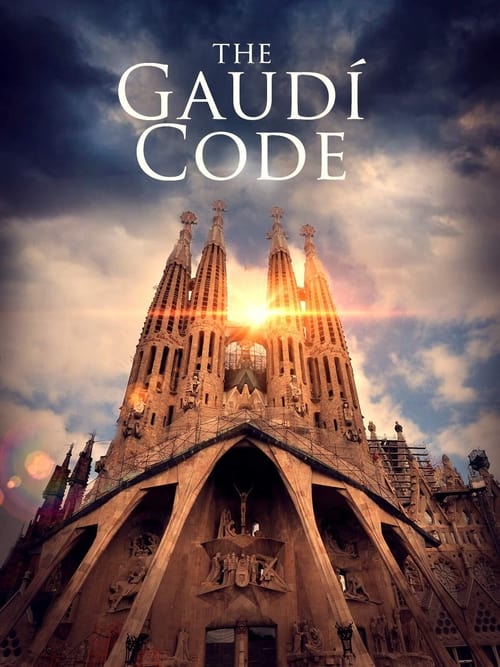
La Sagrada Familia – although still under construction in Barcelona – is a cathedral without any flaws. Almost 100 years after his death, experts are convinced that Gaudi was a mathematical genius and that each embellishing ornament of the Sagrada Familia actually serves an architectural purpose.
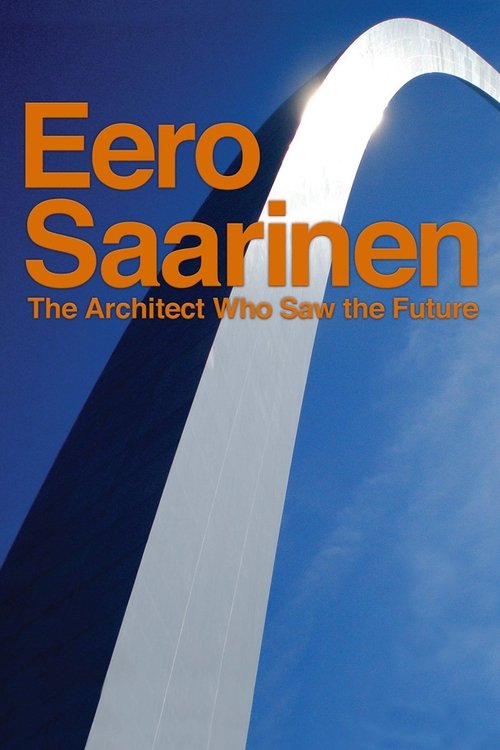
Best known for designing National Historic Landmarks such as St. Louis’ iconic Gateway Arch and the General Motors Technical Center, Saarinen also designed New York’s TWA Flight Center at John F. Kennedy International Airport, Yale University’s Ingalls Rink and Morse and Ezra Stiles Colleges, Virginia’s Dulles Airport, and modernist pedestal furniture like the Tulip chair.
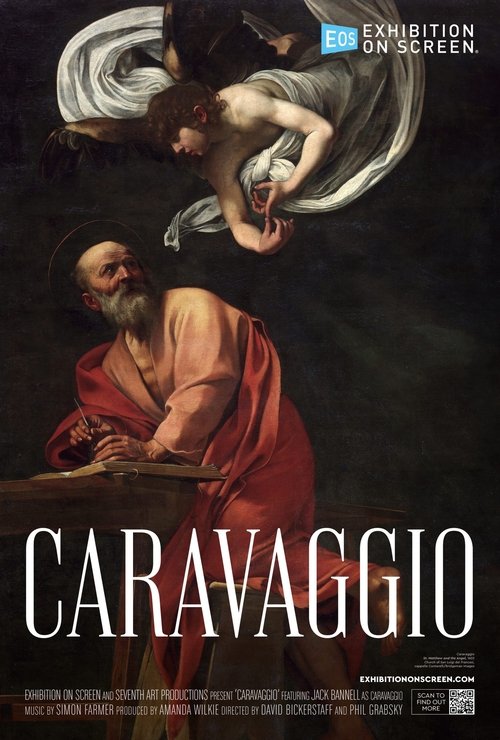
Five years in production, this is the most extensive film ever made about one of the greatest artists of all time – Caravaggio. Featuring masterpiece after masterpiece and with first-hand testimony from the artist himself on the eve of his mysterious disappearance, this beautiful new film reveals Caravaggio as never before. Multi-award-winning filmmakers David Bickerstaff and Phil Grabsky delve into the hidden narratives of Caravaggio’s life, piecing together clues embedded within his incredible art. The intriguing self-depictions within his works — sometimes disguised, sometimes in plain sight — offer a rare window into his psyche and personal struggles. Join us as we unravel the story of one of history’s most brilliant, complex and controversial figures.
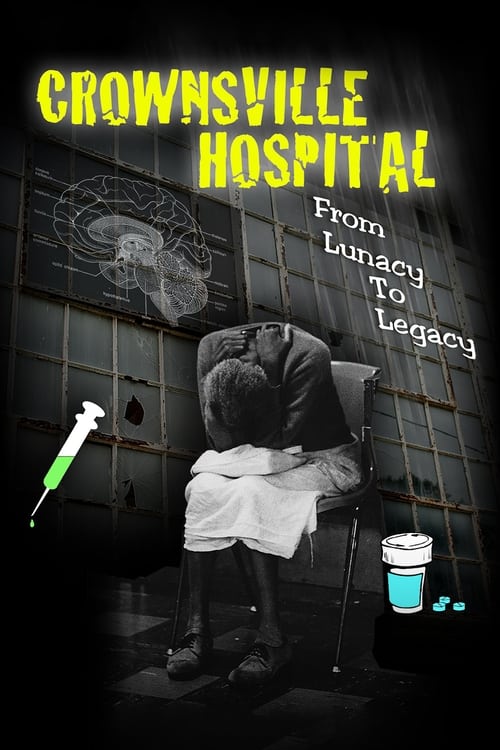
Crownsville Hospital: From Lunacy to Legacy is a feature-length documentary film highlighting the history of the Crownsville State Mental Hospital in Crownsville, MD.
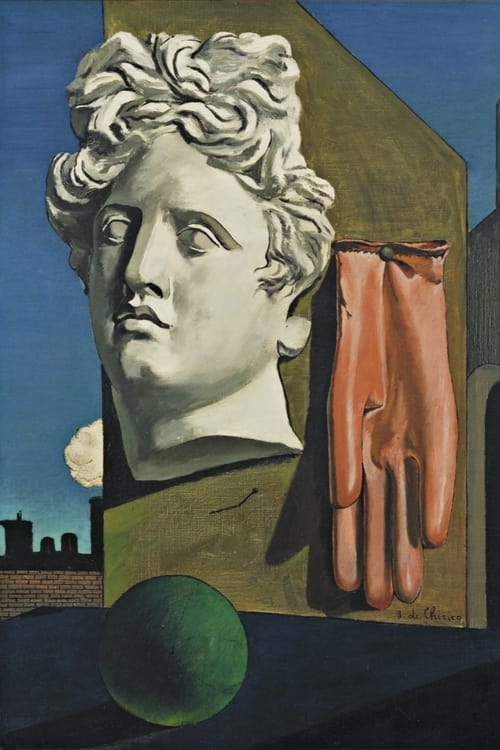
Contemplate the "anti-art" spirit of Dadaism, its nihilistic yet humorous indictment of civilization and bizarre use of unconventional media. In the sensibility of Surrealism, observe its compelling focus on the subconscious and two substyles - dream imagery, with its juxtaposition of objects and settings, and "automatic drawing," eliciting unplanned images from the unconscious.
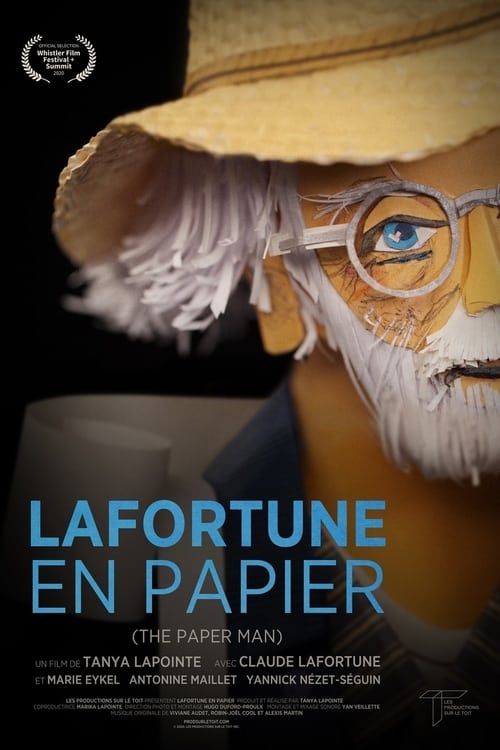
Much like Fred Rogers and Bob Ross in the United States, Claude Lafortune was a staple of French-Canadian television. The beloved children's television host inspired generations of children through his celebration of creativity, inclusivity and diversity. For over five decades, he dedicated his life to transforming mere paper into whimsical sculptures, creatures and film sets. "The Paper Man" reveals the depths of Claude Lafortune's work, as well as his continuing legacy.
No overview available.
A documentary edited from ORLAN's seventh surgery in the The Reincarnation of Sainte-ORLAN series which aired live, vis satellite from New York in 1993.
The concrete costs for culture and creativity is here illustrated in punchy images.
The video revolution of the 1970s offered unprecedented access to the moving image for artists and performers. This Is Not a Dream explores the legacies of this revolution and its continued impact on contemporary art and performance. Charting a path across four decades of avant-garde experiment and radical escapism, This Is Not a Dream traces the influences of Andy Warhol, John Waters and Jack Smith to the perverted frontiers of YouTube and Chatroulette, taking in subverted talk shows and soap operas, streetwalker fashions and glittery magic penises along the way.
400 years ago, in Japan, a revolutionary art was born and would influence the greatest Western artists of the late nineteenth century, the Ukiyo-E "floating images of the world." A wonderful trip in a world of beauty and discovery. The concept and objectives of this documentary are, on the one hand, to show, teach and discover Japanese art (Japanese stamps and prints) and, on the other hand, to demonstrate the influence of Japanese stamps on Western modern art, showing in comparison some of the Most famous paintings (impressionism or paintings by Van Gogh).
Julie Mendez was a 17 year old teenager when she saw the "be all that you can be" Army recruiting messaging and decided to enlist. Her life would change forever when she was deployed to serve in the Iraq War. Her experiences changed her and she returned home to face feelings of isolation and depression. Always a creative person, Julie turned to art to help her process her experiences and begin to heal her PTSD.
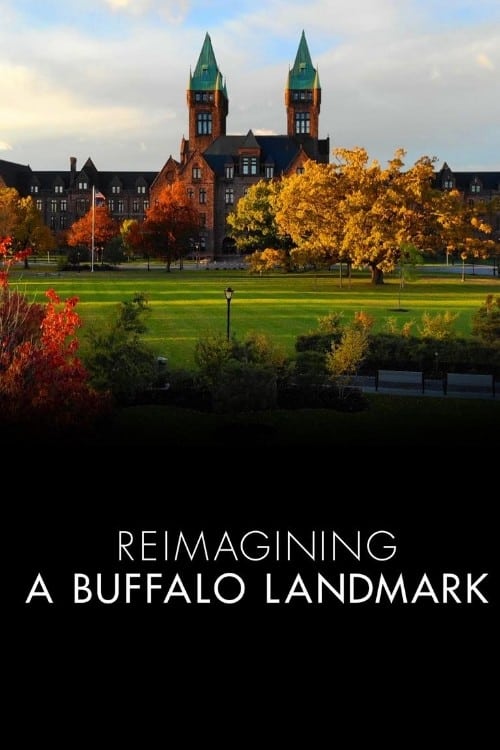
The Richardson Olmsted Campus, a former psychiatric center and National Historic Landmark, is seeing new life as it undergoes restoration and adaptation to a modern use.
No Cast found.
No Trailers found.