No Trailers found.
San Francisco Bay Area salsa and Latin jazz performers and audiences struggle to maintain culture, creativity and community in the face of powerful socioeconomic and demographic changes. This fascinating history of the Bay Area Latin music scene explores the post-WWII growth of California’s multi-ethnic music community, the 1950s Mambo craze, the 70s heyday of Salsa, and subsequent expansions of the art form. In today’s fast-changing environment, despite decreasing audiences and venues, Bay Area performers are transforming the future of the Afro-Latin music and dance through education and outreach.
Two biologists set out on an undertaking as colossal as their subjects—deciphering the complex communication of whales. Dr. Michelle Fournet and Dr. Ellen Garland journey to opposite hemispheres to uncover a culture eons older than our own.
Coral Reef Adventure follows the real-life expedition of ocean explorers and underwater filmmakers Howard and Michele Hall. Using large-format cameras, the Halls guide us to the islands and sun-drenched waters of the South Pacific to document the health and beauty of coral reefs. Featuring songs written and recorded by Crosby, Stills & Nash.
Sea life in a whole new way. Deep Sea 3D, an underwater adventure from the filmmakers behind the successful IMAX® 3D film Into the Deep, transports audiences deep below the ocean surface. Through the magic of IMAX®; and IMAX 3D, moviegoers will swim with some of the planets most unique, dangerous and colorful creatures, and understand this inspiring underworld.
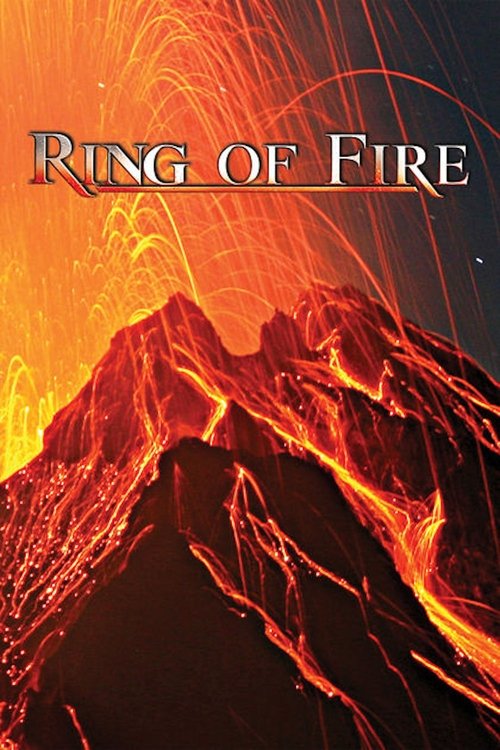
Ring of Fire is about the immense natural force of the great circle of volcanoes and seismic activity that rings the Pacific Ocean and the varied people and cultures who coexist with them. Spectacular volcanic eruptions are featured, including Mount St. Helens, Navidad in Chile, Sakurajima in Japan, and Mount Merapi in Indonesia.
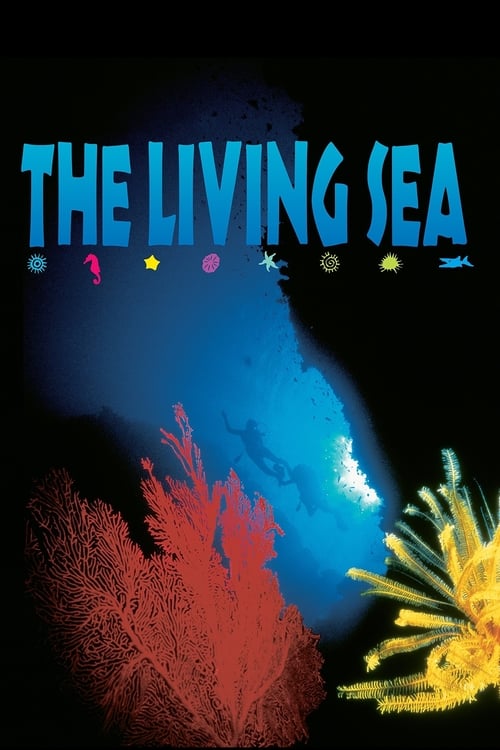
The Living Sea celebrates the beauty and power of the ocean as it explores our relationship with this complex and fragile environment. Using beautiful images of unspoiled healthy waters, The Living Sea offers hope for recovery engendered by productive scientific efforts. Oceanographers studying humpback whales, jellyfish, and deep-sea life show us that the more we understand the ocean and its inhabitants, the more we will know how to protect them. The film also highlights the Central Pacific islands of Palau, one of the most spectacular underwater habitats in the world, to show the beauty and potential of a healthy ocean.
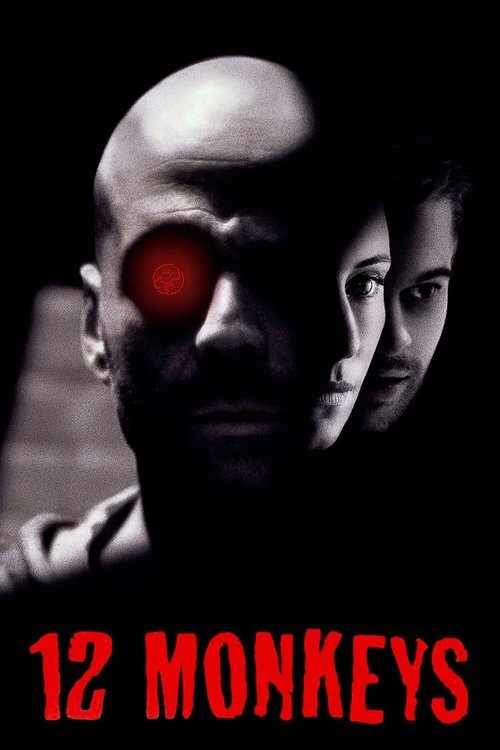
In the year 2035, convict James Cole reluctantly volunteers to be sent back in time to discover the origin of a deadly virus that wiped out nearly all of the earth's population and forced the survivors into underground communities. But when Cole is mistakenly sent to 1990 instead of 1996, he's arrested and locked up in a mental hospital. There he meets psychiatrist Dr. Kathryn Railly and the son of a famous virus expert who may hold the key to the Army of the 12 Monkeys; thought to be responsible for unleashing the killer disease.
During a canoe trip, neurologist Magnus Heier suffers from sudden amnesia: for eight hours, he records nothing. Everything he does is immediately forgotten. This episode becomes the starting point for an exploration of his own memory. How can his functioning explain the incident he suffered? And what happened to the doctor during those lost hours? To understand the amnesia that has affected him, Magnus Heier embarks on an investigation among his peers. His journey takes him to Finland, Germany and Italy, where he visits researchers working on the astonishing brain faculty of memory.
Cold Refuge is about the physical, psychological, and spiritual aspects of full immersion in the natural world: how, though it may seem counter-intuitive, swimming in cold water helps mitigate some of life’s most serious challenges. The film’s diverse film subjects include a wheelchair-bound, paralyzed swimmer who faces fear by diving off a high pier; a Black man who was told by whites when he was 13 that “Black people don’t swim” (it took him 30 years to try); a blind man who tethers himself to a sighted swimmer; a woman with aggressive breast cancer who “swims to chemo;” a lawyer who reduces courtroom stress in the open water; and a young woman who communes with her late mother in San Francisco Bay, where they both swam together. Along with swimmers’ stories of adversity and resilience, the film’s marine mammals, birds, artwork, and a variety of open-water locations create a visual meditation on what it means to escape our abstract digital world in favor of what’s real.
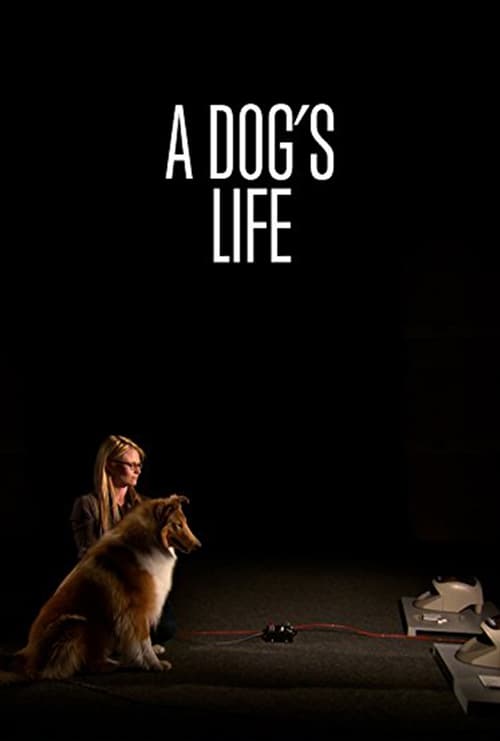
A Dog's Life examines how our canine companions perceive the world - from the moment they take their first morning walk to the time they curl up at our feet to go to sleep. We accompany Daisy, a Jack Russell Terrier, through an average day and on the way discover that, while dogs are not miniature humans, they are amazingly well adapted to life with us. But how well do we know them?
No overview available.
Life is an adventure - especially for a newborn animal who has so much to learn. "Growing Up Wild" takes audiences to the wildest corners of the planet to tell the tales of five courageous animals as they tackle the very first challenges of their young lives. With a little guidance from sage family members, each must figure out how and where to find food, while learning to recognize the very real threat of danger. From their first steps of exploring their world to their final steps into independence, "Growing Up Wild" reveals the triumphs and setbacks of five young lives in which instinct, parental lessons, and trial & error ultimately define their destinies. Featuring the stunning imagery and iconic storytelling that makes Disneynature's big-screen adventures an inspiring movie-going experience, "Growing Up Wild", brings home a special look at how similar and different these young lives can be. - Written by (C) 2016 Disney Enterprises
Peter Snow presents highlights from today's three deep-sea dives around the world. In 2002 BBC organized three concurrent dives , first in Monterey Bay where unmanned submersible is lowered into underwater canyon which is over mile deep. Second dive is in Grand Cayman where submersible Atlantis will explore life at the spectacular Cayman Wall , Kate Humble reports . During the dive, the crew used bait to attract a deep-water giant, the six-gill shark. Third dive takes place in middle of the Atlantic 1200 miles west of Portugal, which is also deepest of the three dives, divers will descent in Russian submersible Mir from research vessel Keldish and the Mir will dive in the bottom of the ocean in 2300 metres .
A research team races to understand mycoplasma ovipneumoniae (m.ovi), an infectious disease tearing through bighorn sheep populations.
The Hubble Space Telescope has spent more than 30 years scrutinizing the cosmos in an attempt to unravel the secrets of the Universe and go as close as possible to its origin. But Hubble has also become the superstar of space, offering us magnificent paintings of the Universe.
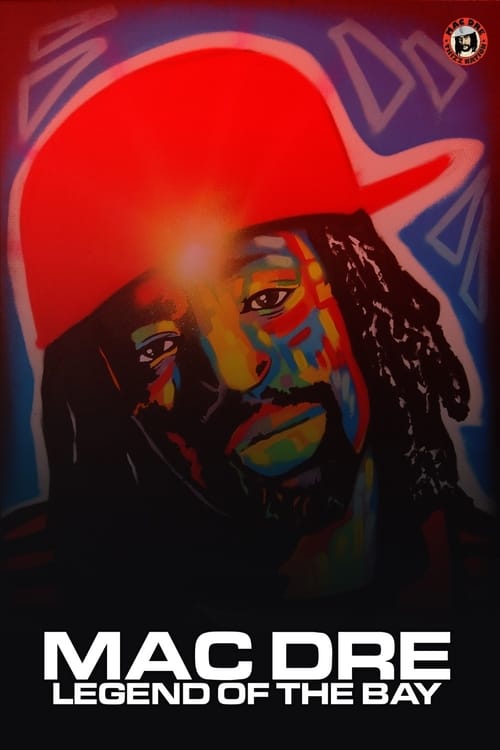
Bay Area rapper Mac Dre began his career at 18 and quickly became an influential force in early west coast hip-hop. In 1992 he was convicted of conspiracy to commit bank robbery when his lyrics were used against him in court. He left prison with a new lease on life, founded an independent record company, and then was murdered just when he began to emerge as a star. For the first time ever, his mother Wanda reveals the true experiences of a hip-hop legend.
Henry Rollins narrates Lilly Scourtis Ayers' no-holds-barred profile of volatile Bay Area punk legend Marian Anderson, whose hypnotic beauty, devil-may-care rebellion and shocking sexual exploits onstage launched her to infamy before tragically dying of a heroin overdose at the tender age of 33.
No Cast found.