The story of those Italian women who, for eighty years, have fought against power in all its forms.
No Trailers found.
'Figure I' uses a feminist perspective to frame and deconstruct patriarchal techniques of control. This film asks: how was a patriarchal gaze construct-ed, and how has it come to effect biological processes? How have specific tools (like Dürer's Grid) come to shape our technological present and possible futures? Are modern Western scientif-ic/mathematic/technological/medical structures rooted in extractive patriarchal philosophies? 'Figure 1' is composed of re-drawn illustrations of allegorical art historical paintings and etchings, alongside archival footage, Obstetric photography, and rotoscoped animation.
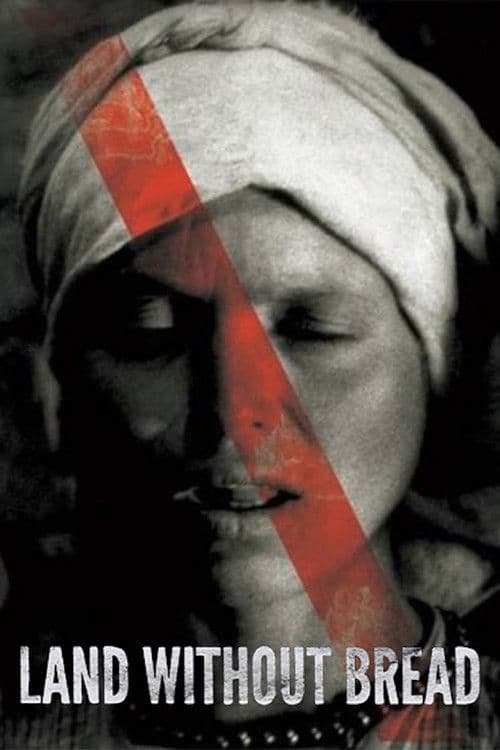
An exploration —manipulated and staged— of life in Las Hurdes, in the province of Cáceres, in Extremadura, Spain, as it was in 1932. Insalubrity, misery and lack of opportunities provoke the emigration of young people and the solitude of those who remain in the desolation of one of the poorest and least developed Spanish regions at that time.
Images complement what is always lacking in words. The poems complement what is always present in the city. Freely inspired by the poetry Cidade City Cité, by Augusto de Campos.
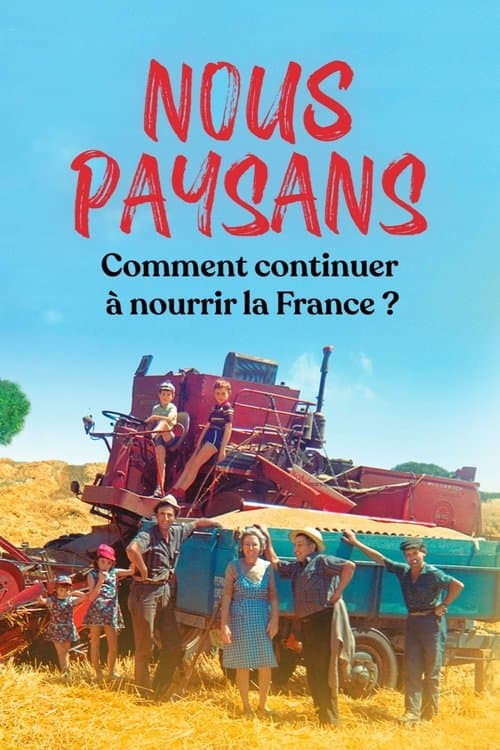
In barely a century, French peasants have seen their world profoundly turned upside down. While they once made up the vast majority of the country, today they are only a tiny minority and are faced with an immense challenge: to continue to feed France. From the figure of the simple tenant farmer described by Emile Guillaumin at the beginning of the 20th century to the heavy toll paid by peasants during the Great War, from the beginnings of mechanization in the inter-war period to the ambivalent figure of the peasant under the Occupation, From the unbridled race to industrialization in post-war France to the realization that it is now necessary to rethink the agricultural model and invent the agriculture of tomorrow, the film looks back at the long march of French peasants.
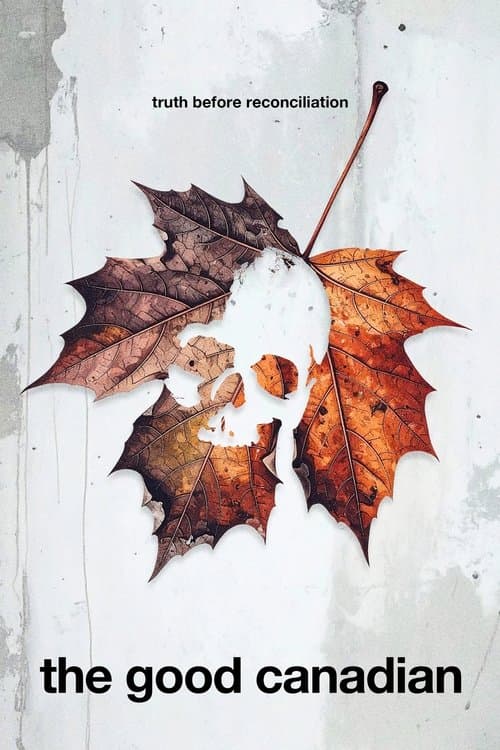
The world knows the image of the good Canadian. But what if there was a dark secret behind a national identity? THE GOOD CANADIAN exposes the truth behind the idea of a True North strong and free. In this unflinching and eye-opening documentary, directors Leena Minifie and David Paperny move us through the corridors of systemic inequity, from the Indian Act to residential schools, to modern-day family separation. Fusing shocking footage with detailed interviews with experts, advocates, whistleblowers and politicians, THE GOOD CANADIAN challenges national myth-making, while offering Canadians the chance to forge a new identity from the truth.
No overview available.
Checkpoint Zoo documents a daring rescue led by a heroic team of zookeepers and volunteers, who risked their lives to save thousands of animals trapped in a zoo behind enemy lines in the Russian Invasion of Ukraine.
In a mountainous but extremely green landscape goats jump over the rocks and laughing children run after them. In this paradise on earth, nomadic families have found their temporary home. From one of these families comes a teenage girl, Shahnaz. The girl should be getting married soon, but her thoughts are focused on the world of literature.
German national election campaign 2002: Henryk Wichmann from the conservative party is fighting a lost battle in the Uckermark.
Three months before the 2019 World Cup, the U.S. Women’s National Soccer Team filed a gender discrimination lawsuit against the United States Soccer Federation. At the center of this no-holds-barred account are the players themselves–Megan Rapinoe, Jessica McDonald, Becky Sauerbrunn, Kelley O'Hara and others–who share their stories of courage and resiliency as they take on the biggest fight for women's rights since Title IX.
In French Polynesia, transgender people evolve with apparent fluidity in all components of society. Their presence, observed as early as the 18th century by Western travelers and missionaries, has never ceased to intrigue and fascinate, producing over time numerous myths that the transgender women and men of Polynesia are today attempting to deconstruct. Through a series of luminous and intimate portraits, this documentary gives them a voice and proposes a rereading of gender issues in the light of Oceanian thought: an obvious enrichment.
David Griecos documentary showcases the underappreciated photography of Domenico Notarangelo, and through it, tells the story of Matera, it's people and it's history.
Huw Edwards presents a documentary examining the relationship between Victorian prime ministers Benjamin Disraeli and William Gladstone, whose bitter personal rivalry dominated British politics for 40 years.
This documentary follows the 2002 mayoral campaign in Newark, New Jersey, in which a City Councilman, Cory Booker, attempted to unseat longtime mayor Sharpe James.
The film is a controversy on democracy. Is our society really democratic? Can everyone be part of it? Or is the act of being part in democracy dependent to the access on technology, progression or any resources of information, as philosophers like Paul Virilio or Jean Baudrillard already claimed?
Based on the memoir by Indian policy analyst Sanjaya Baru, The Accidental Prime Minister explores Manmohan Singh's tenure as the Prime Minister of India, and the kind of control he had over his cabinet and the country.
A documentary on the life of the youth in post-Independence India.
No Cast found.