No Cast found.
No Trailers found.
A scientific treatise on the 'Wäscheklammer' - the artistic landmark of the Kreideberg district in Lüneburg.
No overview available.
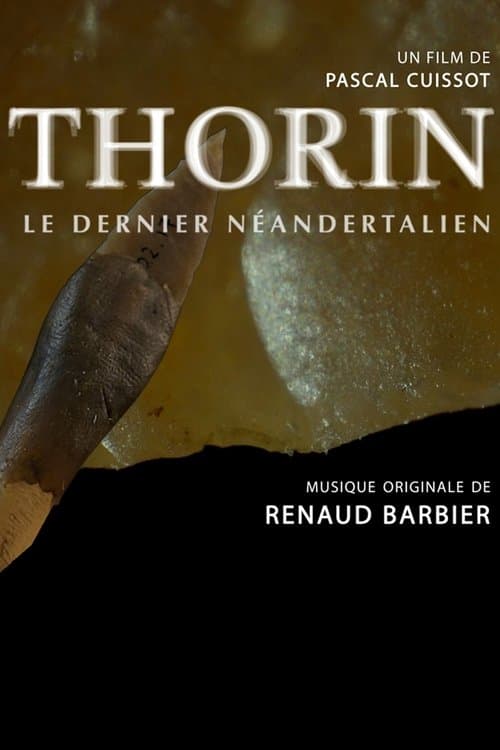
The Mandrin Cave in the Rhône Valley is a fascinating excavation site. Archaeologist Ludovic Slimak discovered fossils and flints here, proving that Neanderthals inhabited the cave for over 80,000 years. The first Neanderthal in France for half a century was also unearthed in the cave: He was given the name Thorin.
Twelve men who belong to one of the world's most exclusive fraternities -- people who've walked on the surface of the moon -- are paid homage in this documentary. Using newsreel footage, rare NASA photographs, and digitally animated re-creations, Magnificent Desolation: Walking on the Moon examines the Apollo missions between 1969 and 1972 which put astronauts on the moon.
A docu-film about the city Lucknow where the creators ask their family members important questions they have always wanted answers to, while indulging in tomfoolery around town. The film showcases the differences in the way three different generations perceive Lucknow. An ode to the city, and an attempt to provide solace to the social misfits of the creators' hometown.
Documentary about the life and art of puppeteer Celso Ohi.
Documentary covering the current state of both the theoretical and practical development of the various scientific basic principles that served, as per Gene Roddenberry's dictum, as a believable basis at the time for The Original Series. Several real-world scientists are interviewed, not a few of them unabashedly admitting they went into their chosen field of profession because of Star Trek: The Original Series.
1969 documentary film covering the flight of Apollo 11 from vehicle rollout to splashdown and recovery.
Top Gear presenter James May presents this informative program that examines the historic moon missions. Traveling to America, May meets three of the men who walked on the surface of the moon, learning how it felt and how the now antiquated technology was used to achieve such an historic feat.
The 1960s was an extraordinary time for the United States. Unburdened by post-war reparations, Americans were preoccupied with other developments like NASA, the game-changing space programme that put Neil Armstrong on the moon. Yet it was astronauts like Eugene Cernan who paved the uneven, perilous path to lunar exploration. A test pilot who lived to court danger, he was recruited along with 14 other men in a secretive process that saw them become the closest of friends and adversaries. In this intensely competitive environment, Cernan was one of only three men who was sent twice to the moon, with his second trip also being NASA’s final lunar mission. As he looks back at what he loved and lost during the eight years in Houston, an incomparably eventful life emerges into view. Director Mark Craig crafts a quietly epic biography that combines the rare insight of the surviving former astronauts with archival footage and otherworldly moonscapes.
The story of Luisa Kiara Marabolí Barrientos a transgender woman, and her journey from living 44 years in obscurity under an imposed identity to becoming a proud social leader and role model in her community.
What began as a document of trades, traditions, cultures and home environments in contemporary England evolved and expanded to become an all-consuming project. Mirrors is a witness to unprecedented events as they unfolded on this singular isle over seven extraordinary years. From volatile public demonstrations to intimate domestic scenes, the film reveals the experience and emotions of living in England, explored through the lives of total strangers as well as family and friends. Shot exclusively on 16mm film, Mirrors is both lucid diary and poetic map - a meditation on human resilience in the most challenging era of our lifetime.
A French documentary or, one might say more accurately, a mockumentary, by director William Karel which originally aired on Arte in 2002 with the title Opération Lune. The basic premise for the film is the theory that the television footage from the Apollo 11 Moon landing was faked and actually recorded in a studio by the CIA with help from director Stanley Kubrick.
This documentary takes the viewer on a journey along Halsted Street, from the southern tip of Illinois, north through various Chicago neighborhoods, to the end of the road at Broadway in Chicago's Lakeview neighborhood.