This film presents the principal features of the planets and the National Aeronautics and Space Administration (NASA) program for exploring them during the 1970s.
No Trailers found.
Venture into deep space for a fascinating look at asteroids, their cosmic origins and the potential threat they pose to our world. Written and produced by Phil Groves, produced by Jini Durr and directed by W.D. Hogan, Asteroid Hunters introduces asteroid scientists – the best line of defense between Earth and an asteroid’s destructive path – and reveals the cutting-edge tools and techniques they use to detect and track asteroids, and the technology that may one day protect our planet. The effects of an asteroid impact could be catastrophic and while the current probability of an event in our lifetime is low, the potential consequences make the study of asteroids an incredibly important area of scientific research. Witness the latest in planetary defense and how science, ingenuity and determination combine to explore the world’s most preventable natural disaster.
This feature-length documentary is a portrait of eclipse chasers, people for whom solar eclipses - among nature's more spectacular phenomena – are a veritable obsession. The film follows 4 of them as they travel incredible distances to witness the last total eclipse of the millennium as it sweeps eastward across Europe to India. At various points along the way enthusiasts Alain Cirou in France, Paul Houde in Austria, Olivier Staiger in Germany and Debasis Sarkar in India offer their impressions of the historic event.
Join the Mars rovers Spirit and Opportunity for an awe-inspiring journey to the surface of the mysterious red planet.
Everyone knows Neil Armstrong came back from the Moon in 1969 – but it wasn’t until three years later, when the people of a tiny Scottish town stepped in, that he finally got home. Neil Armstrong and the Langholmites is a film about the day one of the world’s most famous men visited the small ‘burgh’ of Langholm and the profound emotional effect the place, and its people, had on the normally stoic astronaut. From Industria Studios and Duncan Cowles, director of acclaimed 2024 feature Silent Men, comes a wry and beautiful slice of Scottish life and a unique, lesser-known tale about one of America’s most famous sons.
Spacecraft OSIRIS-REx attempts to grab a piece of an asteroid to bring back to Earth so scientists can study it to learn about the planet's origins.
A testament to NASA's Apollo program of the 1960s and '70s. Composed of actual NASA footage of the missions and astronaut interviews, the documentary offers the viewpoint of the individuals who braved the remarkable journey to the moon and back.
Top Gear presenter James May presents this informative program that examines the historic moon missions. Traveling to America, May meets three of the men who walked on the surface of the moon, learning how it felt and how the now antiquated technology was used to achieve such an historic feat.
Some 220 miles above Earth lies the International Space Station, a one-of-a-kind outer space laboratory that 16 nations came together to build. Get a behind-the-scenes look at the making of this extraordinary structure in this spectacular IMAX film. Viewers will blast off from Florida's Kennedy Space Center and the Baikonur Cosmodrome in Russia for this incredible journey -- IMAX's first-ever space film. Tom Cruise narrates.
In one single, epic camera move we journey from Earth's surface to the outermost reaches of the universe on a grand tour of the cosmos, to explore newborn stars, distant planets, black holes and beyond.
On January 28, 1986, NASA Challenger mission STS-51-L ended in tragedy when the shuttle exploded 73 seconds after takeoff. On board was physicist Ronald E. McNair, the second African American to enter space. But first, he was a kid with big dreams in Lake City, South Carolina.
Social isolation affects millions of people, even Mars-bound astronauts. A savvy NASA psychologist is tasked with protecting these daring explorers.
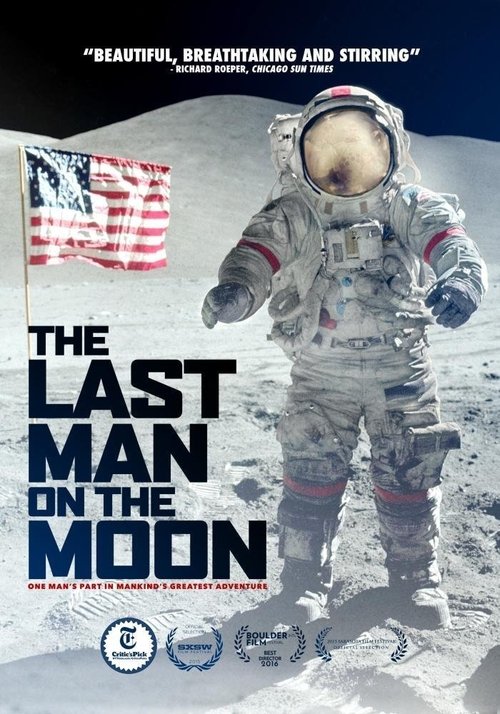
The 1960s was an extraordinary time for the United States. Unburdened by post-war reparations, Americans were preoccupied with other developments like NASA, the game-changing space programme that put Neil Armstrong on the moon. Yet it was astronauts like Eugene Cernan who paved the uneven, perilous path to lunar exploration. A test pilot who lived to court danger, he was recruited along with 14 other men in a secretive process that saw them become the closest of friends and adversaries. In this intensely competitive environment, Cernan was one of only three men who was sent twice to the moon, with his second trip also being NASA’s final lunar mission. As he looks back at what he loved and lost during the eight years in Houston, an incomparably eventful life emerges into view. Director Mark Craig crafts a quietly epic biography that combines the rare insight of the surviving former astronauts with archival footage and otherworldly moonscapes.
The film features amazing scenes of places never before seen gathered by key space missions that culminated with groundbreaking discoveries in 2015. It features a spectacular flight though the great cliffs on comet 67P, a close look at the fascinating bright "lights" on Ceres, and the first ever close ups of dwarf binary planet Pluto/Charon and its moons.
Moonscape is a free and freely downloadable high-definition documentary about the first manned Moon landing. Funded and produced by space enthusiasts from all over the world, it shows the full, unedited Apollo 11 landing and moonwalk, using only the original TV and film footage and the original audio and photographs. All this material has been scanned, digitized and restored from the best available sources. The live TV broadcast, the 16mm color film footage shot on the Moon and in Mission Control, and the Hasselblad 70mm color photographs taken by astronauts Buzz Aldrin and Neil Armstrong, have been fully synchronized with the audio recordings (including the onboard and Mission Control recordings) and are presented in real time, as they happened, with full subtitles in English or Italian.
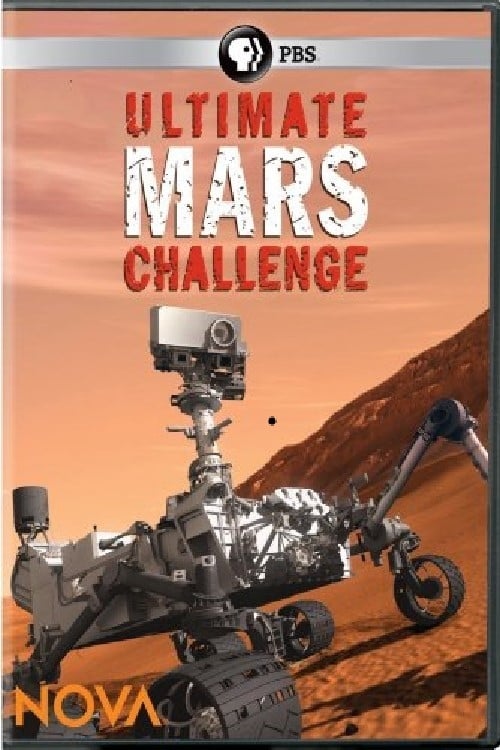
With access to the scientists and engineers responsible for the Curiosity rover's on-the-ground experiments, NOVA captures its landing on Mars
No overview available.
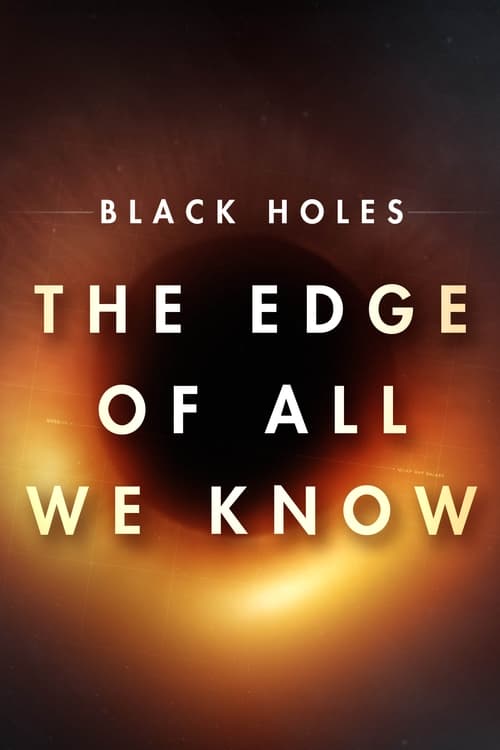
Black holes stand at the limit of what we can know. To explore that edge of knowledge, the Event Horizon Telescope links observatories across the world to simulate an earth-sized instrument. With this tool the team pursues the first-ever picture of a black hole, resulting in an image seen by billions of people in April 2019. Meanwhile, Hawking and his team attack the black hole paradox at the heart of theoretical physics—Do predictive laws still function, even in these massive distortions of space and time? Weaving them together is a third strand, philosophical and exploratory using expressive animation. “Edge” is about practicing science at the highest level, a film where observation, theory, and philosophy combine to grasp these most mysterious objects.
Commemorating the space agency's 50th anniversary, follow John Glenn's Mercury mission to orbit the earth, Neil Armstrong's first historic steps on the moon, unprecedented spacewalks to repair the Hubble stories, and more!
Twelve men who belong to one of the world's most exclusive fraternities -- people who've walked on the surface of the moon -- are paid homage in this documentary. Using newsreel footage, rare NASA photographs, and digitally animated re-creations, Magnificent Desolation: Walking on the Moon examines the Apollo missions between 1969 and 1972 which put astronauts on the moon.
An epic journey around Mars — built from real satellite and rover data — revealing the red planet as you’ve never seen it before.
No Cast found.