logologo
MovieVerse© 2024
Privacy PolicyTerms of ServiceContact Us
Made with ❤️ by Thathsara
movie poster
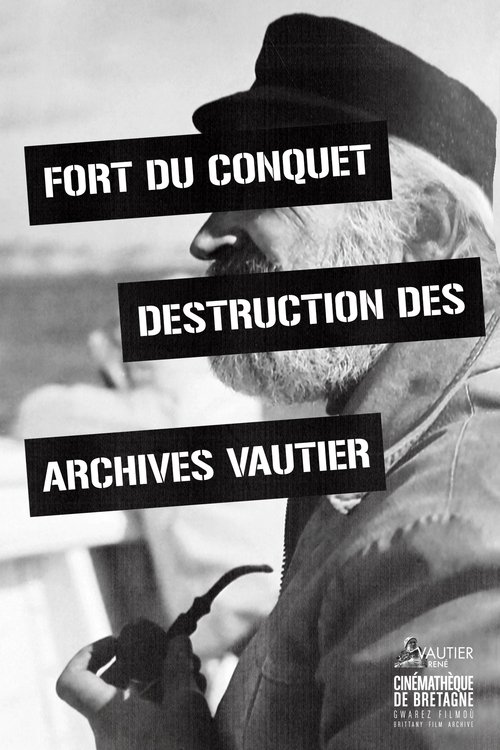
Fort Du Conquet Destruction of the Vautier Archives
Sign in to create your own watchlist

Fort Du Conquet Destruction of the Vautier Archives

Jan 1, 1983
0h 8m
★ 10.0

Overview

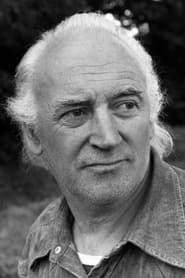
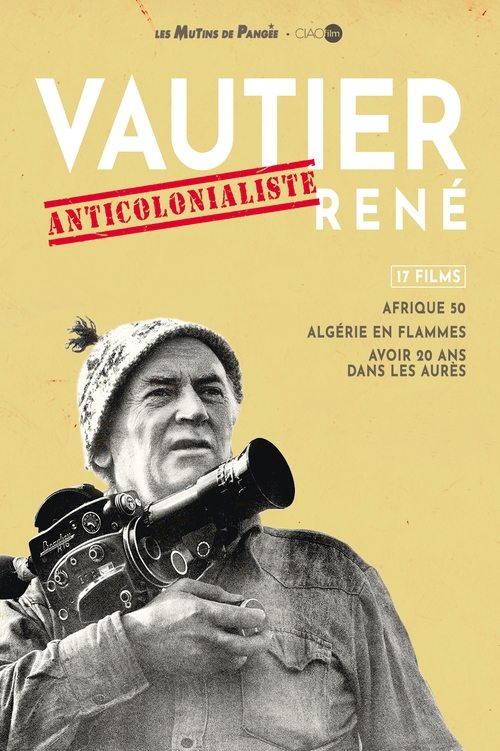
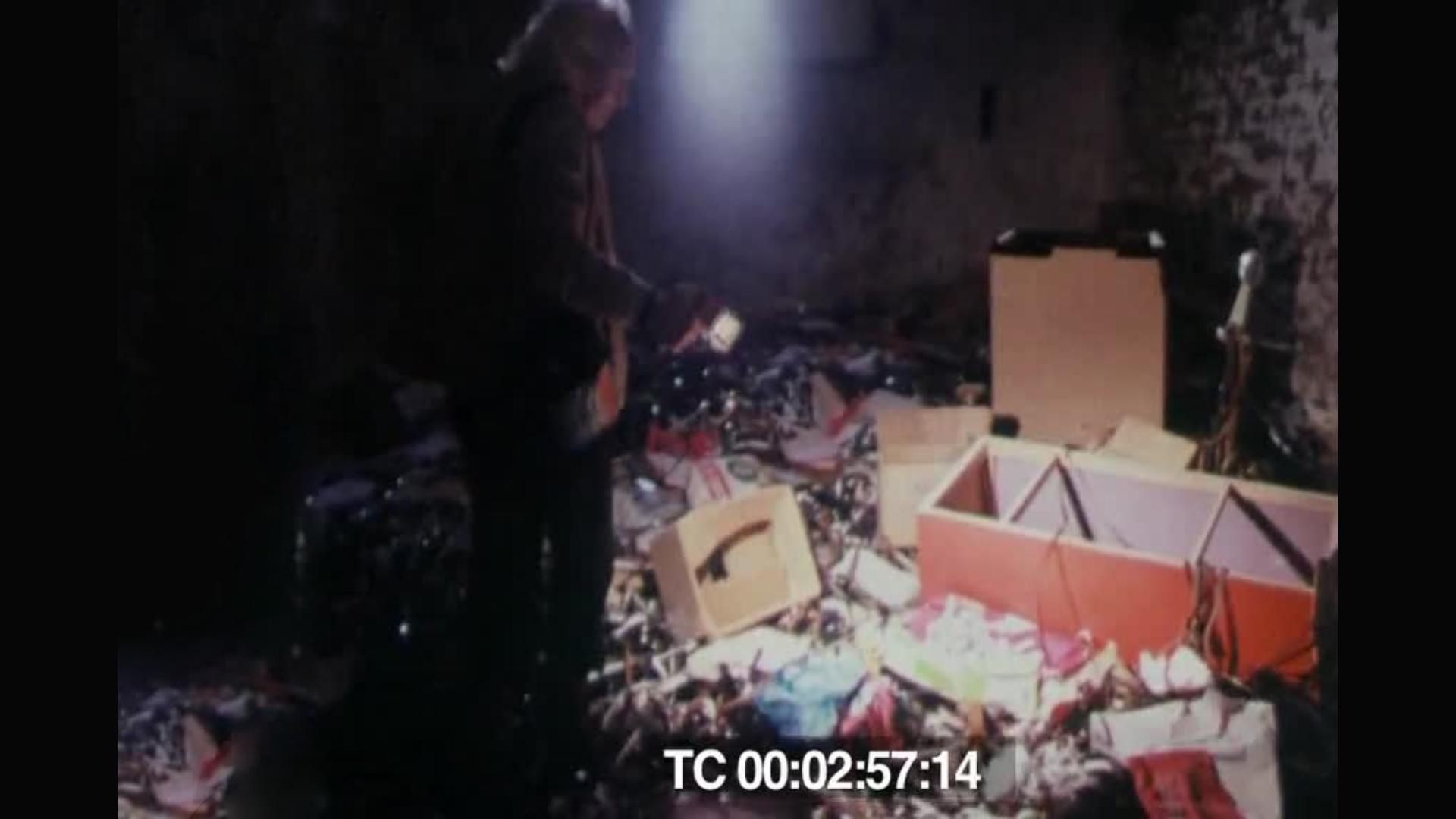
Resistance fighter under the occupation, committed to the FLN during the Algerian war, member of the Medvedkine group after May 1968 and defender of Breton autonomy, René Vautier was a committed filmmaker, author of an anti-colonialist work in which he denounces the repression, torture and racism. In 1983, René Vautier discovered, by the light of a flashlight, his films cut up and scattered at Fort du Conquet. Police also came to check the damage.

Genres

Documentary

Production Companies

René Vautier

Fort Du Conquet Destruction of the Vautier Archives Trailers

No Trailers found.

Cast

René Vautier

Self

René Vautier

You may also like

Be Water
6.7

Be Water

Jan 25, 2020

In 1971, after being rejected by Hollywood, Bruce Lee returned to his parents’ homeland of Hong Kong to complete four iconic films. Charting his struggles between two worlds, this portrait explores questions of identity and representation through the use of rare archival footage, interviews with loved ones and Bruce’s own writings.

CHoosing at Twenty
6.8

CHoosing at Twenty

Aug 24, 2017

Between 1954-1962, one hundred to three hundred young French people refused to participate in the Algerian war. These rebels, soldiers or conscripts were non-violent or anti-colonialists. Some took refuge in Switzerland where Swiss citizens came to their aid, while in France they were condemned as traitors to the country. In 1962, a few months after Independence, Villi Hermann went to a region devastated by war near the Algerian-Moroccan border, to help rebuild a school. In 2016 he returned to Algeria and reunited with his former students. He also met French refractories, now living in France or Switzerland.

No Image Available
0.0

Censored!

Dec 31, 1999

A documentary about the cultural effect of film censorship, focusing on the tumultuous times of the teens and early 1920s in America.

The Forbidden Reel
8.0

The Forbidden Reel

Mar 3, 2020

According to the official history of Afghanistan, ruthless destruction has always prevailed over art and creation; but there is another tale to be told, the forgotten account of a diverse and progressive country, seen through the lens of innovative filmmakers, a story that survives thanks to a few brave Afghans, a small but very passionate group that secretly fought to save a huge film archive that was constantly menaced by war and religious fanaticism.

The Zerda or the Songs of Forgetting
7.6

The Zerda or the Songs of Forgetting

Feb 27, 1983

“La Zerda and the songs of oblivion” (1982) is one of only two films made by the Algerian novelist Assia Djebar, with “La Nouba des femmes du mont Chenoua” (1977). Powerful poetic essay based on archives, in which Assia Djebar – in collaboration with the poet Malek Alloula and the composer Ahmed Essyad – deconstructs the French colonial propaganda of the Pathé-Gaumont newsreels from 1912 to 1942, to reveal the signs of revolt among the subjugated North African population. Through the reassembly of these propaganda images, Djebar recovers the history of the Zerda ceremonies, suggesting that the power and mysticism of this tradition were obliterated and erased by the predatory voyeurism of the colonial gaze. This very gaze is thus subverted and a hidden tradition of resistance and struggle is revealed, against any exoticizing and orientalist temptation.

Zombies in the Sugar Cane Field: The Documentary
7.8

Zombies in the Sugar Cane Field: The Documentary

Nov 8, 2019

Tucumán, Argentina, 1965. Three years before George A. Romero's Night of the Living Dead was released, director Ofelio Linares Montt shot Zombies in the Sugar Cane Field, which turned out to be both a horror film and a political statement. It was a success in the US, but could not be shown in Argentina due to Juan Carlos Onganía's dictatorship, and was eventually lost. Writer and researcher Luciano Saracino embarks on the search for the origins of this cursed work.

No Image Available
0.0

Sankofa

Invalid Date

A short documentary that emerge at the center of round table debate, participating in it there's three students from the Superior School of Arts and Design, Caldas da Rainha - Portugal. This conversation go along with a video essay about Afrofuturism and Pop Culture. Also, during the debate, an interview with another student gives some real example of how afrofuturism can be applied when it comes to in taking control of the colonial narratives into a black person perspective.

How Much I Love You
10.0

How Much I Love You

May 5, 1985

Beginning with a promotional reel encouraging farming investments in Algeria and ending with the secret 1950s nuclear tests that France conducted using Algerian prisoners, How Much I Love You appropriates archival footage produced by the French colonial powers in Algeria. Meddour’s approach is disarmingly simple and yet awe-inspiring—his caustic undoing of colonial discourse is underscored by a liberating release of humor.

Here and Elsewhere
6.5

Here and Elsewhere

Sep 15, 1976

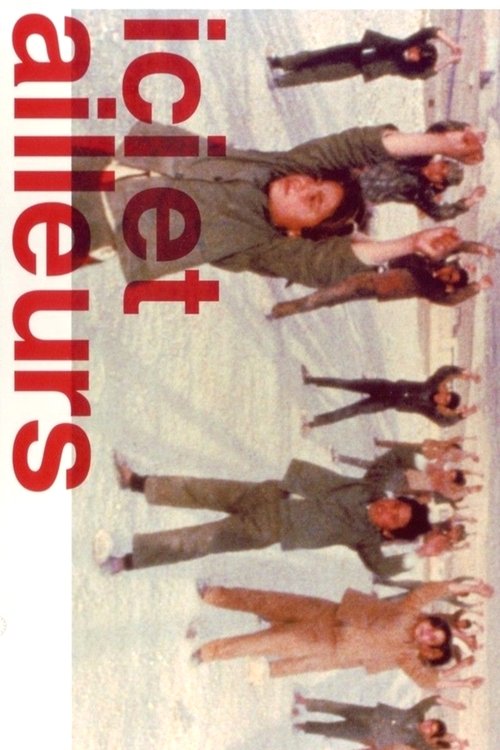
Here and Elsewhere takes its name from the contrasting footage it shows of the fedayeen and of a French family watching television at home. Originally shot by the Dziga Vertov Group as a film on Palestinian freedom fighters, Godard later reworked the material alongside Anne-Marie Miéville.

Sawt Echaâb
10.0

Sawt Echaâb

Jan 1, 1961

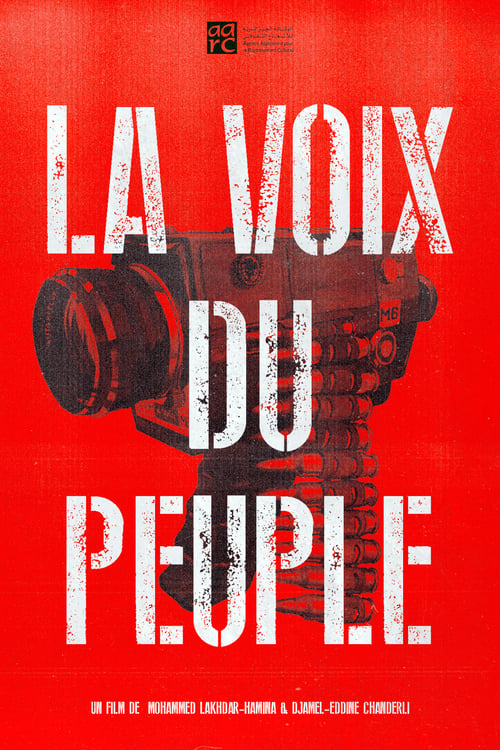
“La Voix du Peuple,” composed of archival photographs by René Vauthier and others, exposes the root causes of the armed conflict of the Algerian resistance. Participating in a war of real images against French colonial propaganda, these images aimed to show the images that the occupier had censored or distorted, by showing the extortions of the French occupation army: torture, arrests and arbitrary executions, napalm bombings, roundabout fires, erasing entire villages from the map, etc. This is what the French media described as a “pacification campaign”.

Cinecittà Babilonia: Sex, Drugs and Black Shirts
6.5

Cinecittà Babilonia: Sex, Drugs and Black Shirts

Jun 14, 2017

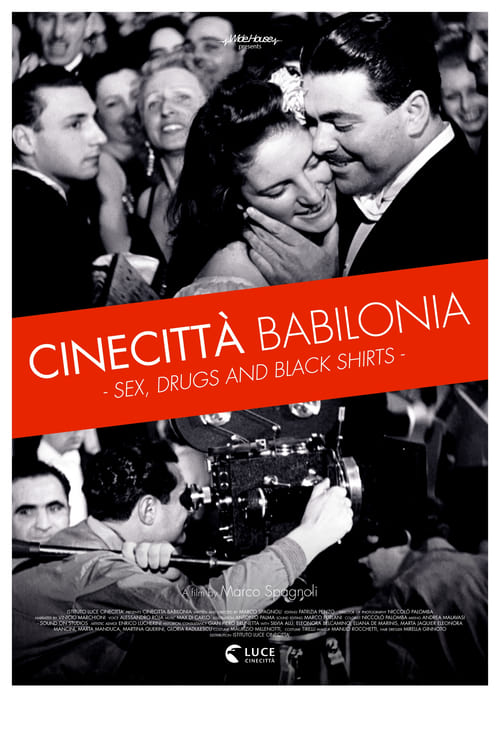
The story of Italian cinema under Fascism, a sophisticated film industry built around the founding of the Cinecittà studios and the successful birth of a domestic star system, populated by very peculiar artists among whom stood out several beautiful, magnetic, special actresses; a dark story of war, drugs, sex, censorship and tragedy.

A Propos D'Un Crime
10.0

A Propos D'Un Crime

Jan 1, 1967

In 1967, Visconti came to Algiers for the filming of The Stranger with Mastroianni and Anna Karina. Camus, during his lifetime, had always refused to allow one of his novels to be brought to the screen. His family made another decision. The filming of the film was experienced in Algiers, like a posthumous return of the writer to Algiers. During filming, a young filmmaker specializing in documentaries Gérard Patris attempts a report on the impact of the filming of The Stranger on the Algerians. Interspersed with sequences from the shooting of Visconti's film, he films Poncet, Maisonseul, Bénisti and Sénac, friends of Camus, in full discussions to situate Camus and his work in a sociological and historical context. “The idea is for us to show people, others, ourselves as if they could all be Meursault, or at least the witnesses concerned to his drama.”

La Bataille d'Alger, l'empreinte
10.0

La Bataille d'Alger, l'empreinte

Jan 1, 2018

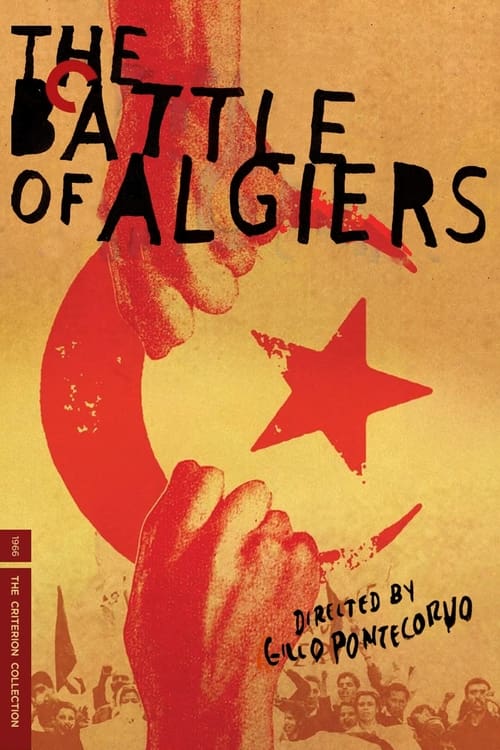
Cheikh Djemaï looks back on the genesis of Gillo Pontecorvo’s feature film, The Battle of Algiers (1965). Through archive images, extracts from the film and interviews with personalities, the filmmaker retraces the journey of a major work - from the events of the Algiers Casbah (1956-1957) to the presentation of the Lion of 'Or causing the anger of the French delegation in Venice - which left its mark as much in the history of cinema as in that of Algeria.

Five Directors On The Battle of Algiers
10.0

Five Directors On The Battle of Algiers

Aug 1, 2004

This 17-minute documentary is featured on the 3-Disc Criterion Collection DVD of The Battle of Algiers (1966), released in 2004. An in-depth look at the Battle of Algiers through the eyes of five established and accomplished filmmakers; Spike Lee, Steven Soderbergh, Oliver Stone, Julian Schnabel and Mira Nair. They discuss how the shots, cinematography, set design, sound and editing directly influenced their own work and how the film's sequences look incredibly realistic, despite the claim that everything in the film was staged .

Colonial Times
0.0

Colonial Times

Jan 1, 1976

Three centuries of Venezuela's history as a Spanish colony are considered from economic, political and social standpoints; evocations of the past are compared to the present. Based on the ideas and research of Federico Brito Figueroa, Alfredo A. Alfonso, Miguel A. Saignes, Josefina Jordan, and Thaelman Urgelles among others.

Die weiße Gefahr
10.0

Die weiße Gefahr

Jan 18, 1971

No overview available.

Frantz Fanon, trajectoire d'un révolté
10.0

Frantz Fanon, trajectoire d'un révolté

Nov 7, 2021

Frantz Fanon alone embodies all the issues of French colonial history. Martinican resistance fighter, he enlisted, like millions of colonial soldiers, in the Free Army out of loyalty to France and the idea of freedom that it embodies for him. A writer, he participated in the bubbling life of Saint-Germain with Césaire, Senghor and Sartre, debating tirelessly on the destiny of colonized peoples. As a doctor, he revolutionized the practice of psychiatry, seeking in the relations of domination of colonial societies the foundations of the pathologies of his patients in Blida. Activist, he brings together through his action and his history of him, the anger of peoples crushed by centuries of colonial oppression. But beyond this exceptional journey which makes sensitive the permanence of French colonialism in the Lesser Antilles at the gates of the Algerian desert, he leaves an incomparable body of work which has made him today one of the most studied French authors across the Atlantic.

Hearts and Minds
7.7

Hearts and Minds

Dec 20, 1974

Many times during his presidency, Lyndon B. Johnson said that ultimate victory in the Vietnam War depended upon the U.S. military winning the "hearts and minds" of the Vietnamese people. Filmmaker Peter Davis uses Johnson's phrase in an ironic context in this anti-war documentary, filmed and released while the Vietnam War was still under way, juxtaposing interviews with military figures like U.S. Army Chief of Staff William C. Westmoreland with shocking scenes of violence and brutality.

Clément-Marie Biazin, peintre-conteur africain
0.0

Clément-Marie Biazin, peintre-conteur africain

Jan 1, 1972

No overview available.

Todos los nombres de Sara
4.0

Todos los nombres de Sara

Dec 15, 2019

Born in Campo de Criptana, a small village in the Spanish region of La Mancha, Sara Montiel (1928-2013) conquered Mexico, Hollywood, and the hearts of people. The recognition of an unparalleled professional career, an intimate dialogue with a tireless worker who took the stage at the age of twelve and never got off. A movie star who seduced millions of viewers around the world, a singer who reinvented a musical genre, a woman who broke the mold…