No Trailers found.
After an accident, Sebastian (Zuko), who was a professional mountaineering guide, lost the mobility of his legs. However, through a great feat he undertakes at the top of Mount Kilimanjaro, he proves that limits only exist in our minds.
Two-time Olympic champion, seven-time world champion, overall World Cup winner – Laura Dahlmeier is one of the most successful German biathletes and sportswomen of all time. But at an unusually early age, at just 25, she turned her back on winter sports and devoted herself to mountaineering. A film crew accompanied the exceptional athlete from Garmisch-Partenkirchen for three and a half weeks on her expedition to the spectacular Ama Dablam in Nepal. In addition to incredible drone footage of the mountain landscape, the documentary also features private moments during the ascent of the "Matterhorn of the Himalayas." The biathlon legend talks about her life as a mountain guide and alpinist after her sporting career, without concealing the dangers involved. Conversations with parents and friends reveal the character and motivation of the 31-year-old, making it clear why this exceptionally talented woman turned her back on the biathlon circuit at such a young age.
In 1975, a woman reached the summit of Mount Everest: Junko, the first woman in history to reach the world's highest peak. Junko's unforgettable feat stunned the world, bringing her into the spotlight but casting a huge shadow over her friends and family. Despite being diagnosed with a terminal illness in her final years, Junko continued to challenge the mountains. What was the last thing she saw beyond the summit?
In the days leading up to the storming of the Red Mosque, Al Jazeera's Rageh Omaar gained exclusive access. He and his team were the last TV crew inside the mosque before the siege began and filmed the last interview with Abdul Rashid Ghazi, one of the mosque's leaders, before his death.
No overview available.
Four adventurers are given the opportunity to take on once-in-a-lifetime challenges. They’ll push themselves physically, mentally and spiritually to conquer what once seemed impossible.
Life By The Fingertips is a documentary film by Jean-Paul Janssen released in 1982, directing Patrick Edlinger totally living his passion, climbing, which he practices here solo ("with bare hands"), it that is, without a rope or any kind of insurance. The film begins with a session of solo sea crossings on the Piade site near Toulon. In the second part, Patrick Edlinger trains in Buoux before carving a solo route in this now famous climbing site. This mythical film in more than one way is considered the first climbing film, that is to say where climbing is an activity in itself and not a means of preparing for mountaineering. His media success was such that he propelled Patrick Edlinger to the rank of world star, and above all he made climbing known to the general public, and was even nominated for the César for best documentary short film.
Sur le fil des 4000 is a documentary film by Gilles Chapaz, which traces the last rope of the mountaineering duo Patrick Berhault and Philippe Magnin. The objective of the roped party was to climb the 82 peaks over 4000 meters in the Alps, by carrying out the connecting routes on foot, on skis or by bike. All at the end of winter and the beginning of spring. They left on March 1, 2004, from Saint Christophe en Oisans. The film shows us in images this alpine adventure, from which the spirit of competition is excluded, to make way for the simple pleasure of being in the mountains. This posthumous film was edited after the disappearance of Patrick Berhault, which occurred during the expedition on April 28, 2004.
Transcending cultural barriers and consistently going against the grain, female Nepali climber Pasang Lhamu Sherpa attempted to summit Everest four times in the early nineties. Although she was not allowed to attend school as a child, Pasang did not let that stop her from pursuing her dreams. After founding her own trekking company in Kathmandu, she blazed a trail for Nepali women via her efforts to summit Everest. Proving how big you can dream and how far you can go to achieve those dreams, she left a legacy not only for the family she has left behind, but for the myriad women following in her footsteps.
Chronicles from Kashmir seeks to create a sense of “balance”: between differently positioned voices that emerge when speaking about Kashmir; between differently placed narratives on the “victim”/“perpetrator” spectrum. While there is an inevitable streak of political commentary that runs throughout the work – a political current that cannot be escaped when talking about Kashmir – Chronicles from Kashmir does not espouse any one political ideology. We see ourselves as being artists and educators, using aesthetics and pedagogy to engage audiences with diverse perspectives from/about the Valley.
Nine famous faces are pushed to their physical and emotional limits in a valiant attempt to scale Mount Kilimanjaro, Africa's highest mountain, to raise money for Comic Relief and help change lives this Red Nose Day, with their turmoil and triumphs revealed in Kilimanjaro: The Bigger Red Nose Climb.
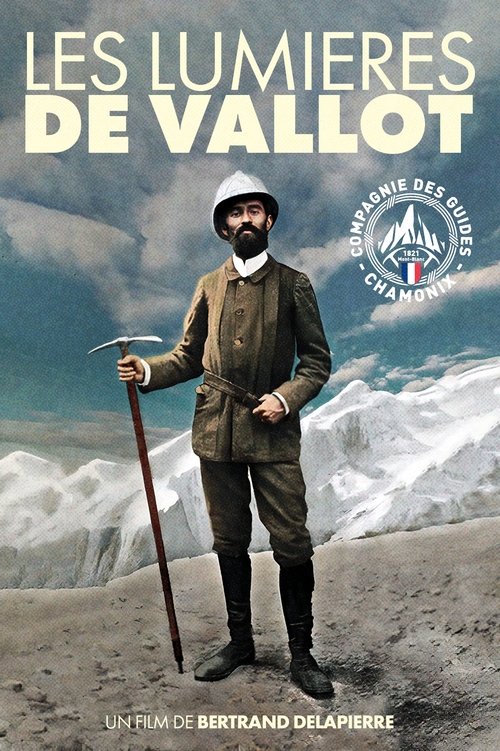
"The ascent of the Aiguilles Ravanel and Mummery", climbed by young guides in cycling pants: The brothers Armand Charlet and Georges Charlet, Arthur Ravanel, Henri Couttet and Charles Balmat. The film was shot by Georges Tairraz II, Chamoniard mountain photographer, representative of the third generation of a family line of mountain photographers and filmmakers. George Tairraz II's film will lay the groundwork for a French vision of mountain film; In the 1930s, a French school of mountain cinema emerged, less expressionist, more stripped down and realistic than the German school. These are the films of Marcel Ichac, Roger Frison-Roche, Samivel, Georges Tairraz II, etc. It develops according to the principles set by Marcel Ichac, in opposition to the German school. It is both about getting out of the dramatic vision of the mountain and placing the mountain and the climbers at the heart of the plot.
A Nepali mountaineer risks everything on a record-breaking Mount Everest climb to secure a brighter future for her daughters.
The Fitz Roy Traverse is one of the most sought after achievements in modern alpinism: a gnarly journey across seven jagged summits and 13,000 vertical feet of climbing. Who knew it could be so much fun? Join Tommy Caldwell and Alex Honnold on the inspiring -- and at times hilarious -- quest that earned the Piolet d'Or.
Follows three young Tibetans faced with moral dilemmas: a rising pop star asked by her Chinese official boyfriend to sing pro-government songs; her brother, an embittered drunk; and their cousin, a Buddhist nun savagely beaten after shouting anti-Chinese slogans.
This is a touching and somber journey of Lasya, who lives with her father Karma and younger brother Chomo in a remote village in the Himalayas. Pristine snow capped mountains surround their tiny hamlet and barren harsh land stretches for miles into nowhere. One day the army moves in, settles a hundred yards across their doorstep. The last bit of comfort the family draws from their familiar surroundings changes into a harsh ceaseless irreversible conflict. The film depicts the life of this family whose dream like existence is interrupted by inevitable odds, one after the other.
In 1990 Macartney-Snape returned once again to Mt Everest with the idea of climbing the mountain from the sea to the summit. The idea had originally been floated by adventure cameraman Michael Dillon. With sponsorship provided by Australian Geographic amongst others, it would take Macartney-Snape three months to achieve this goal. This was the first time anyone had walked from sea level and reached the top of Mt Everest, as even the first expeditions started from Kathmandu, at 1400m above sea level. Although Macartney-Snape planned climbing Everest via the more difficult West Ridge, bad weather and strong avalanche risk changed his plans and he finally ascended via the South Col route.
SherDil follows it's lead character Haris Mustafa, as he journeys from the academy to becoming a Flt Lt in the PAF, chasing his goals that are layered with personal and professional challenges.
Self