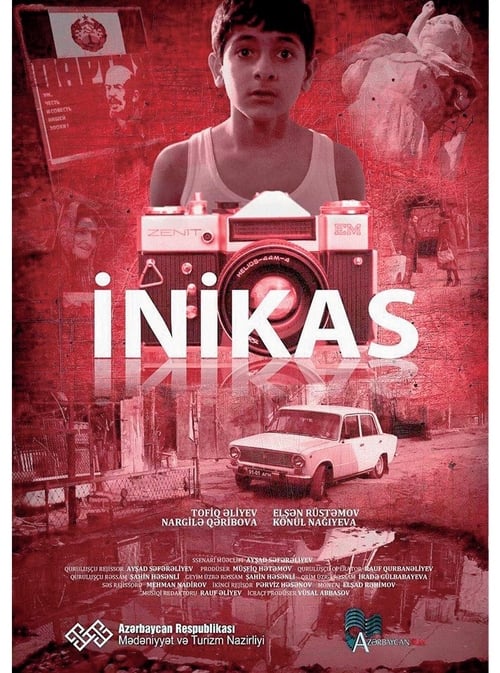
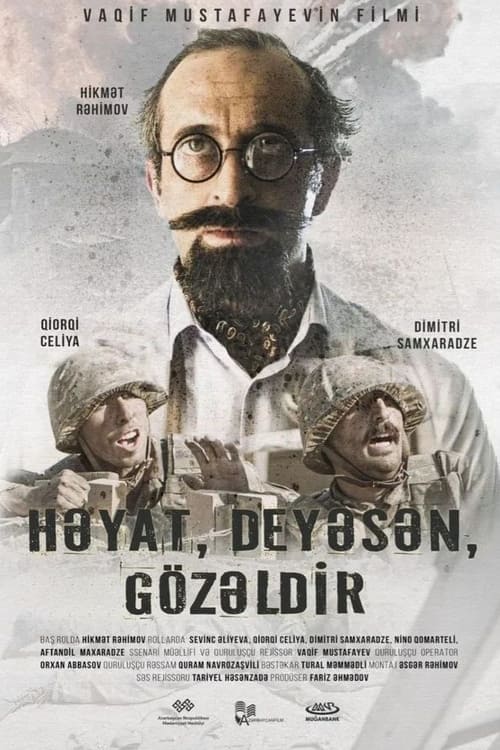
The film depicts a mystical event happening to a family who lived in Aghdam, during the USSR.
No Trailers found.
Father
Javid
Mother
Neighbor
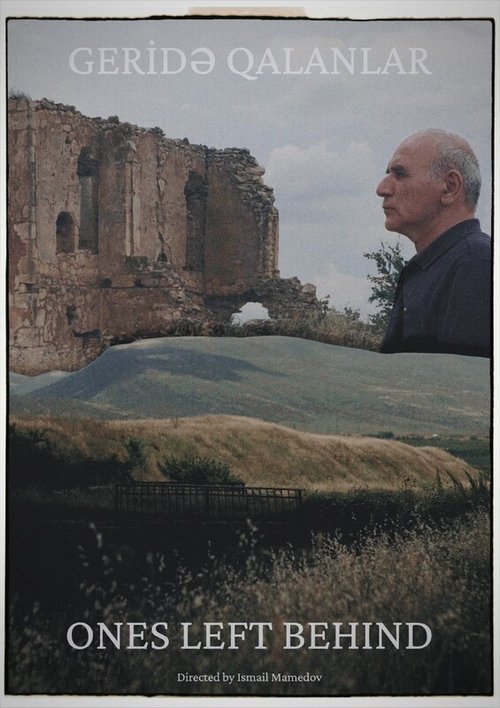
A couple returns to Aghdam, the city they once fled 32 years ago due to the war. It's a story about memory held in people, and about the small, powerful ways the past resurfaces when you finally face it.
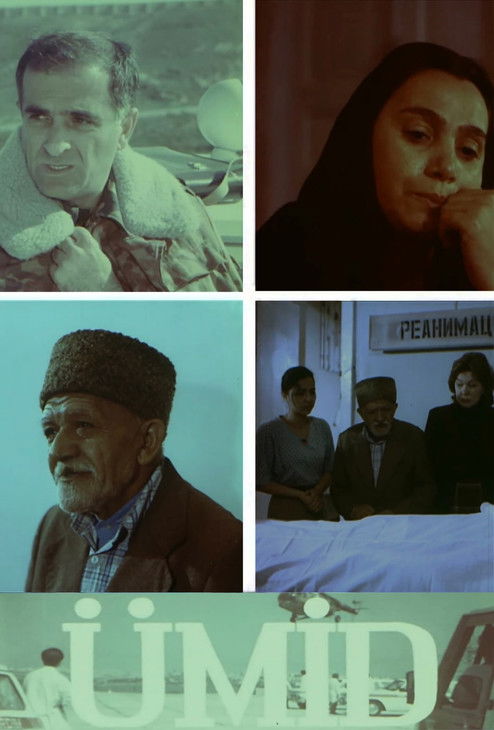
The film is about war in Garabagh and when we look at wounded solider we see our son, brother or father.
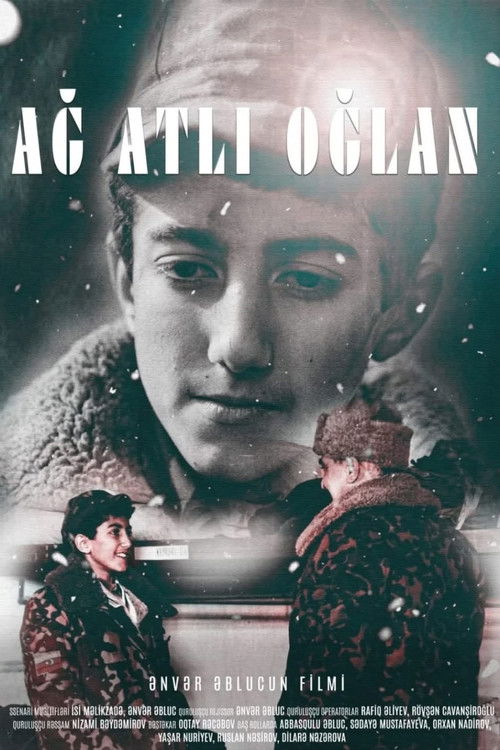
At the end of the Garabagh war, a young Azeri man, who has been witness to the martyrdom of many people and the dispatch of his friends and relatives to the war front, mounts a white horse and without informing his family sets out for the front, He joins the relief work group in spite of the objections of the commander of the forces, until...
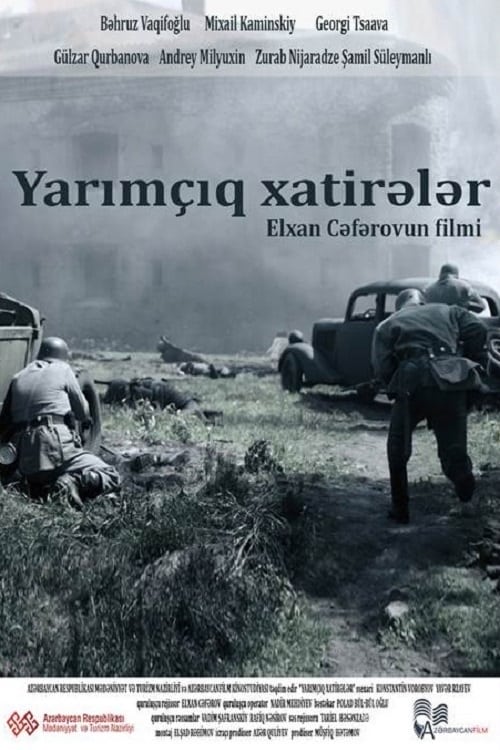
An Azerbaijanian veteran of battle for Brest fortress takes gun again 50 years later - to defend Nagorny Karabakh from Armenians.
The film tells the story of a man, who was in prison when the invaders occupied his native land. When he gets out from prison, he tries to find ways to visit his parents’ graves, which are located on the occupied lands now.
"Endless Corridor" is the definitive account of an agonizing human rights tragedy in which hundreds of Azerbaijanis massacred after Armenian Forces stormed the city of Khojaly during the Nagorno-Karabakh War. It happened in 1992, but the full story never been told throughout the world until now.
Sequel to Fəryad (1993). The film tells the story of Azerbaijani victory in the 44-day Patriotic War for the lands of Karabakh, which the Armenian invaders had occupied for nearly 30 years.
Using unpublished photos taken by Italian war photographer Enrico Sarsini, and the reconstruction of key events, this film examines the battle for a strategically-located church that was defended by Azerbaijani teenager Natig Gasimov. After his surrender and interrogation by Armenian forces, he was never heard of again. This film finds out what happened to Natig and who may be responsible. Filmed over a period of three years, filmmaker Karan Singh spoke to witnesses in Armenia, Azerbaijan, Italy and Russia in his search for the truth.
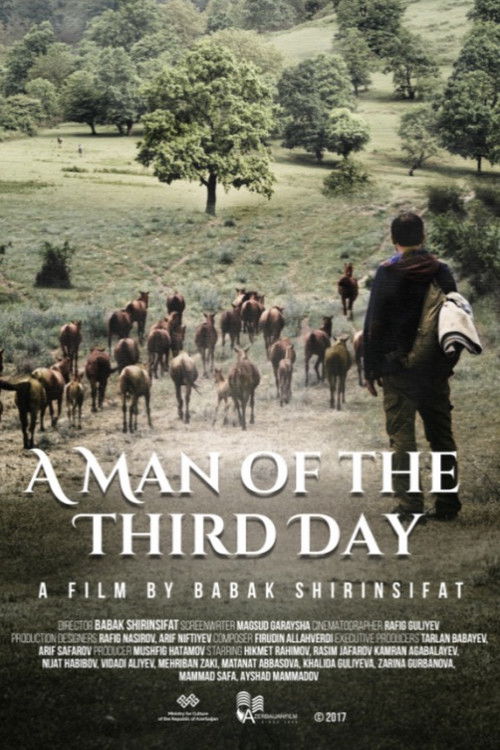
The film is about the breeding of the famous Karabakh horses at the Aghdam equestrian factory.
The film tells the story of the Karabakh veteran, cavalier of the Order of the "Azerbaijani Flag", National Hero of Azerbaijan, and commander of the intelligence unit, Ibad Huseynov.
As a result of the second Karabakh war, a village should be ceded to Azerbaijan since a new highway is built through the Lachin corridor. The family of Narine, like many other Armenian families, needs to find a new place.
The film takes place in Karabakh, where Baku students come to help build a settlement for refugees. Among them are two young lovers, Tural and Gunel. One night, they witness a failed sabotage attempt by Armenian militants, which Tural manages to record on his video camera. The footage shows explosions, armed extremists, and an unmarked helicopter, becoming key evidence. Realizing this, the enemies decide to eliminate the unwanted witness.
In trouble with the local authorities, Mabel Simmons, notoriously known as Madea, is on the run from the law. With no place to turn, she moves in with her friend Bam who is recovering from surgery. Unbeknownst to Bam however, Madea is only using the "concerned friend" gag as a way to hide out from the police.
Lightning streaks through the skies as Dalila declares her love to Samson in one of the finest arias of romantic opera. “My heart awakens to your voice like a flower to the kiss of dawn.” An enchanting yet treacherous beauty… When the thunder at last rumbles, Dalila betrays Samson and offers him up to his enemies: “Come up, for this time he has shown me all his heart”, she whispers to them in the night (The Old Testament, Book of Judges). Based on a violent and erotic biblical story, Saint-Saëns’s opera – composed in 1877, much to Liszt’s insistence – would not be performed at the Palais Garnier until fifteen years later. This first Parisian performance in 1892 included the hitherto unperformed “Dance Of The Priestesses”. Nevertheless, it became one of the most performed French operas in the world, together with Faust and Carmen. Conducted by Philippe Jordan, this new production brings back a repertoire masterpiece that has not been performed at the Paris Opera for twenty-five years.
A quiet and put-upon house cleaner breaks her silence.
A short film about love, told backwards.
Anna is a surgeon and, like her husband Gunnar, works at the hospital in a small town in the Mecklenburg Lake District. They have built a good life here with their son. Anna is torn out of her usual routine when a child suddenly suffers an allergic shock after a routine operation, which was triggered by an antibiotic that Anna had not been given. A medical mystery for Anna until she finds out that the clinic has a massive hygiene problem. The more unpleasant truths Anna uncovers, the more hostile she becomes. Anna is faced with decisions of conscience that could bring down everything she has built up so far.
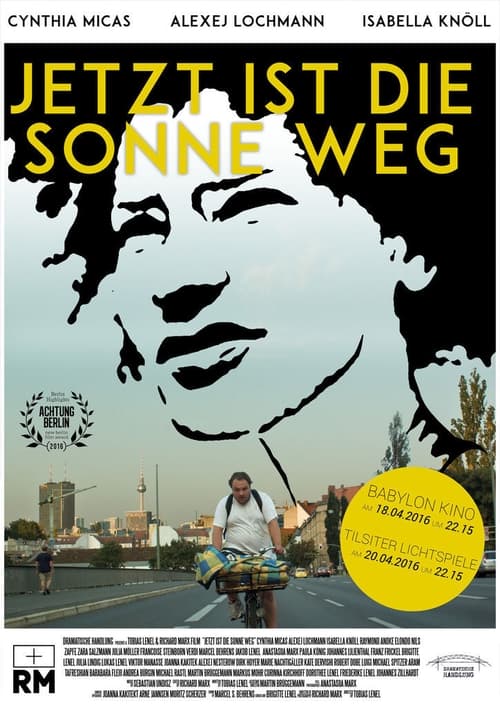
Kostja, the German-Russian, and Beatrice, the German-African, have a big argument at night. Beatrice leaves the apartment and leaves Kostja behind with the baby, reinventing herself as an architect and psychologist, as an actress and screenwriter, while Kostja, the bicycle messenger, tries in vain to find somewhere to put his child. At some point he loses it. All three experience their odyssey through a Berlin summer day.
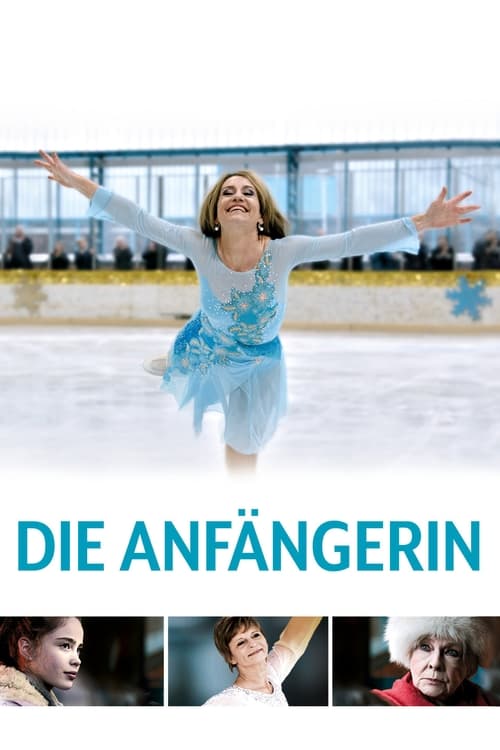
A coming-of-age tale with a difference about the grumpy doctor Annebarbel Buschhaus donning her ice skates again at the age of 58 after an absence of 40 years. Back on the ice, she tries to revive long suppressed childhood dreams – and makes a new friend, Jolina Kuhn, Berlin’s youth figure skating champion. Through her new friend, Annebarbel begins to open up and break away from her dominant mother.
After 10 years separation from his wife, a film director (Jean-Louis Trintignant), imagines he can make up with her by giving her a part in his next film, an adaptation of Tshekov's "Three Sisters". He goes location scouting and stays in Bex, a Spa near Lake Leman, together with the three actresses : Julie, his ex-wife (Delphine Seyrig), the mysterious Cecilia, that his producer wants him to take (Lea Massari), and Esther (Valérie Mairesse), a teenager. They all stay in an old decaying hotel. In this isolated mansion the four of them will fight but also discover each other.