logologo
MovieVerse© 2024
Privacy PolicyTerms of ServiceContact Us
Made with ❤️ by Thathsara
movie poster
Narcotic Deaths
Sign in to create your own watchlist

Narcotic Deaths

Jan 23, 1970
0h 48m
★ 0.0

Forensic Medicine Outlines

Overview

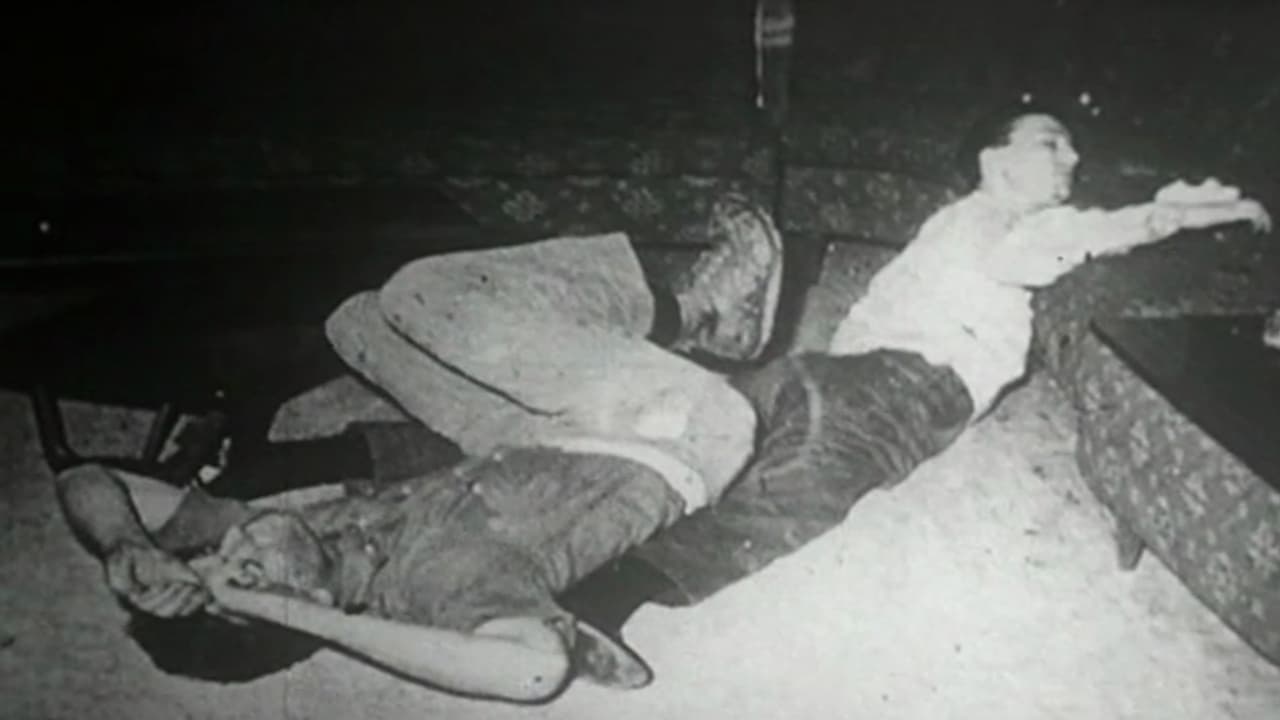
The purpose of this presentation is to discuss the types of narcotic deaths and drugs encountered by Dr. Milton Helpern in his post as Chief Medical Examiner for New York City and to describe internal and external body changes resulting from narcotism. This objective is achieved with the use of photographs of overdose victims and the equipment found and used by addicts. According to this presentation narcotic addiction which has been a problem for many years has increased markedly within the last twenty years. The use of amphetamines and marijuana is discussed briefly and the equipment used by addicts is described and illustrated. Dr. Helpern then shows photographs of overdose victims and describes the circumstances under which the body was found.

Genres

Documentary

Cast

No Image

Dr. Milton Helpern

Narcotic Deaths Trailers

No Trailers found.

You may also like

Ensuring Your Place In Hell Vol. III
0.0

Ensuring Your Place In Hell Vol. III

Invalid Date

The third installment in one of the most disturbing shockumentary series ever made, and it gets even more sick! Includes an autopsy of an unfortunately real dead infant, a cooking tutorial on road-kill, a walk-through of an abandoned house cleared after the homicide of an exchange-student, and a video of re-enactments of workplace incidents.

Dig!
6.7

Dig!

May 14, 2004

A documentary on the once promising American rock bands The Brian Jonestown Massacre and The Dandy Warhols. The friendship between respective founders, Anton Newcombe and Courtney Taylor, escalated into bitter rivalry as the Dandy Warhols garnered major international success while the Brian Jonestown Massacre imploded in a haze of drugs.

Last Fast Ride: The Life, Love and Death of a Punk Goddess
8.0

Last Fast Ride: The Life, Love and Death of a Punk Goddess

Mar 10, 2011

Henry Rollins narrates Lilly Scourtis Ayers' no-holds-barred profile of volatile Bay Area punk legend Marian Anderson, whose hypnotic beauty, devil-may-care rebellion and shocking sexual exploits onstage launched her to infamy before tragically dying of a heroin overdose at the tender age of 33.

The Coroner's Camera
9.0

The Coroner's Camera

Jan 1, 1997

Hosted by Damon Fox, this documentary takes us on a grim dive into the world of the coroner and what they see in their line of work.

Faces of Death
4.6

Faces of Death

Nov 10, 1978

What question has plagued mankind more than the mystery—and terror—of death? This forbidden pursuit has driven Dr. Frances B. Gröss to the brink of madness, but in his obsession, he has amassed a uniquely comprehensive collection of films that depict life in its final, grueling moments. From the savagery of cold-blooded murder to the perverse realities of war, tragic accidents, and the everyday lives of those who collect, dissect, and bury the dead, this descent into morbidity lays bare a truth that all of us will one day face.

Kímmapiiyipitssini: The Meaning of Empathy
9.0

Kímmapiiyipitssini: The Meaning of Empathy

Apr 29, 2021

Follow filmmaker Elle-Máijá Tailfeathers as she creates an intimate portrait of her community and the impacts of the substance use and overdose epidemic. Witness the change brought by community members with substance-use disorder, first responders and medical professionals as they strive for harm reduction in the Kainai First Nation.

No Image
6.8

Løsladt - Henrik tur/retur

Jan 1, 1997

No overview available.

No Image
8.0

Den store aktion

Jan 1, 1994

No overview available.

Jim Morrison: The End
7.4

Jim Morrison: The End

Jul 2, 2021

Paris, Rue Beautreillis, July 3, 1971. The corpse of rock star Jim Morrison is found in a bathtub, in the apartment of his girlfriend Pamela Courson. The chronicle of the last months of the life of the poet, singer and charismatic leader of the American band The Doors, one of the most influential in the history of rock.

Overdose
0.0

Overdose

Jan 23, 1977

This program is an overview of best practices to keep a person who has overdosed alive between discovery and hospitalization. Practices include quickly finding or identifying the substance the person on which the person has overdosed and traveling to a hospital or other treatment site immediately. Several simulations of different situations are shown, and the narrator asks the viewer what he or she would do differently. It provides an excellent overview of the basic prehospital approach to an overdosed patient. The initial field management of a patient is covered, accompanied by well-done scenarios illustrating incorrect technique. Although the inclusion of more medical detail would have been beneficial, this is a compelling presentation which is highly recommended for use.

Narcotics, Why Not?
6.0

Narcotics, Why Not?

Jan 23, 1966

This film presents a series of extemporaneous interviews with teenagers and young adults who have taken narcotics for "kicks," "association," or "curiosity." Residents of the California Rehabilitation Center relate how they were introduced to narcotics, why they wished they had not used drugs or narcotics, and what the future holds for them. Film is shot in Hollywood, Calif.

What Did You Take?
0.0

What Did You Take?

Jan 23, 1971

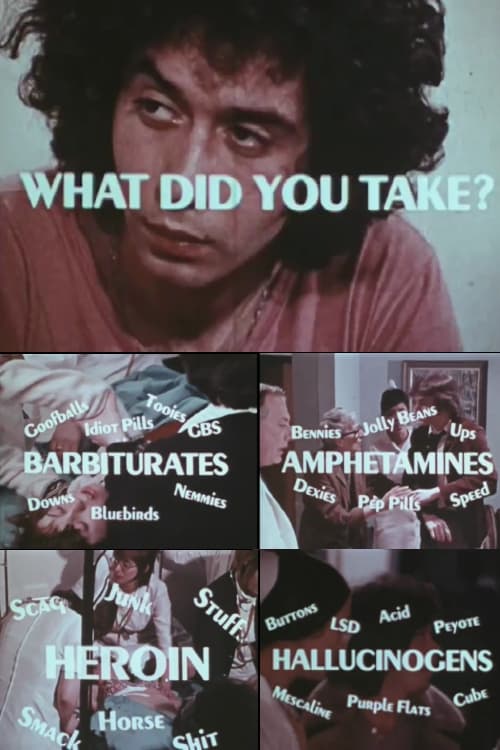
Stresses recognition and treatment of drug abuse emergencies, accurate identification of symptoms, and immediate clinical procedures. Presents scenes of actual cases in the emergency room and adjoining physician's offices of Beth Israel Medical Center in New York City. Viewers observe emergency treatment of patients in the major classes of drugs commonly abused, opiates, depressants, stimulants, and hallucinogens. The film demonstrates to health professionals that successful management of drug overdoses can save most lives and avert additional organic and psychiatric complications.

The Distant Drummer: Bridge from No Place
0.0

The Distant Drummer: Bridge from No Place

Jan 23, 1970

This film describes the 1960s drug culture. Addicts discuss their experiences in the United States and in Vietnam. Dr. Stanley Yolles, director of the National Institute of Mental Health (NIMH), talks about the drug culture and the NIMH role in prevention and treatment. The tape describes growth in the use of marijuana and heroin. In 1966, the Narcotic Addict Rehabilitation Act is the first law to give the addict a choice of treatment or jail. Synanon in California is a private, self-help, residential community that helps people deal with their addictions. New York's Daytop Village works not only with addicts on addictions, but on developing a new lifestyle. Methadone, though still experimental, has proved to be an effective treatment for heroin addiction.

Heroin(e)
6.9

Heroin(e)

Sep 3, 2017

This documentary follows three women — a fire chief, a judge, and a street missionary — as they battle West Virginia's devastating opioid epidemic.

Face Of An Addict
0.0

Face Of An Addict

Jan 23, 1968

This short film takes a look at addiction and whom it affects, specifically those in the medical profession. It was sponsored in the interest of the medical profession by Winthrop Laboratories Limited

US
9.0

US

Jan 23, 1970

This experimental 1970 color documentary film, ostensibly designed to provoke classroom discussion employs a boldly unconventional approach to addressing the issues of drug addiction, featuring the music of Canadian singer-songwriter Bruce Cockburn. The film eschews narration for montage effects and extended fly-on-the-wall scenes of various drug users in conversation.

Without Bias
6.9

Without Bias

Nov 3, 2009

The late Len Bias still leaves more questions than answers. When Bias dropped dead two days after the 1986 NBA Draft, he forever altered our perception of casual drug use and became the tipping point of America's drug crisis in the mid-80's. Future generations continue to face the harsh punishment of drug policies that were influenced by the public outcry after his heartbreaking death. Instead of becoming an NBA star, he became a one-man deterrent, the athlete who reminded everyone just how dangerous drug use can be. Amazingly, questions still linger about his death nearly a quarter-century later. How good could he have been in the pro ranks? Has he become underrated or overrated as the years pass? How could a University of Maryland superstar and Boston Celtics lottery pick be derailed by a cocaine binge? Was Bias a one-time user as we were led to believe, or was there a pattern of recreational use that led to his fatal last night? Did he fall in with the wrong crowd.

HEROINOHIO
0.0

HEROINOHIO

Oct 1, 2022

In the documentary, we follow twin brothers Mike and Chuck Rollins, former addicts who now work in addiction recovery. They know firsthand the struggles and vulnerabilities of addiction, as well as the challenges of reintegrating after treatment. For many addicts, returning to neighborhoods plagued by drugs and abandoned houses that serve as drug dens makes relapse almost inevitable. Through their nonprofit, Gemini Reliance, the Rollins brothers purchase dilapidated homes and transform them into safe, sober living spaces for those in recovery. Their efforts have proven effective, yet sobriety remains a constant battle. The story of HEROINOHIO begins as a profile of these two brothers but soon unfolds into a raw account of a fight against the powerful grip of addiction, revealing the relentless resilience required to reclaim one’s life.

Focus On Heroin
6.0

Focus On Heroin

Jan 23, 1971

This film points out the risks of being a heroin addict. Explains that addicts cannot be identified solely with one particular socio-economic level and cannot always be detected by appearance. Addicts and ex-addicts describe the first and subsequent drugs they used.

No Image
0.0

Parks and People: Dope

Jan 1, 1970

The transcript discusses the prevalent drug culture, particularly marijuana use, among youth in national parks. It highlights the perception that marijuana is less harmful than harder drugs and reflects on the challenges park rangers face in enforcing drug laws. While acknowledging the existence of drug trafficking, the narrative emphasizes that marijuana use is often seen as a minor issue compared to alcohol consumption or harder narcotics. The conversation also touches on the need for a more nuanced understanding of drug use, suggesting that current laws may be overly stringent and not reflective of societal attitudes.