No Trailers found.
No Cast found.
Being mother is the most natural thing in the world. Or so it seems. Yet the demands on women with children have rarely been as overloaded and contradictory as they are in today’s Western world. Promises of happiness are often followed by disadvantages, excessive demands and feelings of guilt. The mother has become an artificially glorified ideal, which nevertheless is often legitimized by the „nature of the woman“. We live in a time when three people could claim to be the same child’s mother: egg donors give their genes to beget children, surrogate mothers deliver babies which they give away immediately after birth, and men raise children by themselves – without a woman at their side. Hence the question arises: What makes a human being a real mother?
This student film by the award-winning Helena Třeštíková bears many of the hallmarks of her later work. Made as a graduation piece when she was at the FAMU Film and TV Academy in Prague, we see the director developing the distinctive observational style of filmmaking that she has used so effectively throughout her career. Over the course of several months, she follows a young pregnant woman as she becomes slowly acquainted with the joys and responsibilities of motherhood.
No overview available.
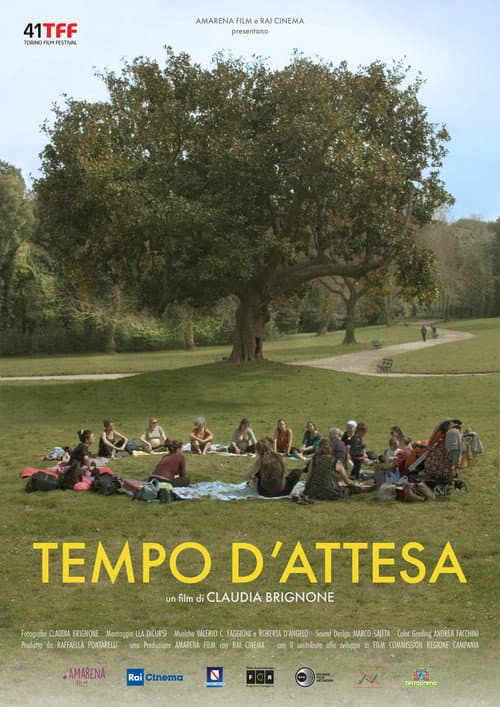
Under the shade of a Magnolia tree, a group of pregnant women gathers weekly. Among them is Teresa, an experienced midwife who listens to them attentively. Sitting in a circle, the women reflect on the impending birth of their children and their own emerging roles as mothers.
As a letter to her son, the filmmaker testifies her experience as a photographer aboard the Aquarius, a ship that rescued 29,523 people in the Mediterranean between 2016 and 2018.
"On the Tip of the Heart" - is a documentary on the St Peter's Hospital in Brussels, structured around seven doors from the maternity to the morgue. This is an opportunity for the director to ask the audience a question, namely: what is there in common between a medieval city, human life and a hospital?
The planet’s busiest maternity hospital is located in one of its poorest and most populous countries: the Philippines. There, poor women face devastating consequences as their country struggles with reproductive health policy and the politics of conservative Catholic ideologies.
Given the fetishizing and normalizing character that is given to motherhood in patriarchy in order to perpetuate the social order, do we truly choose to be mothers? Why is care, of fundamental vital labor, presupposed as an especially appropriate task for women?
When Fernanda and Andressa received the autism diagnoses of their sons, Rafael and Martin, they faced a future marked by invasive treatments and fear. Seeking autonomy, they found in cannabis oil a key to give their children the chance to dream and fight for dignity.
Two drag queens living in a place where homophobia and transphobia are common open their hearts to the world, revealing the human being behind the makeup and wigs. They share the reality of drag as an art form and what it means to move forward as part of the LGBTTTI+ community in a Latin American context.
Claire is a midwife and has devoted her life to others. At a moment when she is preoccupied by the imminent closure of the maternity clinic where she works, her life is further turned upside down when Béatrice, her father's former mistress, turns up on the scene. Béatrice is a capricious and selfish woman, Claire's exact opposite.
Emmett enters into a nightmarish game of therapy with his wife Anya, who has inexplicably taken on the persona of his estranged and recently-deceased mother.
After giving birth to her first child at age 20, Mona Achache had the idea to make a film on childbirth. She filmed the work of midwives to produce this documentary, which became a reference in more than 500 maternity wards and private midwives' offices in France during birth preparation sessions.
Lola (40) enjoys a happy life until an unforeseen pregnancy throws her plans into disarray. Resistant to motherhood and confronted by societal expectations, Lola and her boyfriend, Bruno, deal with the situation. As Lola confronts her inner fears about the repercussions of not embracing motherhood, she embarks on a quest for answers. Unexpectedly, Bruno reveals his desire to become a father, adding further tension and complexity to Lola's search for clarity about her future amidst pressure to conform to societal norms.
Natalia is a 17-year-old mom living with her mother and son, Antos. She wanted to have a baby because it was a “cool” thing to do, and because she feels she has someone to love; someone who can love her in return. Everything changes when Natalia’s mother decides to move out, giving Natalia a chance to lead a “normal life.”