No Trailers found.
No overview available.
When disillusioned Swedish knight Antonius Block returns home from the Crusades to find his country in the grips of the Black Death, he challenges Death to a chess match for his life. Tormented by the belief that God does not exist, Block sets off on a journey, meeting up with traveling players Jof and his wife, Mia, and becoming determined to evade Death long enough to commit one redemptive act while he still lives.
In his delirium from his return from war, Francesco Bernardone goes back in his memories to the days when he lived for parties and carnal pleasures. He slowly recovers, but after the illness he is no longer the Francesco that everybody knew. Instead of spending hours in taverns, he meditates on the beauty of God's creatures, soon renouncing his riches and his family with plans to rebuild an abandoned church and his life.
An affair between the second in line to Britain's throne and the princess of the feuding Irish spells doom for the young lovers.
In 1375, China was in chaos between Yuan Dynasty and Ming Dynasty. Coryo (an ancient kingdom of Korea then) sent a delegation of many diplomats, soldiers and a silent slave to make peace with the new Chinese government. However, this delegation got charged as spies and sent in exile to a remote desert.
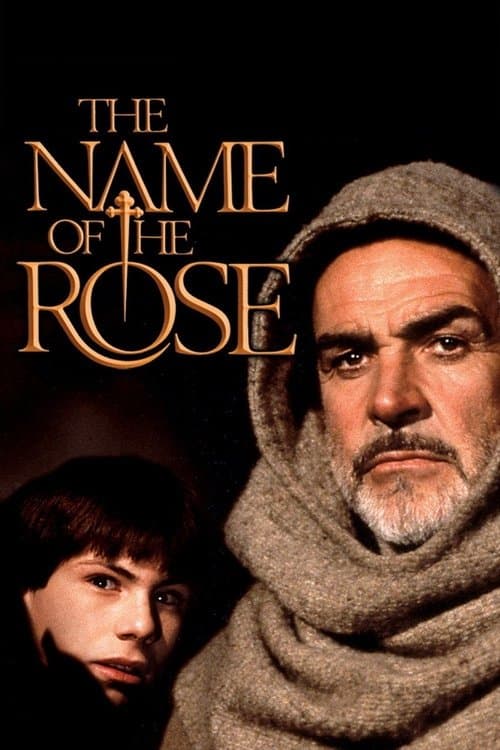
14th-century Franciscan monk William of Baskerville and his young novice arrive at a conference to find that several monks have been murdered under mysterious circumstances. To solve the crimes, William must rise up against the Church's authority and fight the shadowy conspiracy of monastery monks using only his intelligence; which is considerable.
On October 11, 1424, Hussite commander Jan Žižka breathed his last breath near the castle in Přibyslav. With a little exaggeration, it can be said that he never actually died, as he immediately entered national mythology as the prototype of a brilliant military leader and a true Czech. The revolutionary events then took a slightly different course than he would have liked, but his legacy remained ever-present among the Hussites. To this day, Žižka lives on in our society, with books written and films made about him. But even after 600 years of uninterrupted interest, a significant question mark remains over the Trocnov warrior: What was he really like? A deeply religious warrior of God, or just an ordinary medieval cutthroat? Leading Czech historians, headed by Professor Petr Čornej, are attempting to answer this question.
Dolf a 15 year old boy is sent back in time by a timemachine. Accidentally he is sent back to the Middle Ages. He is rescued by children who are part of a childrens' crusade, on their way to rescue Jeruzalem. During the trip Dolf finds out the danger is not coming from outside the crusade, but from within.
An expansive Russian drama, this film focuses on the life of revered religious icon painter Andrei Rublev. Drifting from place to place in a tumultuous era, the peace-seeking monk eventually gains a reputation for his art. But after Rublev witnesses a brutal battle and unintentionally becomes involved, he takes a vow of silence and spends time away from his work. As he begins to ease his troubled soul, he takes steps towards becoming a painter once again.
Sweden, beginning of the 18th Century. Executions are popular entertainment and brothels a given. Still the executioner and the whore are both despised and shunned. The executioner became executioner against his will and the whore, only 17 years old, was forced into the brothel. This is the story of how the two meet and exchange cruelty with tenderness, guilt with innocence.
In Camelot, kingdom of Arthur and Merlin, Lancelot is well known for his courage and honor. But one day he must quit Camelot and the Queen Guinevere's love, leaving the Round Table without protection.
When soldier Robin happens upon the dying Robert of Loxley, he promises to return the man's sword to his family in Nottingham. There, he assumes Robert's identity; romances his widow, Marion; and draws the ire of the town's sheriff and King John's henchman, Godfrey.
Arn, the son of a high-ranking Swedish nobleman is educated in a monastery and sent to the Holy Land as a knight templar to do penance for a forbidden love.
When German knights invade Russia, Prince Alexander Nevsky must rally his people to resist the formidable force. After the Teutonic soldiers take over an eastern Russian city, Alexander stages his stand at Novgorod, where a major battle is fought on the ice of frozen Lake Chudskoe. While Alexander leads his outnumbered troops, two of their number, Vasili and Gavrilo, begin a contest of bravery to win the hand of a local maiden.
In the 1200s, a man arose whose ruthlessness was so feared, he emerged as the greatest empire builder ever known to mankind. Inspired by true historical events.
Part of BBC Arena's Animal Night, this film chronicles a strange era in history when animals were put on trial in human courts.
Middle-aged Late is building a fence in his family home for a summer break, but he falls in love with his daughter's new friend, 16-year old flirtatious Saija.
Year 1100. Italy.The Northern lands are ruled by a German emperor: Fredrick aka "Barbarossa. His dream is to conquer also the lands in the Center and in the South so as to revive the Empire that was once of the one Charles Magno.But in the North a young man from Milan has formed an army of 900 young men coming from different cities: the "company of death". This young man's name is Alberto Da Giussano. His dream is to defeat the Emperor and to give back freedom to the Northern lands.
An examination of the artistic and construction techniques, architecture and design of this immense fortress in the south of Spain, built mainly by the Nasrid dynasty in the 13th century. Its outward austerity conceals an explosion of refinement and ornamentation, gardens and marble fountains in the grandest tradition of Moorish style and Islamic art of the period.